Cybersecurity expert speaks out on digital threats, bio-inspired solutions

Cybersecurity expert Stephanie Forrest is director of the Biodesign Center for Biocomputing, Security and Society at Arizona State University. Photo by Ben Petersen
Our current approach to cybersecurity is not working and it threatens our democracy, economy and critical infrastructure, according to ASU Biodesign Professor Stephanie Forrest, who spoke to a group of Phoenix-area residents Tuesday night at The Market by Jennifer’s restaurant for the “A Sip of Science” series.
Forrest is director of the Biodesign Center for Biocomputing, Security and Society at Arizona State University and a professor at ASU’s School of Computing, Informatics and Decision Systems Engineering. “Why is Cybersecurity So Hard and What Can We Do About It?” was the fourth of six “Sip of Science” events hosted by ASU’s Biodesign Institute. The new series brings leading scientists to local restaurants to engage with the public over appetizers and drinks.
“I think it is reasonable to ask the question, have we completely lost control of our IT systems?” Forrest said. “The Internet of Things is taking all these problems that used to be in the virtual world and bringing them to the physical world.” She began the discussion by asking the audience which threats they worried about most. Fake news, identity theft, attacks on infrastructure, consumer privacy and a shortage of cybersecurity experts were top of mind.
Most cybersecurity efforts today are reactive, not proactive, Forrest said. This “whack-a-mole” approach leaves millions of machines vulnerable while the volume of cyber attacks increases steadily. Her research investigates complex biological systems for new ideas to protect digital systems.
“I believe biology is the true science of security,” she said. “Biological defense systems have had to evolve right from the beginning because there have always been adversaries in the environment.”
Two more “Sip of Science” events will be held in May. On May 6, Josh LaBaer, the executive director of the Biodesign Institute and a leading cancer researcher, will share reasons to be optimistic about cancer research and offer a look at what advances may be around the corner. On May 8, psychologist, biologist and author Athena Aktipis looks at how microbes may be controlling the human brain and our behavior. Information and tickets are available on the Biodesign website.
-

Computer scientist and cybersecurity expert Stephanie Forrest speaks at "A Sip of Science."
Photo by Ben Petersen
-

Forrest took questions from the audience on cybersecurity topics from phishing to privacy.
Photo by Ben Petersen
-

She introduced her area of research, which looks at biology for ideas to protect computers.
Photo by Ben Petersen
-

"A Sip of Science" is a new event series hosted by ASU's Biodesign Institute.
Photo by Ben Petersen
-

Tuesday's event was held at The Market by Jennifer's restaurant in Phoenix.
Photo by Ben Petersen
-

Biodesign's "A Sip of Science" series connects scientists with the public.
Photo by Ben Petersen
-

Forrest is director of the Biodesign Center for Biocomputing, Security and Society.
Photo by Ben Petersen
More Science and technology

New research by ASU paleoanthropologists: 2 ancient human ancestors were neighbors
In 2009, scientists found eight bones from the foot of an ancient human ancestor within layers of million-year-old sediment in…

When facts aren’t enough
In the age of viral headlines and endless scrolling, misinformation travels faster than the truth. Even careful readers can be…
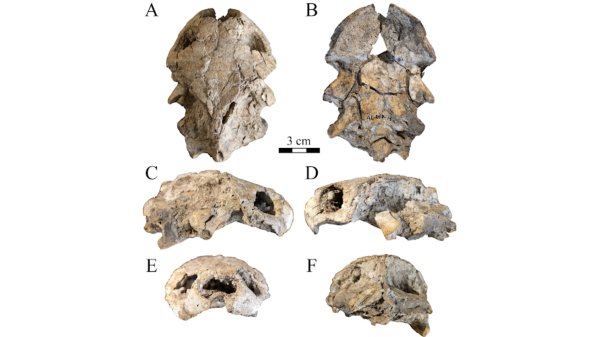
Scientists discover new turtle that lived alongside 'Lucy' species
Shell pieces and a rare skull of a 3-million-year-old freshwater turtle are providing scientists at Arizona State University with…