ASU researcher points to fingerprints as a new way to detect drug use

Min Jang, an assistant professor of forensic chemistry, is leading the development of a quick, simple and noninvasive method to detect drug use through fingerprints using an ambient mass spectrometer. The machine will be operational by the fall semester, when he and his students will be able to use it to detect contraband chemicals in sweat secreted through fingerprints. Photo by Charlie Leight/ASU News
Collecting urine samples, blood or hair are currently the most common ways to detect drug use, but Arizona State University researcher Min Jang may have discovered something better.
Fingerprints.
“It is simple and noninvasive,” according to Jang, an assistant professor of forensic chemistry in the School of Interdisciplinary Forensics. “It can be done in 10 seconds.”
Jang’s work focuses on the chemical characteristics of latent fingerprints — that is, fingerprints that may be on a glass or other surface. They aren’t necessarily apparent to the naked eye but can be made visible by dusting or fuming.
“The latent fingerprints are made up of sweat secreted by sweat pores,” Jang said. “When you analyze a drug that metabolizes, it contains inorganic and organic compounds from the metabolites of both the drug and the parent drug that are circulated through the bloodstream. Then they are secreted in multiple ways. Sweat is one of them."
Then the prints are put through a mass spectrometer, which confirms the presence of chemical compounds in the samples.
Jang has been developing this research for years. When he arrived at ASU's West Valley campus in fall 2024, he brought it with him.
So far, the method has been effective in identifying heroin and cocaine in a person’s body, but it also has applications beyond detecting drug use.
For example, it could help patients who need to take medicine on a regular basis.
“The fingerprint analysis can tell how long ago you took the drug and predict when you might need to take it again," Jang said.
He and his students will continue his work in his ASU lab, where a new mass spectrometer will be up and running by the fall semester.
Jang is also working with local addiction facilities to collect fingerprints from patients for substance-use testing, as the facilities are interested in the less invasive, less expensive way to perform drug testing.
And his expertise has implications for security, investigation and law enforcement needs.
“The ultimate goal of my research is always the same,” Jang said. “I always aim for practical applications with my developed method.”
More Science and technology

New research by ASU paleoanthropologists: 2 ancient human ancestors were neighbors
In 2009, scientists found eight bones from the foot of an ancient human ancestor within layers of million-year-old sediment in the Afar Rift in Ethiopia. The team, led by Arizona State University…

When facts aren’t enough
In the age of viral headlines and endless scrolling, misinformation travels faster than the truth. Even careful readers can be swayed by stories that sound factual but twist logic in subtle ways that…
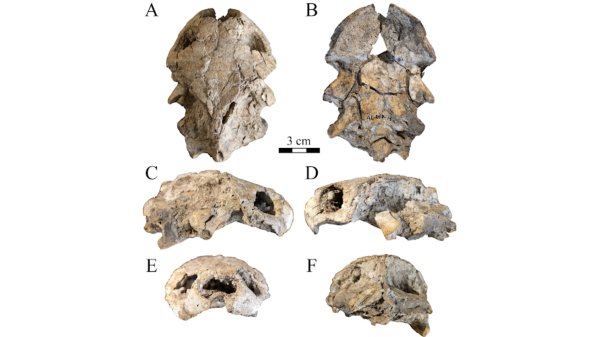
Scientists discover new turtle that lived alongside 'Lucy' species
Shell pieces and a rare skull of a 3-million-year-old freshwater turtle are providing scientists at Arizona State University with new insight into what the environment was like when Australopithecus…