

Interplanetary Initiative pilot project researcher presents at American Geophysical Union conference
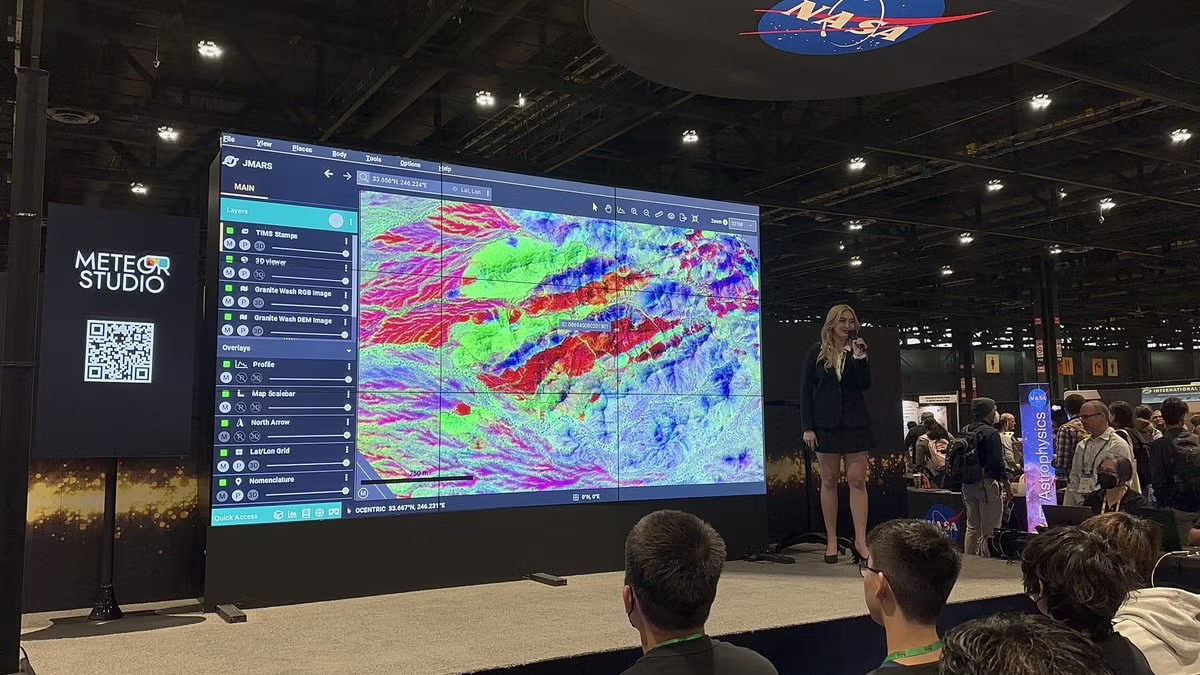
Interplanetary Initiative project member and School of Arts, Media and Engineering doctoral student Lauren Gold presents her research at the American Geophysical Union fall meeting Dec. 12–16.
Interplanetary Initiative project member and Arizona State University's School of Arts, Media and Engineering doctoral student Lauren Gold, advised by Associate Professor Robert LiKamWa, is presenting her research at the American Geophysical Union fall meeting Dec. 12–16.
She submitted her research on JMARS XR to AGU's Student Visualization Research competition and received the grand prize, allowing her to present at the conference.
Gold's project has been sponsored by the Interplanetary Initiative over multiple years as part of the five senses in space pilot project.
She will give a talk and help the JMARS team host their booth on the exhibit floor with live demos of the project. Last year, there were 26,000 scientists in attendance at the AGU fall meeting. This year, Gold gets to help carry the ASU flag as a winner of this competition and broadcast the potential impact of this technology.
Lauren worked with subject-matter expert collaborators Kathryn Powell and Jonathon Hill to create an immersive experience using real data and real stories. She attributes her ability to meet and work with them to Interplanetary Initiative support.
“Interplanetary has empowered me (an AME student) to collaborate with experts from planetary science disciplines, which in turn increases the impact that our JMARS XR technology could have,” Gold says.
The JMARS XR platform allows multiple researchers, educators and learners to collaboratively configure and view planetary terrain dataset fusions. The project is integrated into VR headsets, AR smartphones and desktop and/or laptop computers so users can explore in whatever form they're most comfortable with. It’s also integrated into Dreamscape in both seated and walkable formats.
The project is the continuation of a rich collaboration between Phil Christensen's JMARS team of the Mars Space Flight Facility at ASU and Meteor Studio. Lauren and her team of undergraduate assistants continue to work extensively with JMARS engineers Scott Dickenshied, Ken Rios, Saadat Anwar and others on software and network integration. In preparation for this AGU submission, she also pursued heavy consultation with planetary scientists Hill and Powell, contextualizing the work in legible terminology for her storyboard.
-
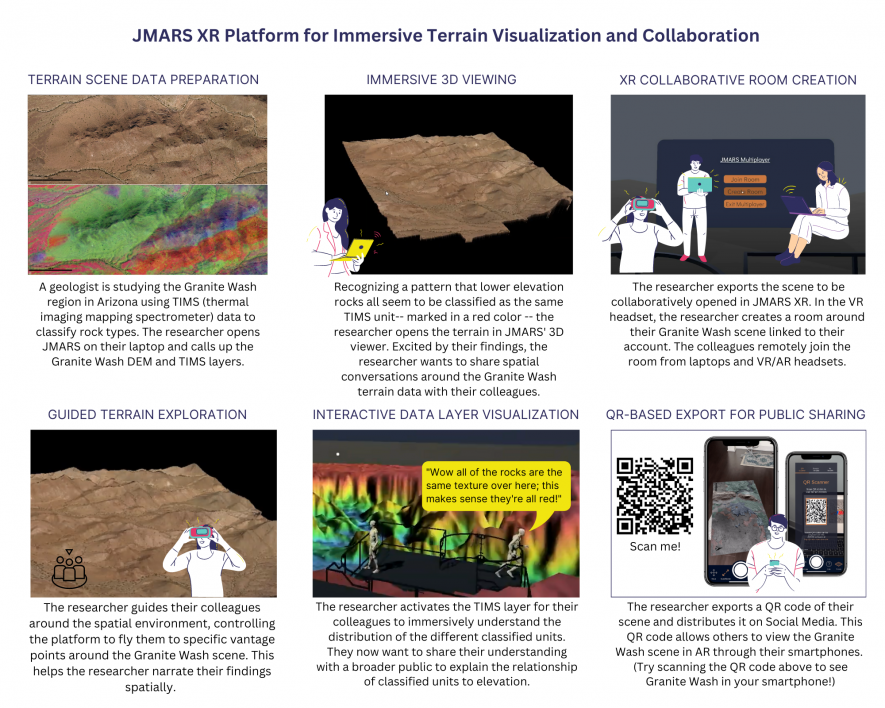
JMARX XR Platform for Immersive Terrain Visualization and Collaboration storyboard.
Photo Courtesy Robert LiKamWa
-
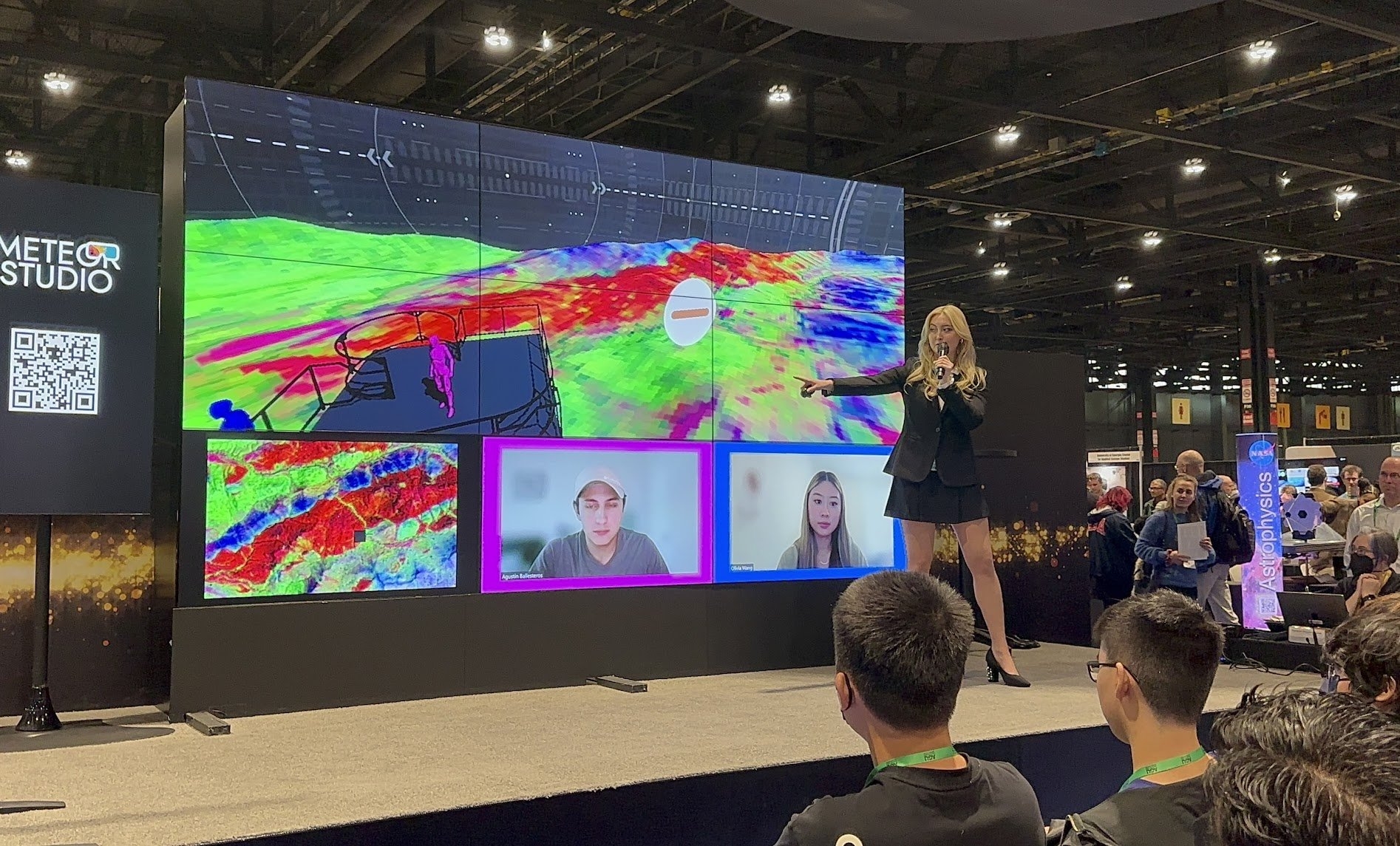
Lauren Gold from ASU's Meteor Studio demonstrates the JMARS XR platform on NASA's hyperwall.
Photo Courtesy
-
JMARX XR Platform for Immersive Terrain Visualization and Collaboration storyboard.
Photo Courtesy Robert LiKamWa
-
Lauren Gold from ASU's Meteor Studio demonstrates the JMARS XR platform on NASA's hyperwall.
Photo Courtesy
-
JMARX XR Platform for Immersive Terrain Visualization and Collaboration storyboard.
Photo Courtesy Robert LiKamWa
-
Lauren Gold from ASU's Meteor Studio demonstrates the JMARS XR platform on NASA's hyperwall.
Photo Courtesy
Written by Robert LiKamWa, Interplanetary Initiative pilot project lead.
More Science and technology

The Sun Devil who revolutionized kitty litter
If you have a cat, there’s a good chance you’re benefiting from the work of an Arizona State University alumna. In honor of…

ASU to host 2 new 51 Pegasi b Fellows, cementing leadership in exoplanet research
Arizona State University continues its rapid rise in planetary astronomy, welcoming two new 51 Pegasi b Fellows to its exoplanet…

ASU students win big at homeland security design challenge
By Cynthia GerberArizona State University students took home five prizes — including two first-place victories — from this year’s…