The number seven is often associated with good fortune, but luck had nothing to do with ASU’s latest accomplishment: For the seventh year in a row, the university is ranked No. 1 in innovation by U.S. News & World Report, a feat borne of a long history of creative reimagining — along with a healthy dose of tenacity and resilience through a period filled with obstacles and uncertainty.
“This past year and a half has been a time of great challenges. It has tested our creativity, our resilience and our humanity," ASU President Michael Crow said. “Through it all, the university community persevered and innovated in order to continue to be of service. As we have done and will continue to do, we pulled together in novel ways to keep our mission of access, excellence and impact moving forward. This recognition reflects that determination, which is emblematic of the Sun Devil spirit.”
Video by Josh Belveal/ASU
ASU has ranked No. 1 — ahead of MIT and Stanford — for all seven years the category has existed. The universities honored in the innovation category were nominated for the distinction by college presidents, provosts and admissions deans from across the country. Schools are chosen based on who is determined to be making the most innovative improvements toward curriculum, faculty, students, campus life, technology and facilities.
As university provost and executive vice president, Nancy Gonzales is responsible for the Academic Enterprise of ASU, which encompasses everything to do with degree-seeking students and the faculty who teach them.
“While access is a central tenet of the ASU Charter, we care greatly about ensuring the success of our students once they get here,” Gonzales said. “Our first-year retention rate as well as our first-year experience and undergraduate teaching rankings speak volumes about the quality of education our students are receiving at ASU. And the rankings highlight the vital work of our dedicated faculty and staff who ensure that students are supported as they progress toward their academic goals.
“It is our mission to not only maintain a multitude of opportunities for our students, but to continue to innovate and support strategic initiatives that drive the success of our academic community of students and scholars.”
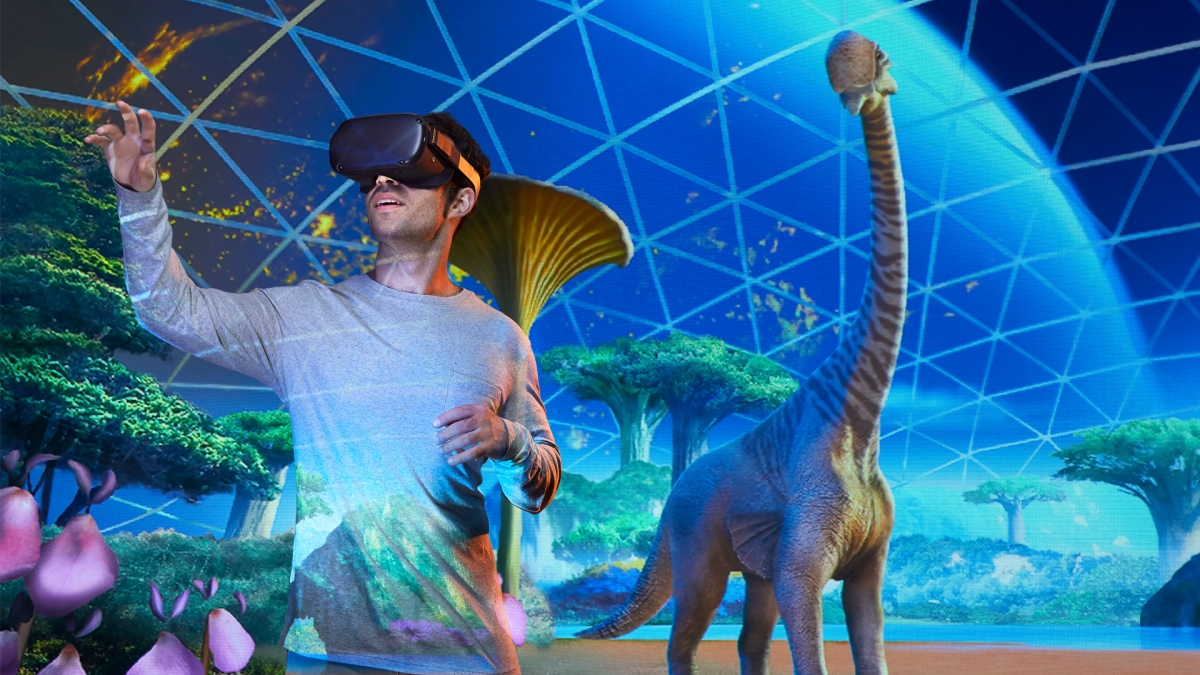
One such initiative, Dreamscape Learn, an immersive VR-based curriculum, will allow students to explore, observe and experience numerous hands-on problem-solving tasks that can’t be done in a traditional classroom.
This past year also saw ASU responding creatively to COVID-19, from a $1 million-winning mask to First Nations supply drives to running testing and vaccine sites.
A number of launches and openings included the Julie Ann Wrigley Global Futures Laboratory and the Mirabella at ASU intergenerational living and lifelong learning complex.
Some of ASU’s standout rankings this year include:
- No. 10 in Best Undergraduate Teaching: ASU is among the top 10 in the nation for undergraduate teaching, with its more than 4,700 faculty members counting five MacArthur fellows, five Nobel laureates, seven Pulitzer Prize winners and hundreds of other award recipients among them. In recent years, ASU has expanded the use of adaptive learning, a personalized method of teaching that combines online and classroom work, and offers a vast array of undergraduate research opportunities. In this category, ASU was ranked ahead of Notre Dame, Vanderbilt and Harvard.
- No. 10 in First-Year Experiences: For the third year in a row, ASU ranked among the top 10 in the nation — ahead of Princeton University, Brown University and Baylor University — for its commitment to helping students transition from high school and community college to life at a four-year university. Now with expanded remote options, the Student Success Center has been focused on addressing the unprecedented situation many students are finding themselves in (having spent the first year of their college career online) and tailoring their services to reflect the diverse population of students they serve, including first-generation and transfer students.
- No. 23 in Best Undergraduate Business: The undergraduate program at ASU’s W. P. Carey School of Business moved up one spot in the rankings from last year in a seven-way tie, ahead of Boston College, Johns Hopkins University and the University of Arizona. W. P. Carey’s supply chain management program moved up one spot from last year to No. 2, ahead of MIT and Ohio State University, while a number of others, including business analytics, production operations and management information systems, ranked among the top 10 and top 20.
- No. 36 in Best Undergraduate Engineering Programs (Doctorate): Moving up six spots from last year, ASU’s Ira A. Fulton Schools of Engineering, the largest in the nation, is proof that such institutions can operate at scale and with excellence. Tying for No. 36, it ranks ahead of University of California-Irvine, Yale University and the Colorado School of Mines. Five of its undergraduate programs ranked among the top 25: civil engineering, computer engineering, electrical engineering, environmental engineering and mechanical engineering.
- No. 54 in Best Undergraduate Computer Science Program: With a seven-spot leap to a tie for No. 54 this year — ahead of Indiana University, Clemson and Emory — the popularity of ASU’s undergraduate computer science program reflects the growing demand in the field. Both the AI and cybersecurity programs ranked among the top 30, coming in at No. 23 and No. 28, respectively.
A complete list of rankings, data and methodologies can be found on the U.S. News College Compass website.
Learn more
Dive into the 2020–21 stories highlighted in our video:
- Dreamscape Learn: Exploring new worlds in virtual reality
- ASU launches Julie Ann Wrigley Global Futures Laboratory with audacious goal: Transforming the world for a better future
- Air Force exoskeleton gets heavy lift from ASU
- Study measures the comfort power of different categories of city shade
- Student team's fog-free mask design wins $1 million international competition
- Poet Natalie Diaz wins Pulitzer Prize for "Postcolonial Love Poem" collection
- Film school named after trailblazing actor and filmmaker Sidney Poitier
- ASU among top ranked in the country for best online programs
- ASU retains top US spot for efforts toward UN sustainability goals
- Mastcam-Z images from Mars; plus, ASU scientists have key roles in Mars sample collection and return
Top photo: Alireza Bahremand, a graduate student working with the Dreamscape Learn team and Meteor Studio, explores the “Alien Zoo” module. Photo by Jeff Newton
More Science and technology

ASU researchers shed light on ancient tattoos in the Nile Valley
Long after an archaeological excavation, discoveries can still be made. One such example of this is newly discovered tattoos from ancient Nubia, nearly doubling the amount previously known from the…

ASU’s LEAPS lab marks a decade of energy impact
Nathan Johnson doesn't mince words when it comes to Earth's energy requirements.“The world needs every electron it can get to match the accelerated pace of economic development and electrification,”…

Smarter tools for peering into the microscopic world
The microscopic organisms that fill our bodies, soils, oceans and atmosphere play essential roles in human health and the planet’s ecosystems. Yet even with modern DNA sequencing, figuring out what…