ASU named one of the world’s top universities for interdisciplinary science

ASU photo
Arizona State University has an ambitious goal: to become the world’s leading global center for interdisciplinary research, discovery and development by 2030.
This week, the university moved significantly closer to that goal, ranking in the top 10 in the U.S. and No. 14 in the world — ahead of the University of Michigan, the University of Illinois and the University of Texas — in the new Times Higher Education Interdisciplinary Science Rankings released Thursday.
Created in partnership with Schmidt Science Fellows, the rankings evaluated more than 600 global universities on three areas of performance: financial investment, institutional support and research output.
Introduced in 2024, it is the first system designed specifically to assess interdisciplinary science and now encompasses research that integrates scientific disciplines with non-STEM areas, including social sciences and law.
"We are laser-focused on moving crucial research and discovery forward,” said Sally C. Morton, executive vice president of ASU Knowledge Enterprise. "This requires an evolving, growing and a transdisciplinary mindset to ensure impact, and we are delighted that our progress has been recognized.”
The rankings highlight the increasing importance of interdisciplinary approaches in solving complex, real-world problems.
“Collaboration is kind of in our DNA,” said ASU biophysicist and microbiologist Kevin Redding, who, together with his colleagues, is creating an environmentally friendly alternative to supplying plants with essential nutrients for growth. “We've chosen people (to work at ASU) who like to collaborate — which is very attractive. It has allowed me to do things I couldn't have done at other places.”
Collaboration fuels discovery
The days of the lone superstar scientist are behind us.
In today’s world, collaboration fuels discovery — especially when researchers from different fields bring their unique expertise to the same table. Two or even 10 minds working together can achieve what one alone cannot.
“Science never occurs in a vacuum,” says Tricia Redeker Hepner, a professor in ASU’s School of Social and Behavioral Sciences. “In my research as a cultural anthropologist, I collaborate with forensic anthropologists and archaeologists to understand how scientific methods such as human identification and DNA analysis have culturally specific meanings and implications for Ugandan war survivors. Together we are figuring out how science and culture can inform each other to better meet people's needs.”
More Science and technology

When facts aren’t enough
In the age of viral headlines and endless scrolling, misinformation travels faster than the truth. Even careful readers can be swayed by stories that sound factual but twist logic in subtle ways that…
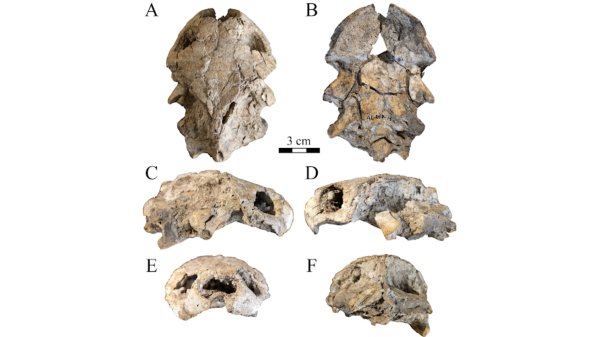
Scientists discover new turtle that lived alongside 'Lucy' species
Shell pieces and a rare skull of a 3-million-year-old freshwater turtle are providing scientists at Arizona State University with new insight into what the environment was like when Australopithecus…

ASU and Thailand advance semiconductor collaboration through workforce development initiatives
As Thailand accelerates efforts to strengthen its semiconductor ecosystem, Arizona State University and Thai partners are expanding collaboration to support the country’s innovation and workforce…