ASU named one of the world’s top universities for interdisciplinary science

ASU photo
Arizona State University has an ambitious goal: to become the world’s leading global center for interdisciplinary research, discovery and development by 2030.
This week, the university moved significantly closer to that goal, ranking in the top 10 in the U.S. and No. 14 in the world — ahead of the University of Michigan, the University of Illinois and the University of Texas — in the new Times Higher Education Interdisciplinary Science Rankings released Thursday.
Created in partnership with Schmidt Science Fellows, the rankings evaluated more than 600 global universities on three areas of performance: financial investment, institutional support and research output.
Introduced in 2024, it is the first system designed specifically to assess interdisciplinary science and now encompasses research that integrates scientific disciplines with non-STEM areas, including social sciences and law.
"We are laser-focused on moving crucial research and discovery forward,” said Sally C. Morton, executive vice president of ASU Knowledge Enterprise. "This requires an evolving, growing and a transdisciplinary mindset to ensure impact, and we are delighted that our progress has been recognized.”
The rankings highlight the increasing importance of interdisciplinary approaches in solving complex, real-world problems.
“Collaboration is kind of in our DNA,” said ASU biophysicist and microbiologist Kevin Redding, who, together with his colleagues, is creating an environmentally friendly alternative to supplying plants with essential nutrients for growth. “We've chosen people (to work at ASU) who like to collaborate — which is very attractive. It has allowed me to do things I couldn't have done at other places.”
Collaboration fuels discovery
The days of the lone superstar scientist are behind us.
In today’s world, collaboration fuels discovery — especially when researchers from different fields bring their unique expertise to the same table. Two or even 10 minds working together can achieve what one alone cannot.
“Science never occurs in a vacuum,” says Tricia Redeker Hepner, a professor in ASU’s School of Social and Behavioral Sciences. “In my research as a cultural anthropologist, I collaborate with forensic anthropologists and archaeologists to understand how scientific methods such as human identification and DNA analysis have culturally specific meanings and implications for Ugandan war survivors. Together we are figuring out how science and culture can inform each other to better meet people's needs.”
More Science and technology

Findings on adenoviruses in baby gelada monkeys provide a window into our own cold and flu season
If you have young kids or spend time around day care centers, you know the drill: Someone gets a cold, and soon the whole group is sniffling and sneezing. Now imagine that same pattern playing out in…

Student teams create AI tools to help neurodivergent learners
When Stevie Cervantes was a first-year student at Arizona State University, she shied away from using AI.“AI was everywhere and my friends were asking me, ‘Oh, do you use ChatGPT?’ And I hadn’t even…
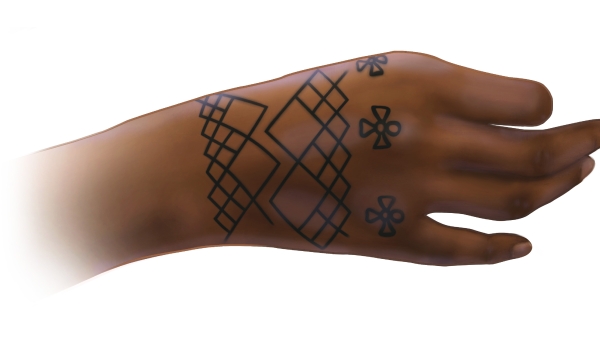
ASU researchers shed light on ancient tattoos in the Nile Valley
Long after an archaeological excavation, discoveries can still be made. One such example of this is newly discovered tattoos from ancient Nubia, nearly doubling the amount previously known from the…