When speaking out feels risky: ASU study reveals the hidden dynamics of self-censorship

ASU researchers developed a model to explore how people weigh the risks of speaking out against authority. Graphic courtesy of santima.studio/Adobe Stock
In an era where social media blurs the line between public and private speech, how do people decide whether to speak their minds or stay silent?
A new study from researchers at Arizona State University and the University of Michigan offers a look at the strategic trade-offs individuals make when facing the threat of punishment for dissent.
The work — coauthored by Professor Stephanie Forrest and Assistant Professor Joshua J. Daymude in the School of Computing and Augmented Intelligence, part of the Ira A. Fulton Schools of Engineering at ASU, and Robert Axelrod from the University of Michigan — introduces a mathematical model to explain when people choose to express dissent or self-censor.
The findings shed new light on how surveillance, punishment and boldness interact to shape societies, especially under authoritarian conditions where expressing one’s true opinion can carry real danger.
The science behind silence
Published in Proceedings of the National Academy of Sciences, one of the world’s most prestigious scientific journals, the paper “Strategic Analysis of Dissent and Self-Censorship” explores how individuals and governing authorities influence one another’s behavior over time.
“Modern technologies — from facial recognition to algorithmic content moderation — have transformed the landscape of dissent,” Daymude says. “Our goal was to move beyond intuition and provide a formal way to understand when and how self-censorship emerges.”
The researchers developed a mathematical model where individuals balance their desire to express dissent against the fear of punishment, while an authority dynamically adjusts its surveillance and punishment policies to minimize both total dissent and enforcement costs.
The results reveal that self-censorship isn’t simply a product of fear. It is a rational, strategic response shaped by the interplay of boldness, surveillance and punishment severity.
When fear becomes a strategy
At the heart of the study is a model that captures three distinct responses to authority: compliance, self-censorship and defiance. The researchers found that when punishments are uniform, such as blanket bans or internet shutdowns, people tend to hold back their opinions up to a point. Once the punishment feels intolerable or unfair, some individuals may push back and become defiant.
When punishments are proportional, for example, escalating penalties for repeated offenses, people may still take small risks to voice mild dissent, but as the penalties mount, the cost of speaking out becomes too high, and most fall into compliance.

In the simulated societies, authorities that began with moderate policies often evolved toward stricter control, echoing historical cases such as as former Chinese Communist Party Chairman Mao Zedong’s "Hundred Flowers Campaign," which encouraged open critique before abruptly reversing course. The model showed that as tolerance is reduced and surveillance intensifies, dissenters self-censor progressively, leading to near-total compliance over time.
However, populations with higher “boldness,” or a measure of willingness to risk punishment, resisted longer. In these cases, authorities struggled to fully suppress dissent, even when equipped with strong surveillance and severe penalties.
“A population’s willingness to speak out early on and suffer the negative consequences has an outsized effect on how long it takes an authority to suppress all dissent,” Forrest says. “This is because the cost of punishing an entire population simultaneously is too high.”
Crossing disciplinary lines to decode dissent
The research reflects the interdisciplinary mission of Forrest and Daymude. While both are computer science and engineering faculty members, they also play key roles in ASU’s Biodesign Center for Biocomputing, Security and Society, directed by Forrest, a pioneer in evolutionary computation and complex systems. Together, the team brought computer science and mathematical rigor to one of humanity’s oldest political questions: What makes people speak out or stay silent?
Daymude’s expertise in distributed algorithms and collective behavior complemented Forrest’s decades of work applying biological principles to computing. The collaboration with Axelrod, the William D. Hamilton Distinguished University Professor Emeritus at the University of Michigan and renowned political scientist known for his work on cooperation and conflict, extended the project’s reach into the social sciences.
The fragility of free expression
The study’s implications go far beyond academic theory. From citizens in authoritarian regimes to users navigating content moderation on global social platforms, the pressures that shape public expression are everywhere. The study highlights how easily self-censorship can spread and how difficult it is to reverse once established.
“Self-censorship can start as a form of self-protection,” Daymude says. “But when people begin to silence themselves preemptively, before any punishment occurs, it becomes a powerful tool for control.”
By clarifying the strategic nature of dissent, the researchers hope their work can inform policymakers, platform designers and advocates for free expression.
“Ultimately, our findings show that preserving open dialogue depends not only on laws or technology but on the courage of individuals and the collective willingness to keep speaking, even when it’s uncomfortable,” Forrest says.
More Science and technology

When facts aren’t enough
In the age of viral headlines and endless scrolling, misinformation travels faster than the truth. Even careful readers can be swayed by stories that sound factual but twist logic in subtle ways that…
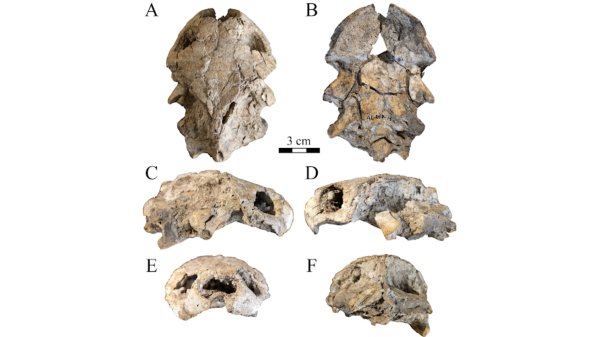
Scientists discover new turtle that lived alongside 'Lucy' species
Shell pieces and a rare skull of a 3-million-year-old freshwater turtle are providing scientists at Arizona State University with new insight into what the environment was like when Australopithecus…

ASU named one of the world’s top universities for interdisciplinary science
Arizona State University has an ambitious goal: to become the world’s leading global center for interdisciplinary research, discovery and development by 2030.This week, the university moved…