

ASU student-run podcast shares personal stories from the lives of scientists

iStock image
Everyone has a story.
Some are inspirational. Others are cautionary. But most are narratives of a person’s path, sometimes a circuitous one, from one point in their lives to another.
A new podcast titled "SciChronicles" provides a place for Arizona State University faculty and students in science-related studies to share stories about their personal and professional journeys — including moments that changed the trajectory of their career.
These kind of platforms aren’t always available to scientists.
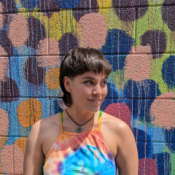
“'SciChronicles' is a podcast that basically allows scientists from the School of Life Sciences to tell stories about how they got to where they are now,” said Risa Schnebly, a graduate student studying biology and society at ASU’s College of Liberal Arts and Sciences and cohost of the podcast.
"This is really exciting because in science we are so often told that we need to stay objective and keep our personalities and experiences out of what we do. But the truth is that we're all humans and we all have reasons for why we do what we do — and stories about how we got here,” she said.
The first episode features a scientist who discovered that incorporating her struggles with OCD and anxiety into her work could make her a better scientist.
“Bringing your whole self to research is an asset not a detriment,” said Olivia Davis, an ASU graduate with a PhD in biology and society whose mental health journey in graduate school inspired her postdoctoral research in mental health.
“I started to think, 'How I can make a difference by studying mental health — a difference that could make other people, like me, feel they belong and have a place in science?'” she said on the podcast.
A podcast origin story
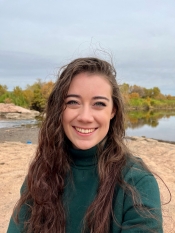
In 2023, Kayla Burgher, cohost of "SciChronicles," attended a science-related story slam that took place at the American Association for the Advancement of Science conference in Washington, D.C.
“It was really inspiring for me to hear people being their authentic selves and putting a human element back into science because oftentimes, we're stuck in our papers, stuck in the data, but bringing back some emotions and some real human touch to science was really inspiring to me, and I wanted to bring something like that to ASU,” said Burgher, a PhD candidate in ASU's earth and environmental sciences program.
In April 2024, Burgher and Schnebly organized the first School of Life Sciences Story Slam!
The stories featured were unusual, unexpected and real.
“It went wonderfully,” Burgher said. “We had a really great turnout and people seemed really excited about it.”
People like Charles Kazilek, who happened to be in the audience for the event.
When Kazilek heard the stories, he immediately thought, “This needs to be a podcast.”
“I realized very quickly that this is something that can really make an impact,” Kazilek said.
Kazilek, the executive director of K–12 outreach at ASU and advisor to the provost on academic technology, knows a bit about podcasts. He is the host of “Ask a Biologist” — the longest-running biology podcast on the internet, with listeners from 63 countries.
Have a story to share?
ASU scientists who are interested in being featured on "SciChronicles" can email Kayla Burgher at kburgher@asu.edu.
He approached Burgher with the idea.
“We often talk about science, but we don't talk about how you become a scientist and what were the challenges you had to overcome to get there,” he said. “And these stories have such an important message and impact for other graduate students.”
"SciChronicles" has already produced several episodes, and will continue with new storytellers from the School of Life Sciences.
“This is a really exciting venture because we can bring these stories to a wider audience and hopefully inspire more people,” Burgher said. “And let everyone know that things happen to scientists all the time and they are not alone.”
More Science and technology

Hack like you 'meme' it
What do pepperoni pizza, cat memes and an online dojo have in common?It turns out, these are all essential elements of a great cybersecurity hacking competition.And experts at Arizona State…

ASU professor breeds new tomato variety, the 'Desert Dew'
In an era defined by climate volatility and resource scarcity, researchers are developing crops that can survive — and thrive — under pressure.One such innovation is the newly released tomato variety…

Science meets play: ASU researcher makes developmental science hands-on for families
On a Friday morning at the Edna Vihel Arts Center in Tempe, toddlers dip paint brushes into bright colors, decorating paper fish. Nearby, children chase bubbles and move to music, while…