

Consortium for Science, Policy & Outcomes celebrates 25 years
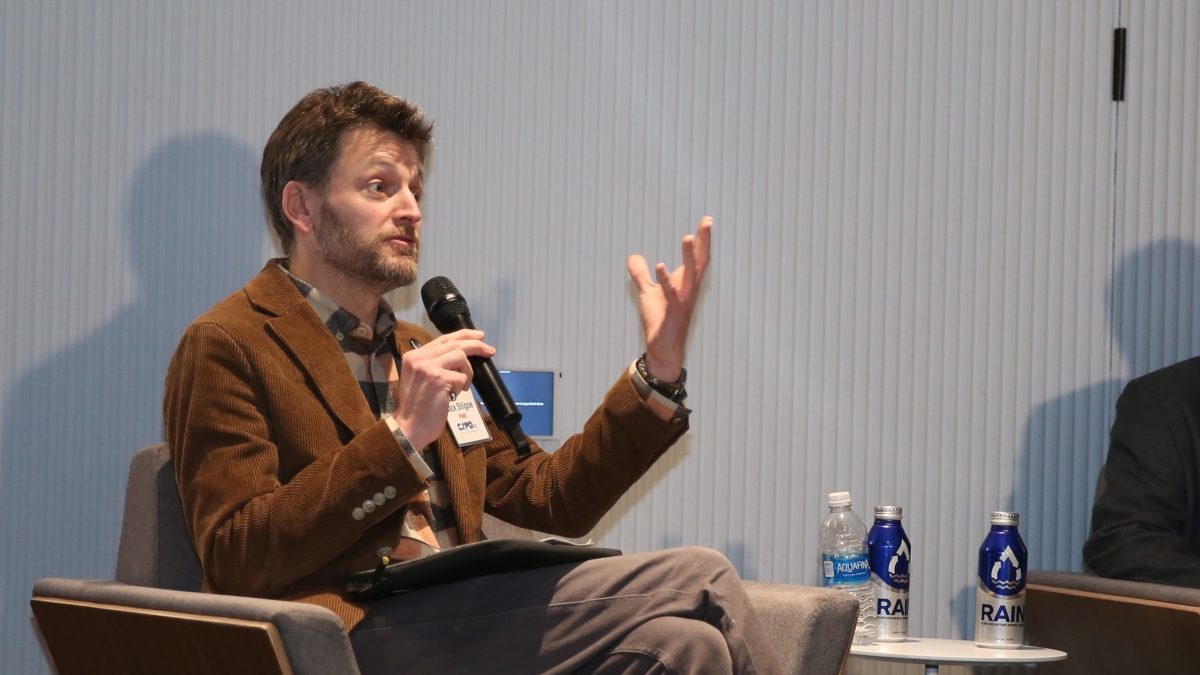
Jack Stilgoe, professor of science and technology policy at University College London, examines anticipatory governance and responsible innovation in science and technology. Photo courtesy of Hager Sharp
For Arizona State University's Consortium for Science, Policy & Outcomes (CSPO), recognizing the past is just as important as designing the future. The consortium marked 25 years in Washington, D.C., in early December by celebrating its legacy of connecting diverse groups to key issues in science and technology policy.
The celebration — buzzing with scientists, past and present policymakers, and innovative thinkers — began with a panel featuring CSPO’s Director Emeritus Dan Sarewitz and Associate Vice Provost for Discovery, Engagement and Outcomes David Guston.
The germ that became CSPO was an unusual congressional testimony that had an impact on Sarewitz, who was working on Capitol Hill in the 1990s in the health science community.
“There was this guy who was unique among all people we ever had testifying,” Sarewitz said. “He said publicly that the problem for science is not about how much money it has but about how we organize the institutions for spending that money. That guy was Michael Crow.”
That initial experience began a series of encounters and discussions that grew to become CSPO. Although not president of ASU at that time, President Crow’s PhD in science and technology policy showed that his tie to CSPO was — and always had been — personal.
“This was enabled by ... good fortune that I connected with Michael Crow, but also the fact that there was someone who was willing to put resources into this from the beginning and who saw the key problem, which was that science policy in the U.S. was entirely input driven,” Sarewitz said. “It was about how much money went into institutions; it was not driven by any tools or careful thinking about what you were or could achieve through those investments.”
-
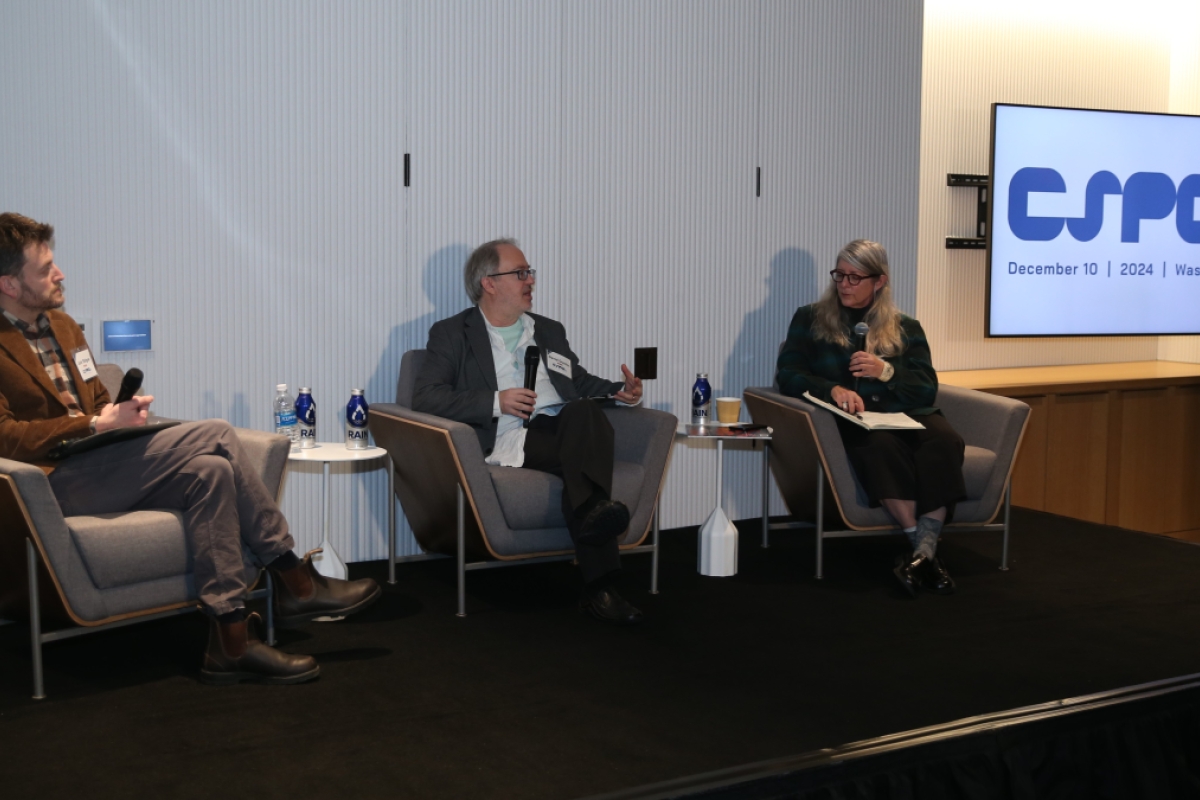
(From left) Jack Stilgoe, professor of science and technology policy at University College London, David Guston, professor and founding director of the School for the Future of Innovation in Society at ASU, and Lisa Margonelli, editor-in-chief of Issues in Science and Technology at the School for the Future of Innovation in Society at ASU, examine anticipatory governance and responsible innovation in science and technology.
Photo courtesy of Hager Sharp
-
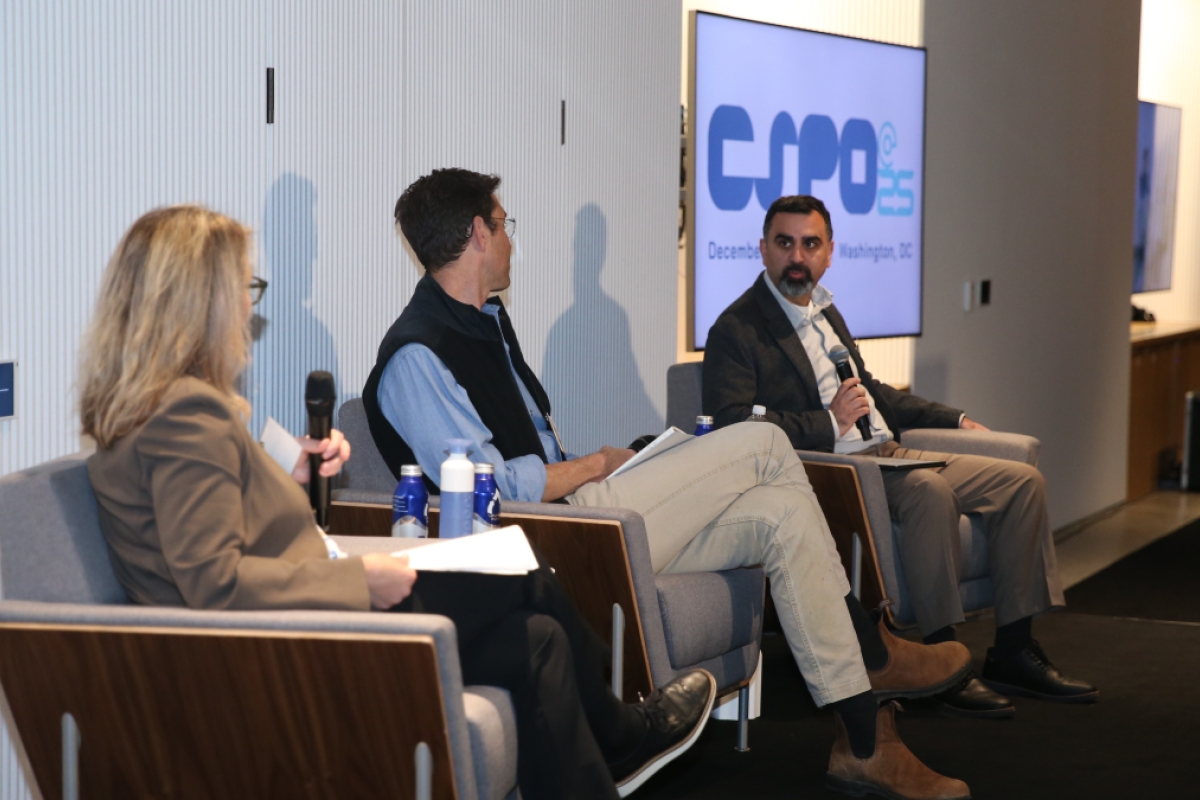
(From left) Angela Bednarek, project director of the Evidence Project at The Pew Charitable Trusts, Ryan Meyer, executive director of the Center for Community and Citizen Science at the UC Davis School of Education, and Bhaven Sampat, professor at ASU's School for the Future of Innovation in Society and School of Public Affairs, discuss uses of evidence and science in decision-making.
Photo courtesy of Hager Sharp
-
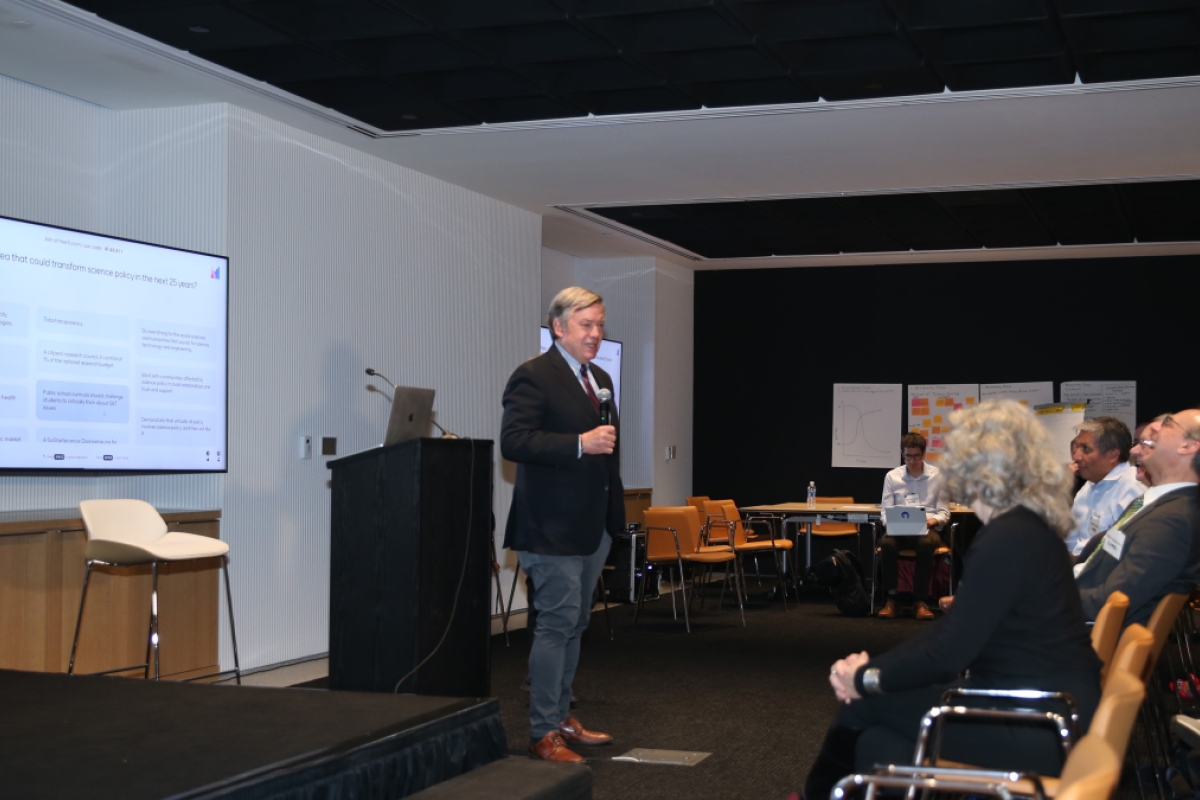
ASU President Michael Crow fields questions from participants at CSPO @ 25.
Photo courtesy of Hager Sharp
-
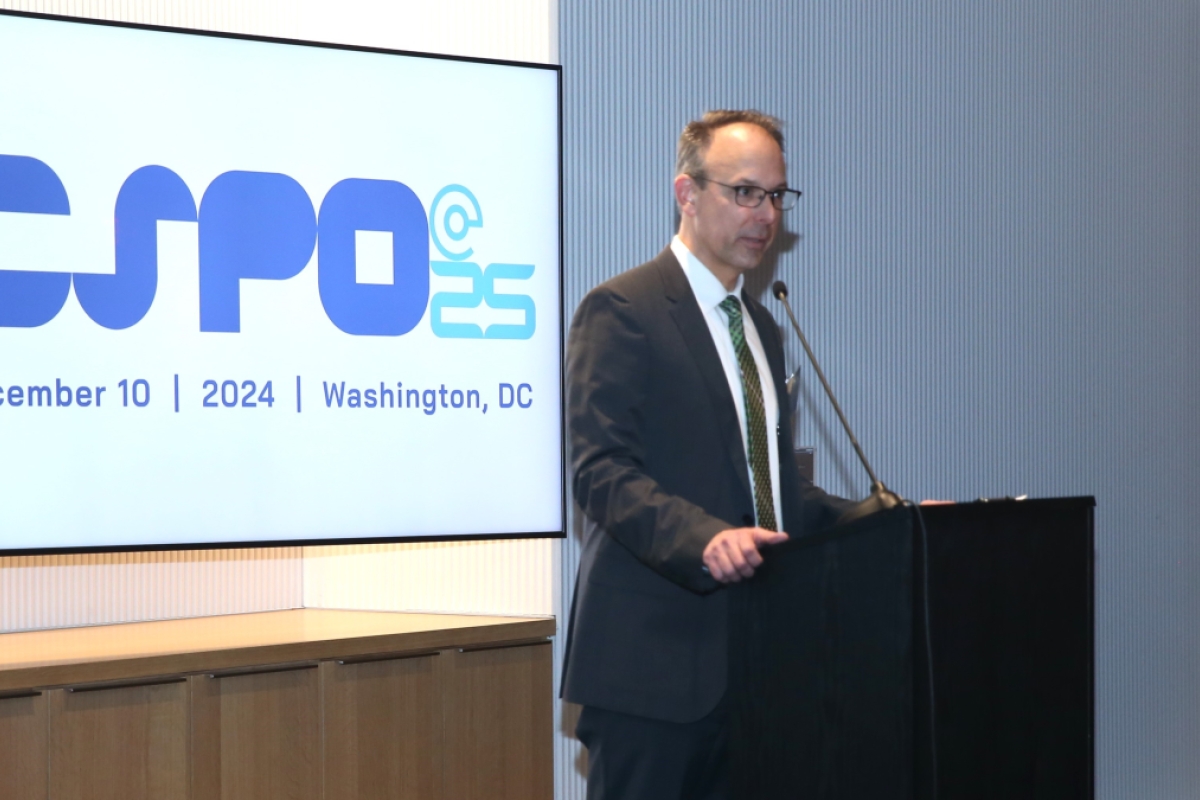
Arthur Daemmrich, director of CSPO and professor of practice in the School for the Future of Innovation in Society at ASU, gives the opening remarks for the 25th anniversary event of the Consortium for Science, Policy & Outcomes in Washington, D.C.
Photo courtesy of Hager Sharp
-
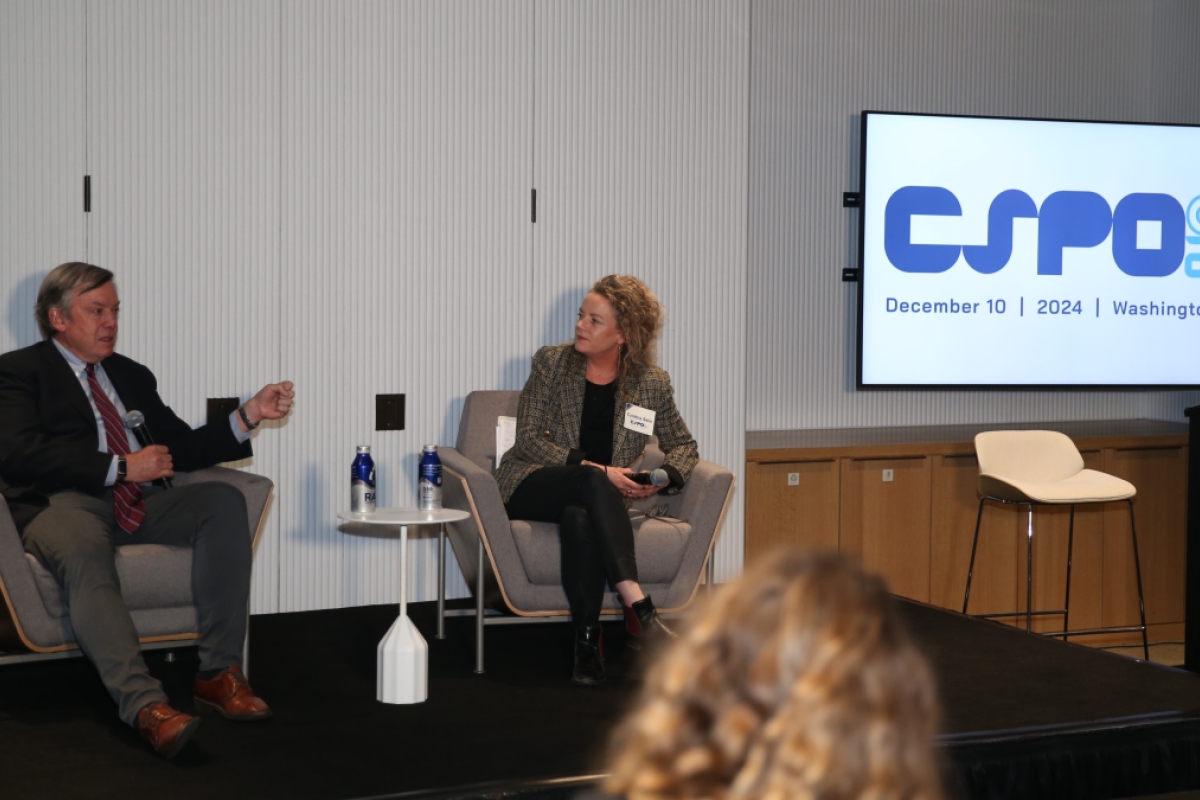
ASU President Michael Crow and Cynthia Selin, a senior Global Futures scholar at ASU, hold an interactive talk about the future of science and technology.
Photo courtesy of Hager Sharp
-
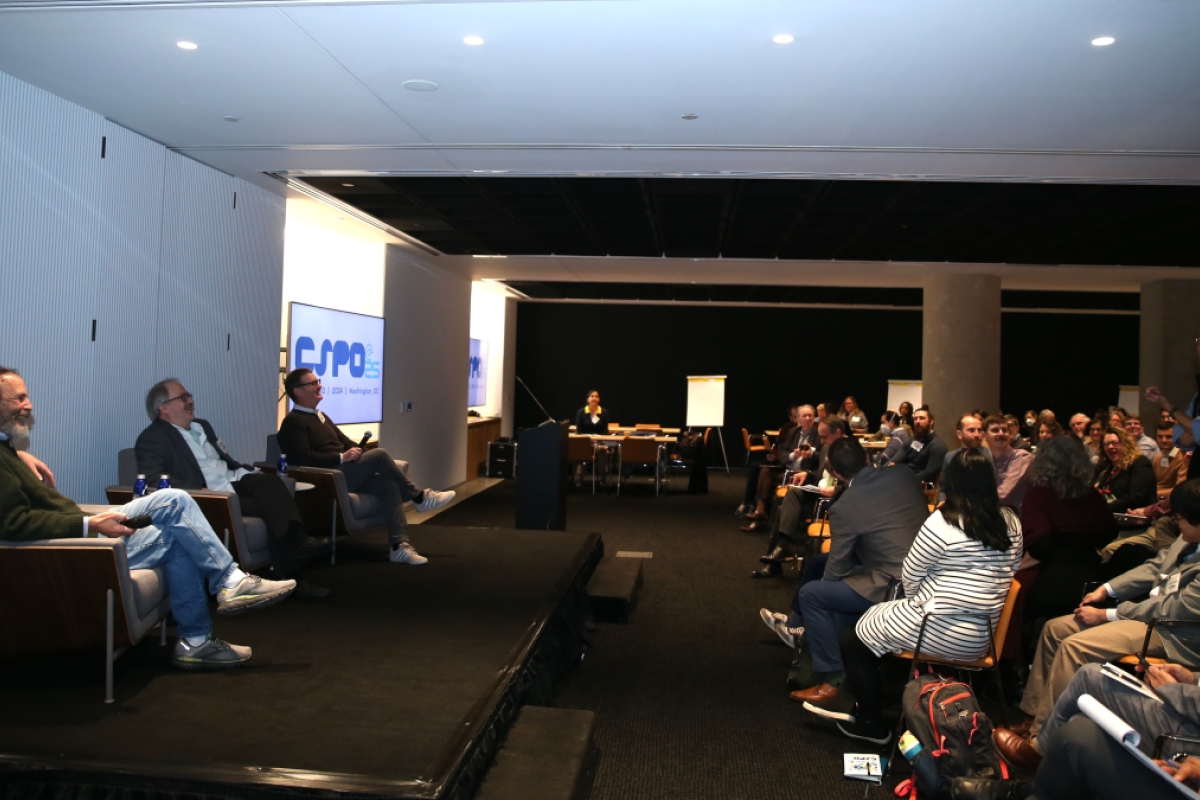
(From left) Dan Sarewitz, CSPO director emeritus, David Guston, professor and founding director of the School for the Future of Innovation in Society at ASU, and Roger Pielke Jr., senior fellow at American Enterprise Institute, answer questions from participants at CSPO @ 25.
Photo courtesy of Hager Sharp
-
(From left) Jack Stilgoe, professor of science and technology policy at University College London, David Guston, professor and founding director of the School for the Future of Innovation in Society at ASU, and Lisa Margonelli, editor-in-chief of Issues in Science and Technology at the School for the Future of Innovation in Society at ASU, examine anticipatory governance and responsible innovation in science and technology.
Photo courtesy of Hager Sharp
-
(From left) Angela Bednarek, project director of the Evidence Project at The Pew Charitable Trusts, Ryan Meyer, executive director of the Center for Community and Citizen Science at the UC Davis School of Education, and Bhaven Sampat, professor at ASU's School for the Future of Innovation in Society and School of Public Affairs, discuss uses of evidence and science in decision-making.
Photo courtesy of Hager Sharp
-
ASU President Michael Crow fields questions from participants at CSPO @ 25.
Photo courtesy of Hager Sharp
-
Arthur Daemmrich, director of CSPO and professor of practice in the School for the Future of Innovation in Society at ASU, gives the opening remarks for the 25th anniversary event of the Consortium for Science, Policy & Outcomes in Washington, D.C.
Photo courtesy of Hager Sharp
-
ASU President Michael Crow and Cynthia Selin, a senior Global Futures scholar at ASU, hold an interactive talk about the future of science and technology.
Photo courtesy of Hager Sharp
-
(From left) Dan Sarewitz, CSPO director emeritus, David Guston, professor and founding director of the School for the Future of Innovation in Society at ASU, and Roger Pielke Jr., senior fellow at American Enterprise Institute, answer questions from participants at CSPO @ 25.
Photo courtesy of Hager Sharp
-
(From left) Jack Stilgoe, professor of science and technology policy at University College London, David Guston, professor and founding director of the School for the Future of Innovation in Society at ASU, and Lisa Margonelli, editor-in-chief of Issues in Science and Technology at the School for the Future of Innovation in Society at ASU, examine anticipatory governance and responsible innovation in science and technology.
Photo courtesy of Hager Sharp
-
(From left) Angela Bednarek, project director of the Evidence Project at The Pew Charitable Trusts, Ryan Meyer, executive director of the Center for Community and Citizen Science at the UC Davis School of Education, and Bhaven Sampat, professor at ASU's School for the Future of Innovation in Society and School of Public Affairs, discuss uses of evidence and science in decision-making.
Photo courtesy of Hager Sharp
Sarewitz’ and Crow’s ideas — along with the ideas of many others, many of whom were in attendance at the celebration — are what created the consortium. Crow himself spoke at the celebration, taking a red-eye flight to the nation’s capital to address attendees.
When beginning CSPO at Columbia University, Crow said that he envisioned a shift in focus in how scientists engaged with the broader public. “We’ve got to focus on this: science comma policy and outcomes,” Crow said. “It's not science policy. It’s science, policy and outcomes, with the key word really being outcomes.”
For Crow, the crux of CSPO was about focusing on real outcomes that real people wanted and working to provide the scientific research needed to inform the policy that helped create those outcomes.
“We needed to start thinking about what were we going to do with all of this power that science enabled,” Crow said. “Were we going to truly build a better society?”
And for the future, Crow noted that many parts of the U.S. face significant challenges in key policy dimensions, including education, quality of health and income.
“There's no forward progress,” Crow said. “They send their kids to college. They don't graduate, and they have debt. More than half the people that have gone to college in the United States have no diploma, but debt. Three-fourths of the people with debt have no certificate of any type. This is trillions of dollars.”
Crow hopes that the consortium can help work toward more positive outcomes, including improving how scientists and policymakers communicate with each other as well as the community they are both working to benefit.
“We have to find a better translation language,” Crow said. “The academic-speak, the science-speak, the technology-speak is too much know-it-all. ... What we have to figure out on the outcome side is not just the outcome of science and technology, but the means by which in our democracy that we actually go to great lengths to understand how to communicate.”
At the center of CSPO is a desire for democratic outcomes — outcomes that are fairly contested and equally decided.
“CSPO exists to help build collaborations, to carry out new projects, to do research, but also to convene this community,” said Arthur Daemmrich, CSPO’s current director, when opening the day’s events.
And the celebration did just that. Through panels with esteemed speakers and breakout groups full of ideas pushing the boundaries of what’s to come, the celebration was also a vibrant exploration of what the next 25 years could bring. And while much is still unknown, the consensus among leaders at the celebration was that the future is bright, and that the consortium’s work was far from done.
“Do I wish (CSPO) was 50 times bigger? Yeah, sure,” Crow said. “But alive is better than being dead.”
For more information about the full schedule at CSPO @ 25, visit Arizona State University’s Consortium on Science, Policy & Outcomes online.
More Science and technology

Breakthrough copper alloy achieves unprecedented high-temperature performance
A team of researchers from Arizona State University, the U.S. Army Research Laboratory, Lehigh University and Louisiana State University has developed a groundbreaking high-temperature copper alloy…

4 ASU researchers named senior members of the National Academy of Inventors
The National Academy of Inventors recently named four Arizona State University researchers as senior members to the prestigious organization.Professor Qiang Chen and associate professors Matthew…

Transforming Arizona’s highways for a smoother drive
Imagine you’re driving down a smooth stretch of road. Your tires have firm traction. There are no potholes you need to swerve to avoid. Your suspension feels responsive. You’re relaxed and focused on…