

College of Health Solutions medical nutrition student aims to give back to her Navajo community

Former Miss Navajo Nation Amy N. Begaye has re-enrolled in the College of Health Solutions master's program in medical nutrition. Her goal is to become a registered dietitian. Courtesy photo
As Miss Navajo Nation, Amy N. Begaye worked to improve lives in her community by raising awareness about STEM education and health and wellness.
After her one-year term ended last month, Begaye’s advocacy continues — now as a re-enrolled student in Arizona State University’s College of Health Solutions, where she is continuing her master’s degree in medical nutrition.
Begaye hopes to become a registered dietitian after completing her master’s degree.
“She is really interested in helping to improve the nutrition environment and nutritional awareness in the Navajo Nation,” College of Health Solutions Associate Professor Karen Sweazea said.
Growing up, Begaye was very close with her cheii (Navajo for grandpa), Leo Reeves Sr. He had kidney failure and was also a Type 2 diabetic.
“I remember just being 12 years old, sitting in dialysis with my grandpa and seeing not only him but other people and even younger people that were in there as well,” she said. “I realized that there was a need for health education programs.”
A study published by the Centers for Disease Control and Prevention in 2020 said, “an estimated 100,000 Navajo, about half of the adult population, are living with either Type 2 diabetes or prediabetes, compared with 9.4% of the adult U.S. population.”
“Both sides of my grandparents have Type 2 diabetes. To go to a primary registered dietitian was never really available to my grandparents,” Begaye said.
Her great-grandma also had several limbs removed because of diabetes.
“That's the reason why I'm really passionate about the topic of diabetes. I'm not the only person that's had things happen like this to them,” she said. “Thousands of families are like that on the reservation.”
-
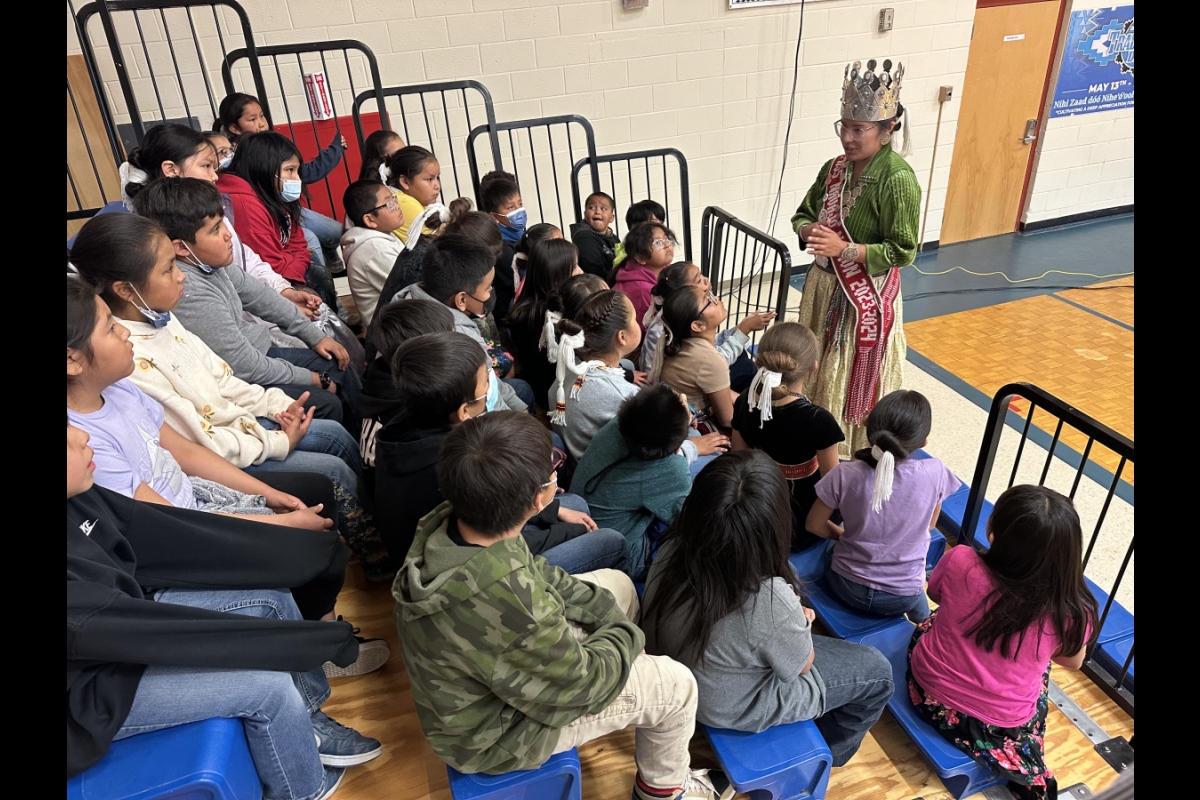
Amy N. Begaye speaks to children about STEM subjects at the Miss Navajo Nation STEM-sation event in April.
Photo courtesy of Amy N. Begaye
-
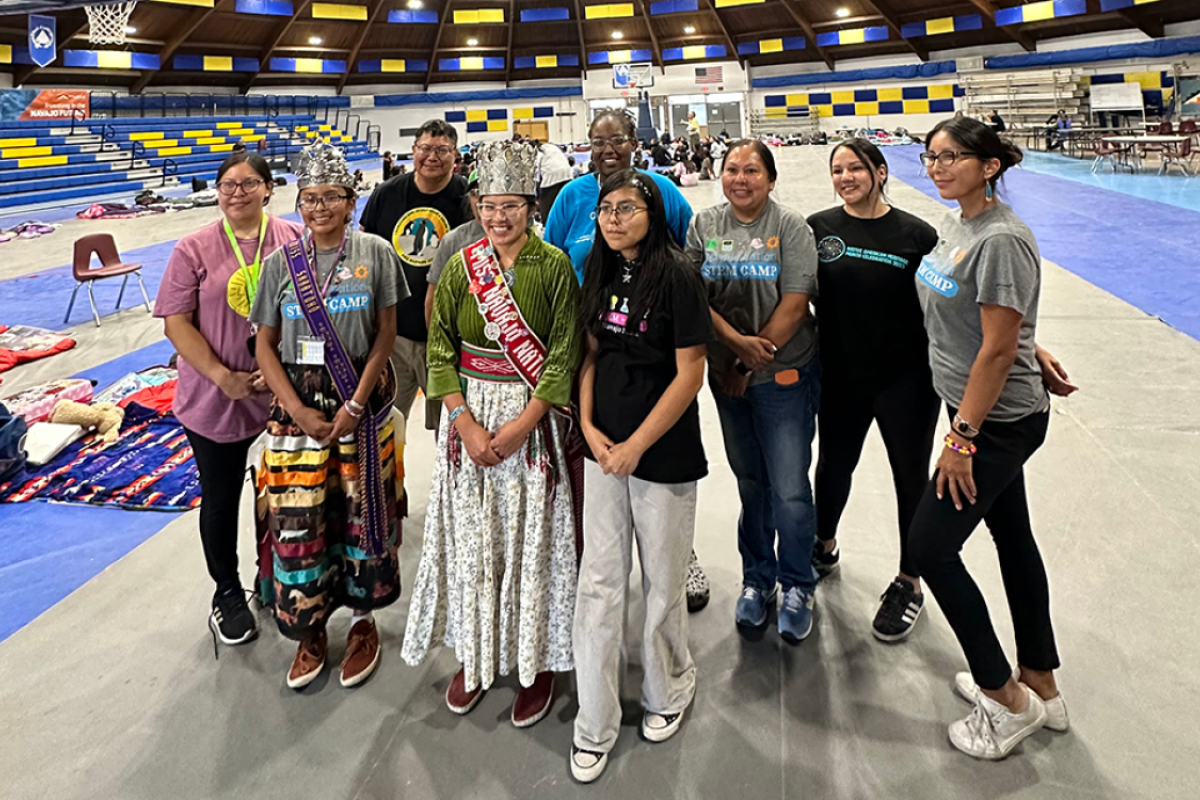
During her one-year term as Miss Navajo Nation, Begaye represented the community at a number of events.
Photo courtesy of Amy N. Begaye
-

Begaye stands with peers.
Photo courtesy of Amy N. Begaye
-
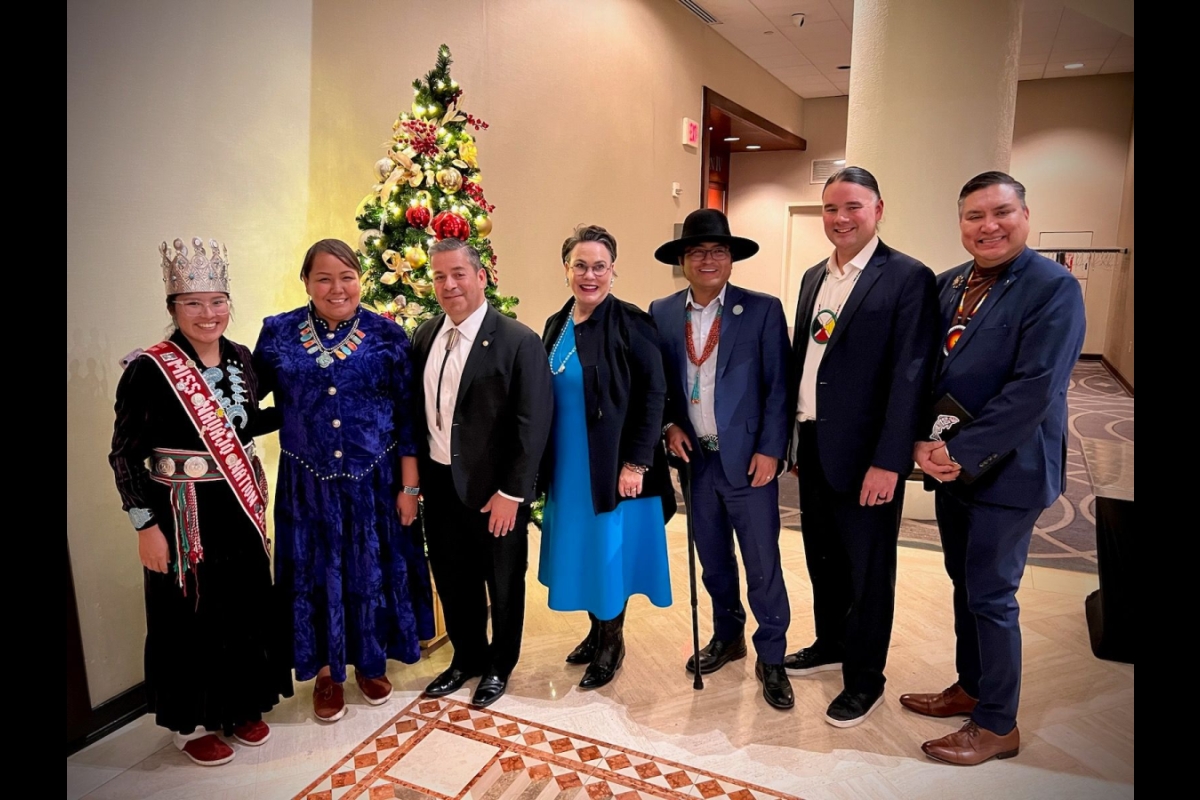
Begaye (left) poses for a photo with Navajo Nation President Buu Nygren (wearing a hat) and other delegates.
Photo courtesy of Amy N. Begaye
-
Amy N. Begaye speaks to children about STEM subjects at the Miss Navajo Nation STEM-sation event in April.
Photo courtesy of Amy N. Begaye
-
During her one-year term as Miss Navajo Nation, Begaye represented the community at a number of events.
Photo courtesy of Amy N. Begaye
-
Begaye stands with peers.
Photo courtesy of Amy N. Begaye
-
Begaye (left) poses for a photo with Navajo Nation President Buu Nygren (wearing a hat) and other delegates.
Photo courtesy of Amy N. Begaye
-
Amy N. Begaye speaks to children about STEM subjects at the Miss Navajo Nation STEM-sation event in April.
Photo courtesy of Amy N. Begaye
-
During her one-year term as Miss Navajo Nation, Begaye represented the community at a number of events.
Photo courtesy of Amy N. Begaye
-
Begaye stands with peers.
Photo courtesy of Amy N. Begaye
-
Begaye (left) poses for a photo with Navajo Nation President Buu Nygren (wearing a hat) and other delegates.
Photo courtesy of Amy N. Begaye
This also became why Begaye was determined to promote STEM (science, technology, engineering and mathematics) in her home community.
During her tenure as Miss Navajo Nation, Begaye helped raise awareness of STEM subjects at schools on and near the Navajo Nation, advocated for Native American representation in higher education, and promoted health and wellness in the Navajo Nation. She is proud to say she accomplished the goals she set out for her term.
In April, she hosted the Miss Navajo Nation STEM-sation event at Monument Valley High School in Kayenta, Arizona. Over 500 students participated in the event, which used science experiments, groundwater models and virtual reality to introduce students to different STEM-related careers.
“I wanted to show our youth that there's more to life than just the reservation, that they can dream big and that anything is possible for them,” she said. “To be able to produce those types of STEM programs, it was really nice to see.”
Begaye's grandfather didn’t have the same opportunities to pursue education. Throughout his life, he encouraged Begaye and others in the family to pursue education.
“He always used to say, ‘The only way that we're going to get better is if you get educated, and you go make a difference in your community,’” Begaye said.
More Health and medicine

Bird flu: Your questions on symptoms, spread and safety answered
Bird flu is no longer only “for the birds.”Infections have expanded beyond wild birds and poultry to a range of animals — from mice to mountain lions, dairy cows to domestic cats, and polar bears to…

Making medicine side-effect free
Many drugs that address medical conditions can come with serious side effects. In drug commercials, the litany of potential side effects is often longer than the benefits being touted. Carl…

Diagnostic research happening at ASU focused on detecting diseases earlier to save lives
It was one of America’s founding fathers, Benjamin Franklin, who may have foreshadowed today’s health care innovation when he quipped the adage: An ounce of prevention is worth a pound of cure.In…