

ASU historian contributes to key legal move in ballot eligibility case
Image courtesy Pixabay
An amicus brief filed with the Supreme Court of the United States by 25 historians this past week has emerged as a focal point of media attention. The document is a direct response to the unfolding legal drama surrounding the removal of former President Donald Trump from the Republican presidential primary ballot in Colorado by that state’s supreme court. It aims to assist the high court’s deliberations by offering historical context within which to interpret Section 3 of the 14th Amendment of the U.S. Constitution.
Arizona State University Foundation Professor Brooks Simpson is among the group of prominent U.S. historians who have collectively lent their expertise to the document. Simpson, a member of ASU's College of Integrative Sciences and Arts faculty, and his colleagues bring a wealth of knowledge on topics such as the Civil War, the Reconstruction era, and American political and constitutional history.
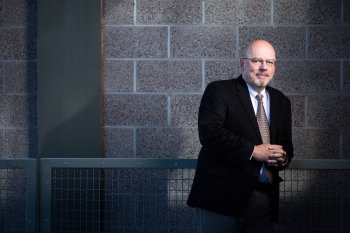
"As historians, our duty is to illuminate the past to guide the present,” Simpson said. “In contributing to the amicus brief, we aim to provide a comprehensive historical context to aid the court's understanding of Section 3 of the 14th Amendment by highlighting the original intent of the framers of that amendment.”
Drawing on historical evidence from congressional debates, contemporary information and precedents related to historical figures and the use of the disqualification clause, Simpson and his colleagues argue that Section 3 of the 14th Amendment covers the office of the president and that its implementation does not require additional acts of Congress. The clause bars individuals who have taken an oath to support the Constitution from holding public office if they have "engaged in insurrection or rebellion" against the United States government.
Watch
ASU Foundation Professor Brooks Simpson discusses the historical context of a pivotal amicus brief related to ballot eligibilty on Arizona PBS' "Horizon."
The Colorado Supreme Court’s ruling to remove Trump from the ballot in Colorado and disqualify him from running for president in the state is rooted in the aftermath of the 2020 presidential election. Colorado officials, citing concerns related to the events of Jan. 6, 2021, namely the Capitol insurrection, sought to disqualify individuals who were deemed to have played a role in or supported the insurrection from appearing on the state's ballot.
The move has sparked legal debates, leading to the filing of additional amicus briefs by Trump’s political allies who disagree with the Colorado court ruling. Simpson believes that historians have to explore and interpret the historical record dispassionately from a disinterested perspective. Still, he emphasizes that the brief he and his colleagues filed is not just an academic exercise.
“History can be a powerful tool to assist us to achieve justice,” he said. “Our collective expertise was deployed with a commitment to truth and accuracy, ensuring that the court is well-informed as it navigates the complexities of this crucial constitutional matter.”
More Arts, humanities and education

Award-winning playwright shares her scriptwriting process with ASU students
Actions speak louder than words. That’s why award-winning playwright Y York is workshopping her latest play, "Becoming Awesome," with actors at Arizona State University this week. “I want…
Exceeding great expectations in downtown Mesa
Anyone visiting downtown Mesa over the past couple of years has a lot to rave about: The bevy of restaurants, unique local shops, entertainment venues and inviting spaces that beg for attention from…

Upcoming exhibition brings experimental art and more to the West Valley campus
Ask Tra Bouscaren how he got into art and his answer is simple.“Art saved my life when I was 19,” he says. “I was in a dark place and art showed me the way out.”Bouscaren is an …