

ASU, Mayo Clinic celebrate alliance for health care
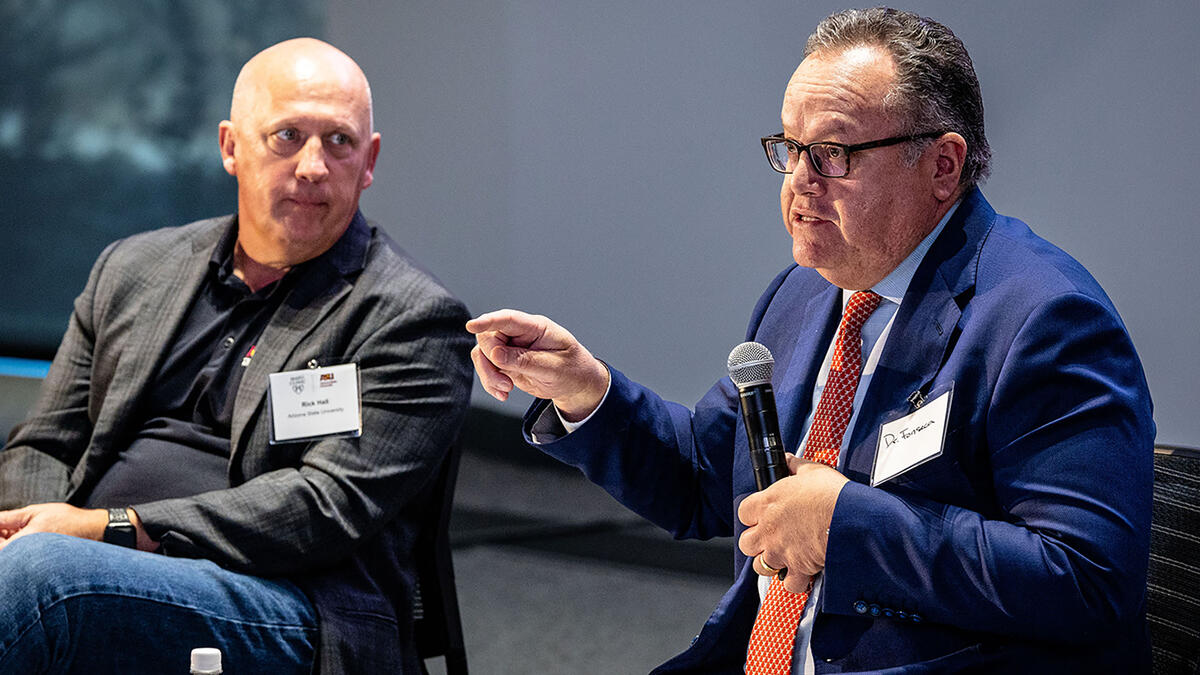
Dr. Rafael Fonseca of Mayo Clinic (right) and Rick Hall, managing partner of the Mayo Clinic and ASU MedTech Accelerator, talk during a symposium celebrating the Mayo Clinic and Arizona State University Alliance for Health Care. Photo by Charlie Leight/ASU News
Nearly 200 people gathered at ASU’s Health Futures Center on Sept. 8 to learn about and celebrate the Mayo Clinic and Arizona State University Alliance for Health Care.
The symposium, Giants Among Us, was a chance to highlight the work of the researchers, entrepreneurs and teams at the Health Futures Center (HFC) as well as inspire future collaborations with the ultimate goal of improving health and health care in Arizona and beyond.
College of Health Solutions (CHS) Affinity Networks leaders Dr. Anita Murcko, Michael Donovan and Hassan Ghasemzadeh developed the concept and structure for the symposium along with Mayo Clinic’s Dr. Rafael Fonseca and ASU Knowledge Enterprise’s Nicole Woodrick and Natalia Diaz.
“It was a win-win-win for ASU, Mayo Clinic and the alliance,” Murcko said. “We all had a little knowledge about the amazing work being done behind the glass doors at HFC, but as faculty and students, it was hard to appreciate the many research giants working and teaching among us.
“The Affinity Network for Biomedical Informatics, Biomedical Diagnostics and Data Science is a CHS faculty service organization dedicated to fostering interdisciplinary research and education in informatics and diagnostics, so creating this program with Mayo Clinic was a natural fit.”
The Health Futures Center, which opened in 2020, was also a natural fit to serve as the setting for the symposium.
“The Health Futures Center is the physical representation of the growing relationship between Mayo Clinic and ASU,” Fonseca said.
-
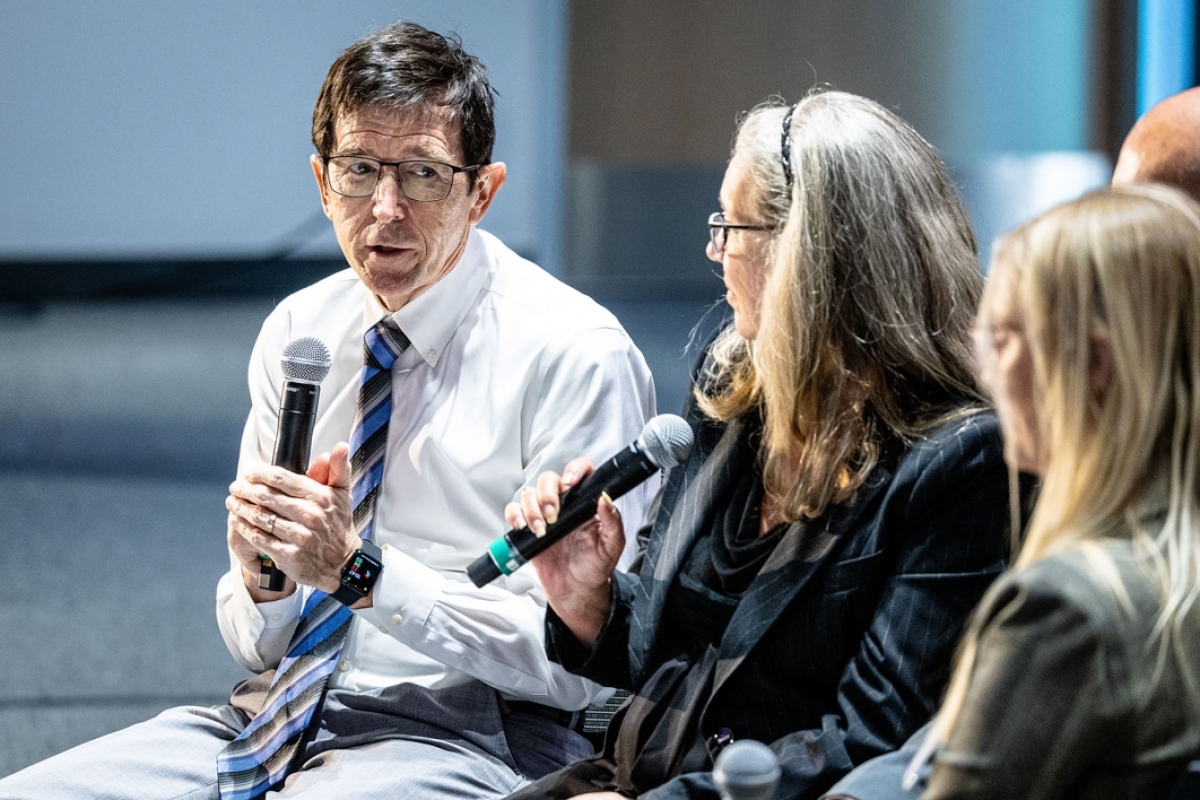
ASU Chief Science and Technology Officer Neal Woodbury (left) speaks during a symposium celebrating the Mayo Clinic and Arizona State University Alliance for Health Care.
Charlie Leight/ASU News
-
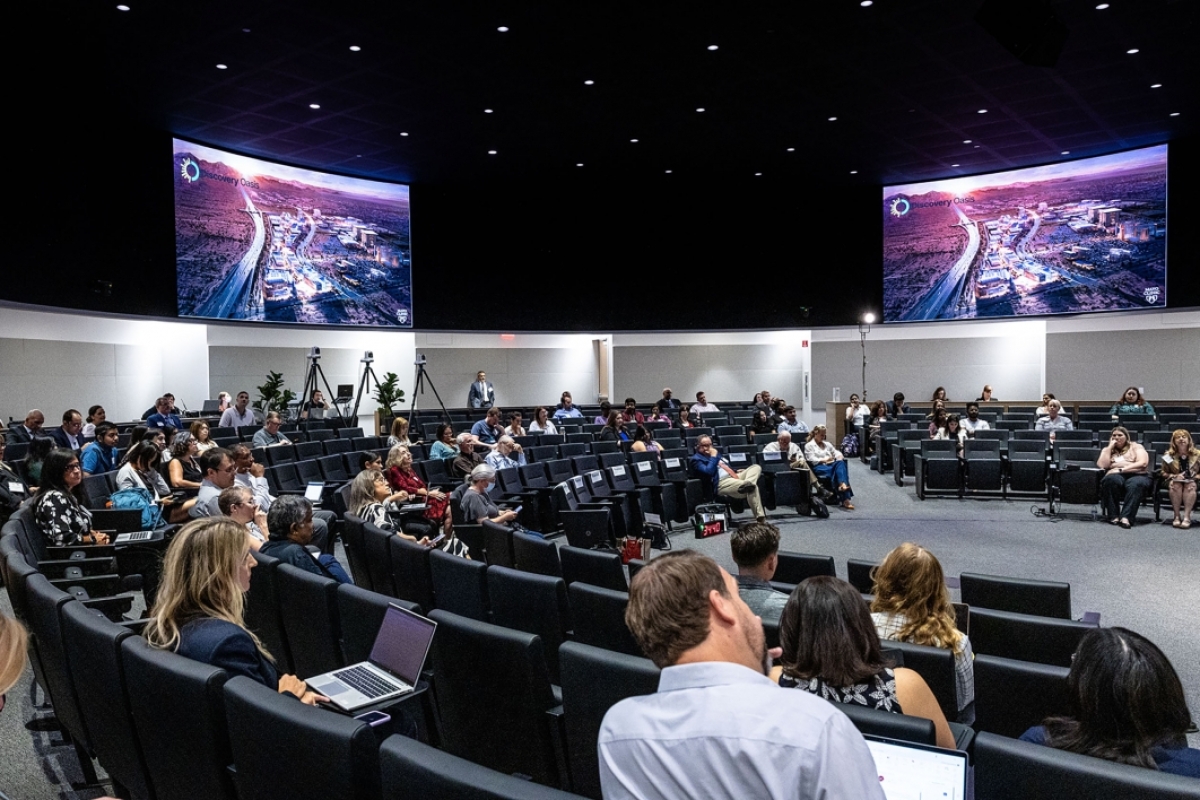
Nearly 200 people attended the Giants Among Us symposium at ASU's Health Futures Center on Sept. 8.
Charlie Leight/ASU News
-
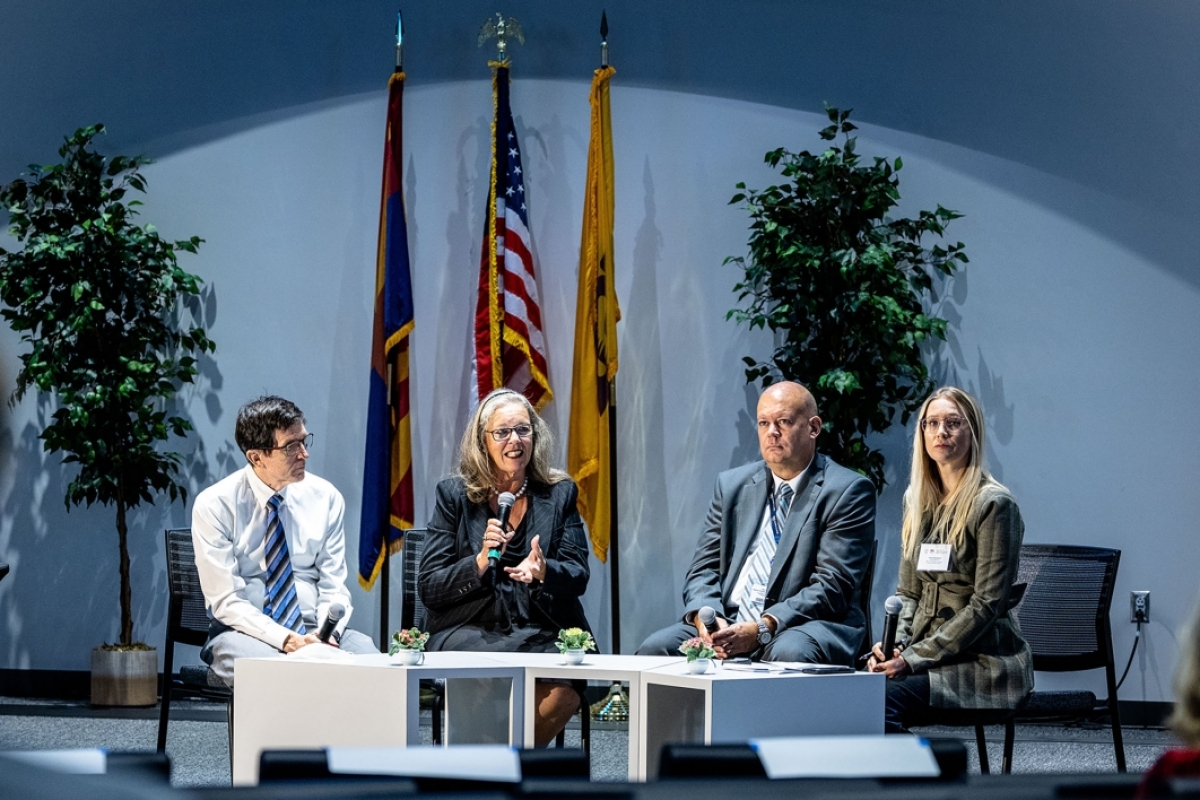
From left: ASU Chief Science and Technology Officer Neal Woodbury, AZBio President and CEO Joan Koerber-Walker, Mayo Clinic Discovery Oasis Executive Director Aric Bopp and ASU Knowlege Enterprise Chief of Staff Nicole Woodrick talk during a symposium celebrating the Mayo Clinic and Arizona State University Alliance for Health Care.
Charlie Leight/ASU News
-
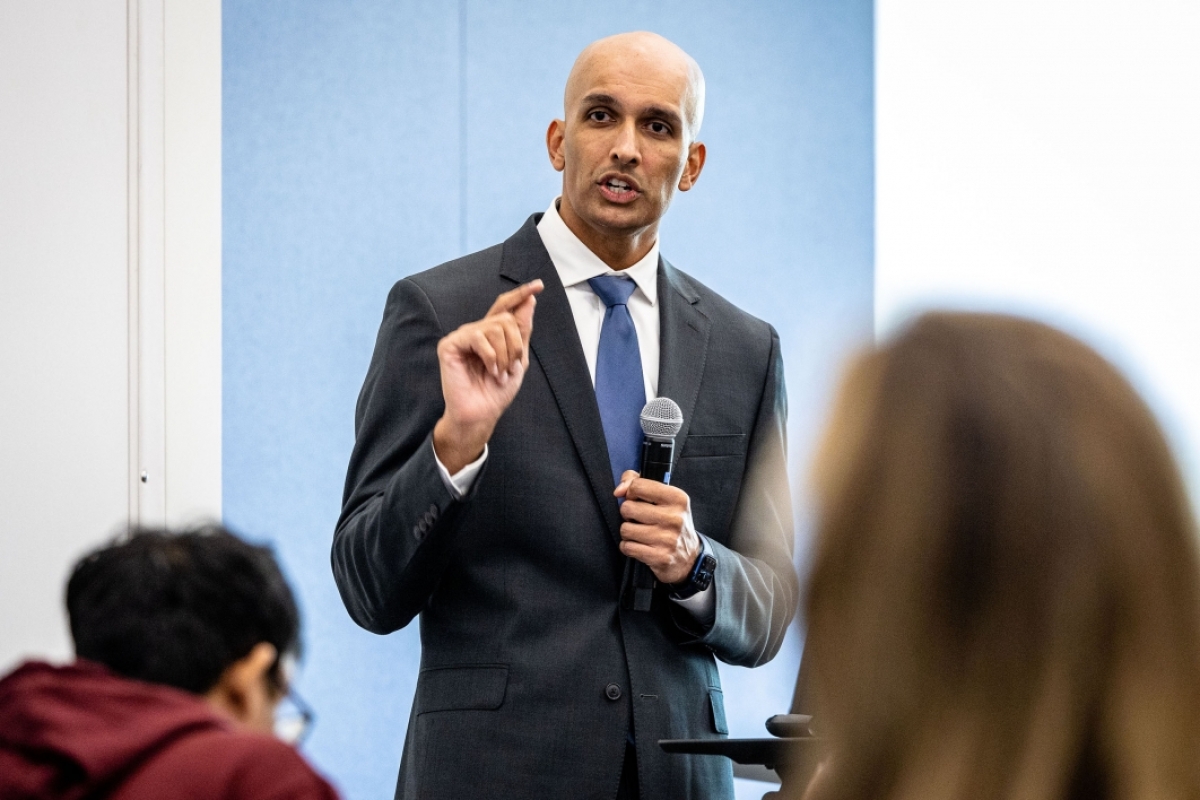
Dr. Bhavik Patel of Mayo Clinic delivers the keynote address, "Artificial Intelligence: The Fourth Industrial Revolution," during a symposium celebrating the Mayo Clinic and Arizona State University Alliance for Health Care.
Photo credit
-
ASU Chief Science and Technology Officer Neal Woodbury (left) speaks during a symposium celebrating the Mayo Clinic and Arizona State University Alliance for Health Care.
Charlie Leight/ASU News
-
Nearly 200 people attended the Giants Among Us symposium at ASU's Health Futures Center on Sept. 8.
Charlie Leight/ASU News
-
From left: ASU Chief Science and Technology Officer Neal Woodbury, AZBio President and CEO Joan Koerber-Walker, Mayo Clinic Discovery Oasis Executive Director Aric Bopp and ASU Knowlege Enterprise Chief of Staff Nicole Woodrick talk during a symposium celebrating the Mayo Clinic and Arizona State University Alliance for Health Care.
Charlie Leight/ASU News
-
Dr. Bhavik Patel of Mayo Clinic delivers the keynote address, "Artificial Intelligence: The Fourth Industrial Revolution," during a symposium celebrating the Mayo Clinic and Arizona State University Alliance for Health Care.
Photo credit
-
ASU Chief Science and Technology Officer Neal Woodbury (left) speaks during a symposium celebrating the Mayo Clinic and Arizona State University Alliance for Health Care.
Charlie Leight/ASU News
-
Nearly 200 people attended the Giants Among Us symposium at ASU's Health Futures Center on Sept. 8.
Charlie Leight/ASU News
-
From left: ASU Chief Science and Technology Officer Neal Woodbury, AZBio President and CEO Joan Koerber-Walker, Mayo Clinic Discovery Oasis Executive Director Aric Bopp and ASU Knowlege Enterprise Chief of Staff Nicole Woodrick talk during a symposium celebrating the Mayo Clinic and Arizona State University Alliance for Health Care.
Charlie Leight/ASU News
-
Dr. Bhavik Patel of Mayo Clinic delivers the keynote address, "Artificial Intelligence: The Fourth Industrial Revolution," during a symposium celebrating the Mayo Clinic and Arizona State University Alliance for Health Care.
Photo credit
Why the symposium was a success
Giants Among Us featured a keynote address, “Artificial Intelligence: The Fourth Industrial Revolution,” by Mayo Clinic’s Dr. Bhavik Patel. Patel leads a multidisciplinary team of clinicians, data specialists and computer science engineers exploring AI models to assist health care providers in decision-making.
Another highlight of the event was “lightning rounds” in which the principal investigators of 10 of Health Futures Center’s 25 resident labs and ventures gave brief presentations introducing their work and teams.
Biomedical informatics master's student Brittany Phelps said the lightning rounds were her favorite part of the day.
“Learning more about who shares the campus with us and what they’re working on was fascinating,” Phelps said. “The entire day could have been spent on that topic alone. Besides the value of knowing the expertise of the people around us, the stories of how some of the labs came to be were especially valuable. That process can be opaque, so learning how some researchers came to establish their individual labs was not only edifying, but humanizing.”
The stated goal of the symposium was to create opportunities for forging new partnerships and collaborations that will ultimately improve health and health care through innovation.
With nearly 200 participants attending the event in person and more tuning in via Zoom, it proved to be a fertile ground for the seeds of cooperation to take root.
“Attendees reported that our goal of new and richer collaborations between clinicians, scientists, faculty, entrepreneurs and students started that day,” Murcko said, “and Dr. Fonseca, Mayo Clinic’s alliance lead, has invited us to partner again for a Giants event next year!”
More Science and technology

ASU technical innovation enables more reliable and less expensive electricity
Growing demand for electricity is pushing the energy sector to innovate faster and deploy more resources to keep the lights on…

What do a spacecraft, a skeleton and an asteroid have in common? This ASU professor
NASA’s Lucy spacecraft will probe an asteroid as it flys by it on Sunday — one with a connection to the mission name.The asteroid…

Hack like you 'meme' it
What do pepperoni pizza, cat memes and an online dojo have in common?It turns out, these are all essential elements of a great…