

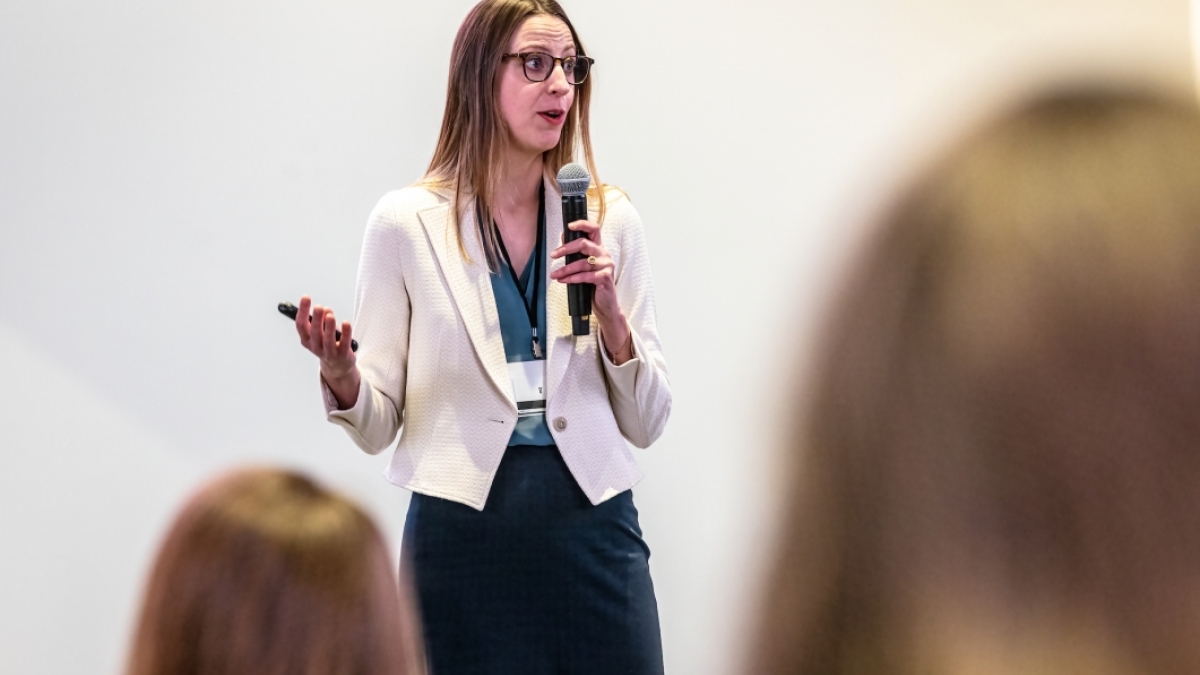
A “Shark Tank” style pitch event Thursday hosted by Arizona State University and Mayo Clinic gave a look into the future of medicine.
Eight companies from around the world gave five-minute pitches on products, platforms, devices and software that address gaps in health care to a panel of industry executives.
The winner was a company called Medecipher Solutions, which offers software for health care providers. Misallocating resources can burn out staff and reduce the quality of care for patients. The software optimizes staffing using predictive analytics and forecasts capacity and eliminates patient flow bottlenecks.
“Our software is really about planning the care team, putting in place care models that best predict the patient’s actual needs and aligns the available human capital resources of an organization to best serve the needs of that population,” CEO Stephanie Gravenor said.
Gravenor will be a panelist at a Phoenix Business Journal MedTech Accelerator event on May 18. Her company will also be featured in related articles by the outlet.
“It’s great,” Gravenor said of her win. “It’s such an honor. These companies are amazing, all coming from all across the world here to work and collaborate with Mayo Clinic and ASU in terms of innovation. To be among them has been an honor.”
Among the other products pitched were devices that detect, measure and monitor neurological disorders like cranial hemorrhaging and strokes in real time.
The devices, manufactured by a company named Sense Neuro Diagnostics, eliminate the guesswork involved in triaging the severity of a stroke, which can cost valuable time. The typical patient loses 1.9 million neurons every minute a stroke is left untreated. The company produces a brain monitor, an emergency room EMS field device and a similar device made for the military. Sense Neuro Diagnositcs won the audience voters’ prize.
-
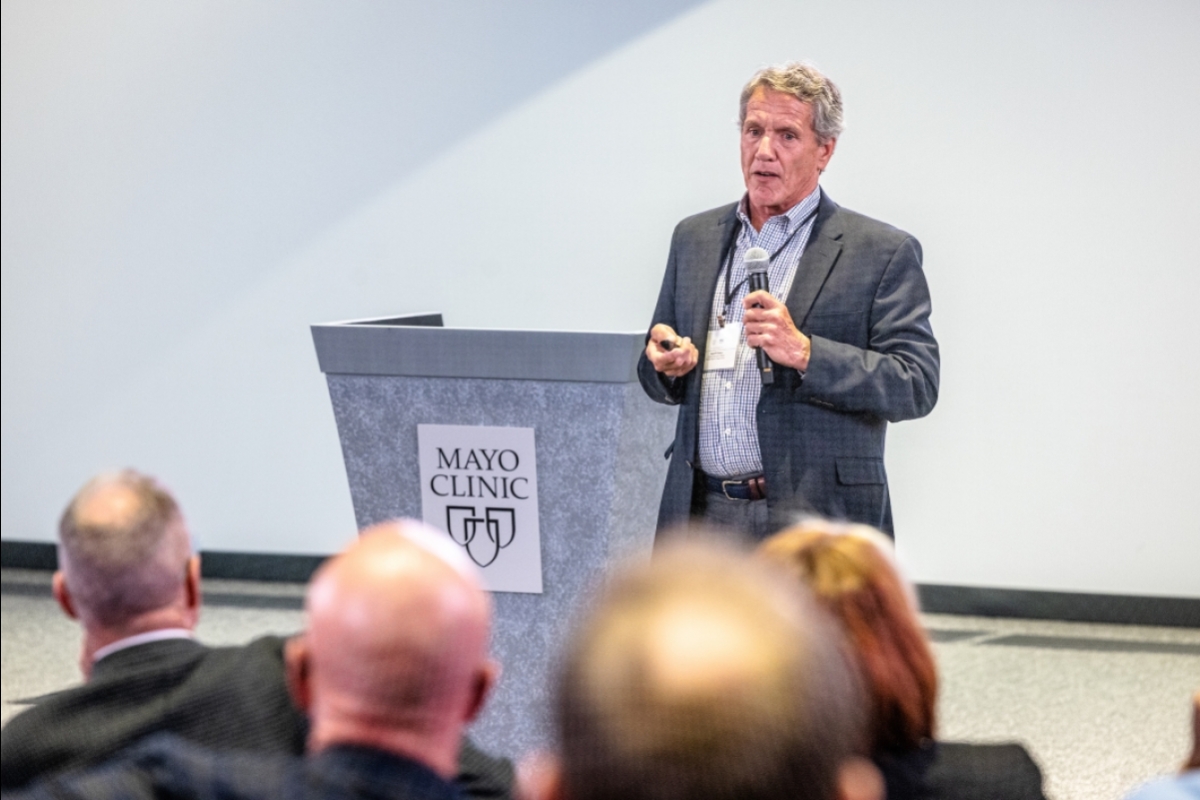
Geoff Klass with Sense Neuro Diagnositcs talks about his company's cap used to detect damage from brain trauma at the spring 2022 Mayo Clinic and ASU MedTech Accelerator Pitch Competition. Sense Neuro Diagnositcs won the audience voters’ prize and will receive legal services from Spencer Fane LLP.
Photo by Charlie Leight/ASU News
-
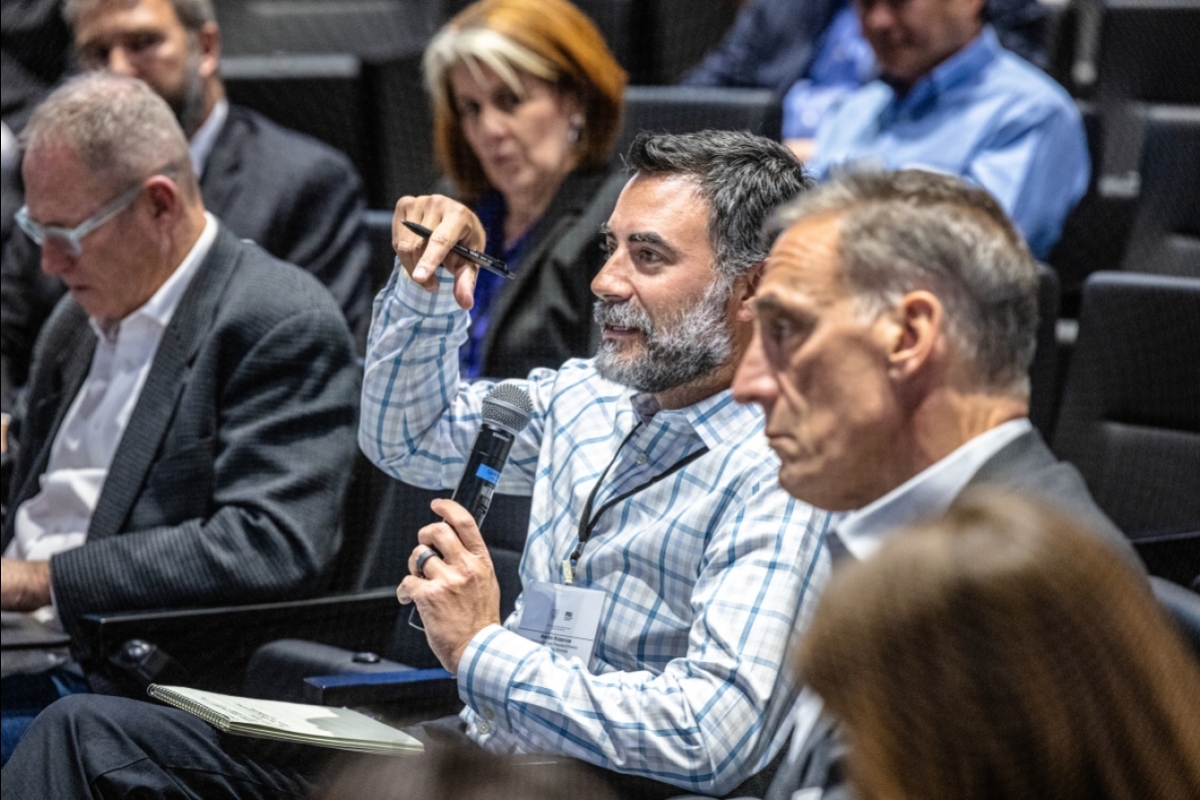
Judge Aaron Krasnow, the associate vice president of ASU Health Services and ASU Counseling Services, poses a question to one of the presenters at the MedTech pitch event. Eight teams from more than 250 applicants made their five-minute elevator pitches to promote their medical products, platforms, software and devices.
Photo by Charlie Leight/ASU News
-

Stephanie Gravenor with Medecipher Solutions reacts as her company is announced as the judges' top pitch at the spring 2022 Mayo Clinic and ASU MedTech Accelerator Pitch Competition at the Health Futures Center in north Phoenix on Thursday.
Photo by Charlie Leight/ASU News
-
Geoff Klass with Sense Neuro Diagnositcs talks about his company's cap used to detect damage from brain trauma at the spring 2022 Mayo Clinic and ASU MedTech Accelerator Pitch Competition. Sense Neuro Diagnositcs won the audience voters’ prize and will receive legal services from Spencer Fane LLP.
Photo by Charlie Leight/ASU News
-
Judge Aaron Krasnow, the associate vice president of ASU Health Services and ASU Counseling Services, poses a question to one of the presenters at the MedTech pitch event. Eight teams from more than 250 applicants made their five-minute elevator pitches to promote their medical products, platforms, software and devices.
Photo by Charlie Leight/ASU News
-
Stephanie Gravenor with Medecipher Solutions reacts as her company is announced as the judges' top pitch at the spring 2022 Mayo Clinic and ASU MedTech Accelerator Pitch Competition at the Health Futures Center in north Phoenix on Thursday.
Photo by Charlie Leight/ASU News
-
Geoff Klass with Sense Neuro Diagnositcs talks about his company's cap used to detect damage from brain trauma at the spring 2022 Mayo Clinic and ASU MedTech Accelerator Pitch Competition. Sense Neuro Diagnositcs won the audience voters’ prize and will receive legal services from Spencer Fane LLP.
Photo by Charlie Leight/ASU News
-
Judge Aaron Krasnow, the associate vice president of ASU Health Services and ASU Counseling Services, poses a question to one of the presenters at the MedTech pitch event. Eight teams from more than 250 applicants made their five-minute elevator pitches to promote their medical products, platforms, software and devices.
Photo by Charlie Leight/ASU News
-
Stephanie Gravenor with Medecipher Solutions reacts as her company is announced as the judges' top pitch at the spring 2022 Mayo Clinic and ASU MedTech Accelerator Pitch Competition at the Health Futures Center in north Phoenix on Thursday.
Photo by Charlie Leight/ASU News
This was the event’s third year. MedTech Accelerator cohort companies optimize their offerings, license intellectual property, engage in idea mentoring and develop funding strategies by working with distinguished physicians, researchers and entrepreneurs.
Mayo Clinic and Arizona State University Alliance for Health Care is a collaboration between Mayo Clinic, the recognized world leader in patient care, education and research, and ASU, the nation’s No. 1 ranked university for innovation. Its mission is to improve the science of health care delivery and practice while advancing patient care.
Top photo: Stephanie Gravenor pitches Medecipher Solutions's predictive nurse staffing software Thursday at the Health Futures Center in north Phoenix. Medecipher took the judges’ top honor and will be a panelist for a Phoenix Business Journal MedTech Accelerator event on May 18, and her company will be featured in related articles by the outlet. Photo by Charlie Leight/ASU News
More Science and technology

ASU-led space telescope is ready to fly
The Star Planet Activity Research CubeSat, or SPARCS, a small space telescope that will monitor the flares and sunspot activity of low-mass stars, has now passed its pre-shipment review by NASA.…

ASU at the heart of the state's revitalized microelectronics industry
A stronger local economy, more reliable technology, and a future where our computers and devices do the impossible: that’s the transformation ASU is driving through its microelectronics research…

Breakthrough copper alloy achieves unprecedented high-temperature performance
A team of researchers from Arizona State University, the U.S. Army Research Laboratory, Lehigh University and Louisiana State University has developed a groundbreaking high-temperature copper alloy…