

ASU professor, students bring new perspective to Lerman production
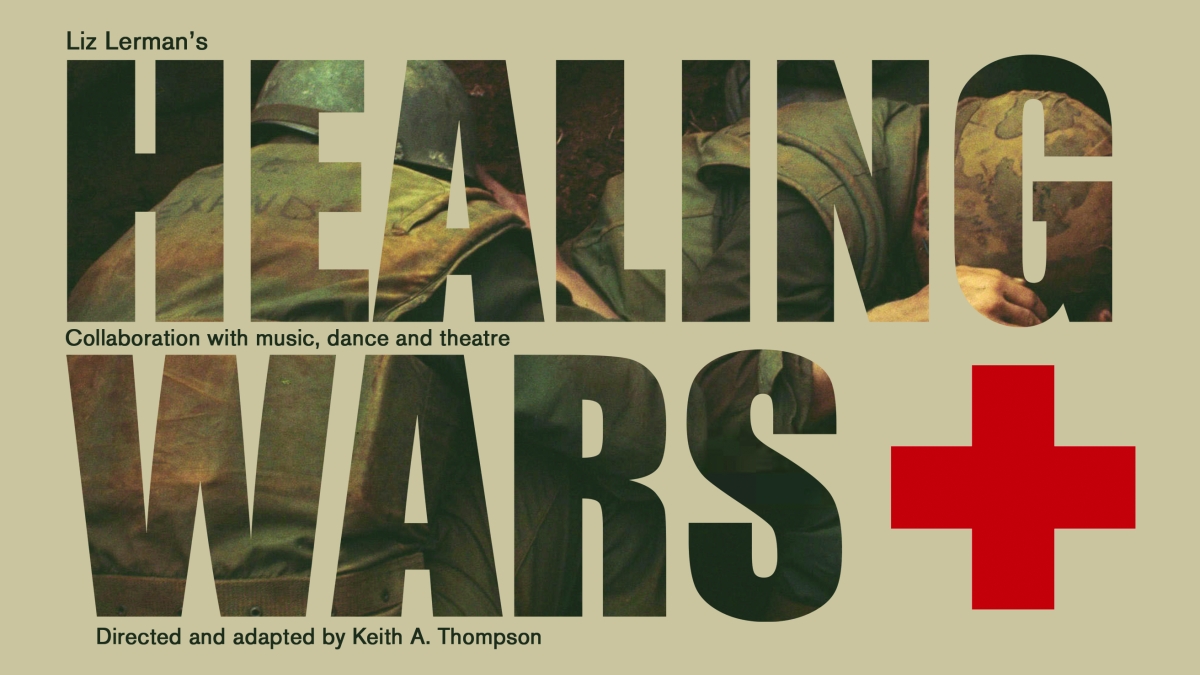
Liz Lerman's "Healing Wars" runs Nov. 5-14 in the Galvin Playhouse Theatre. Image by Brunella Provvidente
Keith Thompson, associate professor and assistant director of dance at Arizona State University, will direct “Healing Wars” this November.
"Healing Wars" was originally created by Liz Lerman, legendary dancer and Herberger Institute Professor, to honor the 150th anniversary of the Civil War. Thompson has been working together with Lerman for more than a decade. Lerman said the inspiration for “Healing Wars” grew out of a moment while visiting the Ford’s Theatre Museum in Washington, D.C. She started wondering about the women during the Civil War and what they experienced.
“Sometimes you just have these flashes and they last,” Lerman said.
Lerman’s research prompted her to investigate the impact of war on medicine, leading to her loosely woven, movement-based narrative of the trauma experienced by men and women during both the Civil War and modern war. Many of the characters remain unnamed, except for the role of Clara Barton, nurse and founder of the American Red Cross. All the characters are based on real people; the spirit character is based on the nuns who spent days on the battlefield of Gettysburg helping people pass over.
“Audiences should be prepared that it’s an emotional rollercoaster,” Thompson said.
In the original production — what Lerman calls the “first phase” — actor Bill Pullman and his wife, Tamara, originated the roles. It toured across America, from Arena Stage in Washington, D.C., to the La Jolla Playhouse in California.
Tim Smith of the Baltimore Sun said of the original production, “Lerman takes the audience to places few of us are comfortable being, a place where injury or death is ever-present, but she makes the journey feel necessary, vital and, in some strange way, uplifting.”
Thompson was a dancer and co-choreographer in the first phase of the work, making him uniquely able to bring this work to life again — this time featuring students.
“Having this production student-based is an incredible opportunity for young people who don’t have a connection to war and trauma to learn about it,” Thompson said.
Lerman said she is comfortable with the ways that Thompson is making changes to the work. The original production cast eight performers playing multiple roles. Thompson has expanded the production to 18 students playing all of the roles, mentored by faculty. He has also added singing to the production.
Lerman said that each of her works tells a story, but this one has an actual script, making it perfect for a collaboration within ASU’s newly formed School of Music, Dance and Theatre.
“This production can bring all three areas together,” Thompson said.
New faculty member Arnel Sancianco will be doing the scenic design for “Healing Wars.” The production starts with a preamble 30 minutes prior to the show where the audience walks through an immersive experience en route to their seats. Thompson recommends ticket holders arrive 45 minutes early to have the full experience, but audience members may opt out and can go directly to their seats.
“Audiences crave both intimacy and spectacle,” said Thompson, “and ‘Healing Wars’ really does provide both.”
“Healing Wars” opens Nov. 5 and runs through Nov. 14. Tickets must be purchased in advance through the Herberger Institute box office. Because the production focuses on death and war, audiences should be warned that there are loud sounds and explosions, as well as depictions of violence and suicide. Audiences can learn more about this production here.
More Arts, humanities and education

ASU professor's project helps students learn complex topics
One of Arizona State University’s top professors is using her signature research project to improve how college students learn…

Award-winning playwright shares her scriptwriting process with ASU students
Actions speak louder than words. That’s why award-winning playwright Y York is workshopping her latest play, "Becoming…

Exceeding great expectations in downtown Mesa
Anyone visiting downtown Mesa over the past couple of years has a lot to rave about: The bevy of restaurants, unique local shops…