

ASU alum uses online degree to prevent genocide in our modern world

The Center for Genocide Research and Education logo.
Pursuing a graduate degree can be daunting to many in today’s world. Between finding the funds, time and energy, the dream of continued education can seem far out of reach. That’s why people like Marcus Steiner take advantage of the degree programs available through ASU Online.
“I had a 6-month-old, a full-time job and a wife in school as well,” said Steiner, who graduated with a MA degree in history from the School of Historical, Philosophical and Religious Studies in May. “I wanted the flexibility that came along with an online program to make sure I could keep up with work, family and school.”
The stigma surrounding online classes and course work stems from people perceiving the classes to be less challenging and engaging compared to their in-person counterparts. A survey in 2013 found 42 percent of employers thought students learned less in online classes and 39 percent thought they were easier to pass. In the same survey, 56 percent of employers also said they prefer employees to have a degree from an average-rated traditional school over an online degree from a top-rated school.
However, institutions like ASU are changing the way we look at online schooling.
“My time with (the school) was some of the most challenging for me academically,” said Steiner. “There was never a time when I did not feel challenged by the content and by the discussions with my professors and peers. I found the experience as a whole to be a fantastic opportunity to push my academic limits and to expand what I knew about history as a discipline.
In fact, Steiner’s very first class as a master’s student changed his career trajectory. He signed up for the “Using Geographic Information Systems in Historical Contexts” class, where he learned valuable research skills and discipline.
“This subset of digital history has flourished in recent decades and its enhancement of historical geography, environmental history, public history, political history and a range of other fields has been called ‘the spatial turn’ in the humanities,” said Joshua MacFadyen, the former professor of the course. “We discuss material from multiple disciplines and regions and we work with several large geospatial datasets produced recently by Canadian and U.S. agencies.”
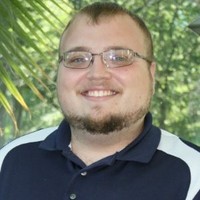
Marcus Steiner
Steiner now works for the Center for Genocide Research and Education as the development director. He was connected with the center during a residency program for his doctoral studies when the executive director became interested in his work with geographic information systems and wanted to discuss how it could be incorporated into genocide studies.
In his position, he is responsible for fundraising, working with the education director to develop a comprehensive curriculum for teaching genocide in public schools and conducting research into specific genocides, among other duties.
“The most rewarding part of my career with (the center) is giving a voice to the victims of genocide,” Steiner said. “Those who are victimized often come from groups that are consistently oppressed and ignored. While we are still new, we are beginning the process of bringing out the stories of genocide victims and getting them in front of the public.”
Christi Yoder, executive director of the Center for Genocide Research and Education, thinks Steiner’s schooling has helped him to actively and skillfully evaluate risk factors for genocide using geographic information systems. His knowledge reaches from the ancient world to the present and gives him unique insight into the problems the CGRE is working on.
“I believe it is important to study humanities so that we realize we are part of a global society,” Yoder said. “We need to learn to think critically about human rights and learn to have respect for those that are different from us. History shows what can happen when we start down the road to ‘othering’ those different from us. In addition, I believe studying the humanities enables us to learn to think critically about the information we hear and see every day. This ultimately makes for better citizens.”
Although the center is an education and research-focused nonprofit, the ultimate goal of the organization is to prevent genocide around the world.
“We are very focused on genocide education as a means to prevent genocide,” Steiner said. “As such, we are developing curriculums and conducting nonpartisan, independent research focused on bringing the field of genocide studies out from the relatively arcane world of academia and to the public.”
Steiner had never considered studying geographic information systems or any other type of quantitative analysis before he came to study at ASU. He encourages current students to step out of their comfort zones as well and to try their hands at something new.
“Some of my best experiences at ASU came from taking classes outside of my research specialties,” Steiner said. “I took Dr. MacFadyen's class because I knew I was going to learn something I had never learned before. Never be satisfied with what you know.”
More Arts, humanities and education

ASU professor's project helps students learn complex topics
One of Arizona State University’s top professors is using her signature research project to improve how college students learn…

Award-winning playwright shares her scriptwriting process with ASU students
Actions speak louder than words. That’s why award-winning playwright Y York is workshopping her latest play, "Becoming…

Exceeding great expectations in downtown Mesa
Anyone visiting downtown Mesa over the past couple of years has a lot to rave about: The bevy of restaurants, unique local shops…