

Increasingly aggressive immigration enforcement is troubling, says ASU expert
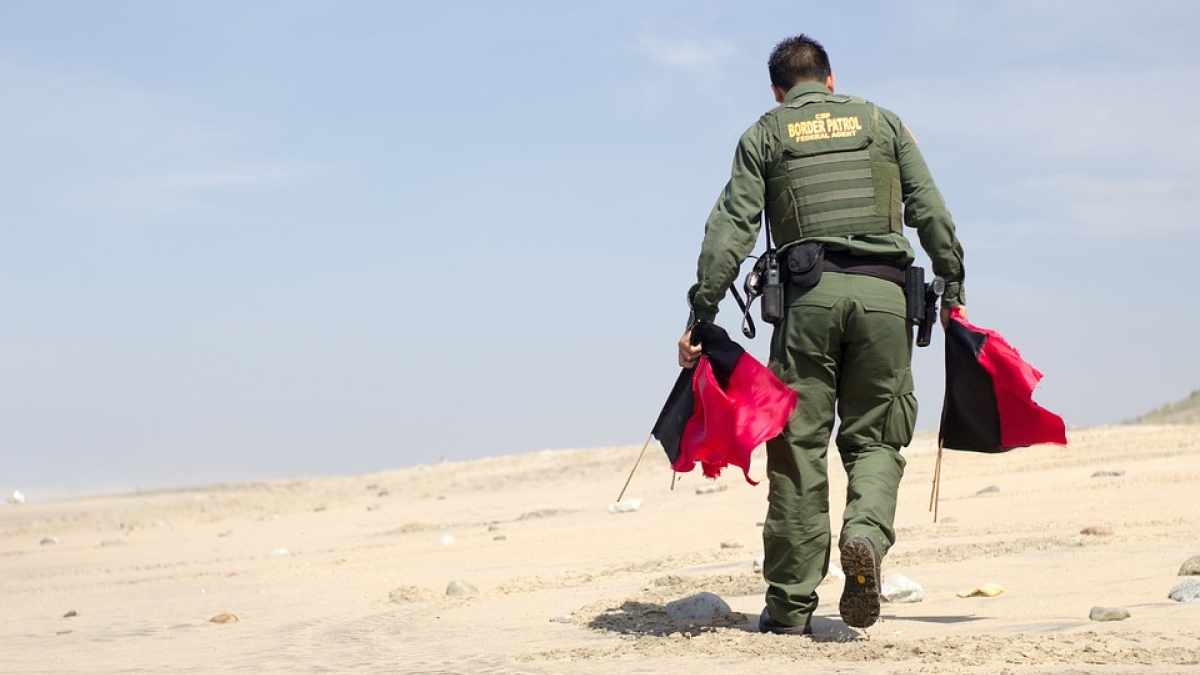
Recent news reports of apprehensions of undocumented immigrants raise fresh questions about the rights and responsibilities of the Department of Homeland Security and U.S. Immigration and Customs Enforcement — and the civil liberties of undocumented people. One high-profile case involved Rosa Maria Hernandez, a 10-year-old girl with cerebral palsy who was on her way in an ambulance for gallbladder surgery when she was stoppedThe family said she was allowed to continue on to the hospital for her surgery but was picked up and detained after she was released from the hospital. by Border Patrol agents in Texas last month.
To better understand the current dynamic, ASU Now reached out to Angela Banks, the Charles J. Merriam Distinguished Professor of Law at the Sandra Day O’Connor College of Law at Arizona State University and an immigration and citizenship expert whose research focuses on membership and belonging in democratic societies.

Angela Banks
Question: In the case of Rosa Maria Hernandez, were border patrol agents acting according to law? And are we seeing a rise in this sort of behavior by federal authorities?
Answer: The detention of Rosa Maria Hernandez after undergoing emergency gallbladder surgery is an example of increased immigration enforcement against individuals who have previously been considered low priorities. The Department of Homeland Security (DHS) has limited resources for identifying, apprehending and deporting noncitizens eligible for deportation.
In the past, DHS policy has stated that resources would be used in ways that prioritized deporting individuals who pose a threat to public safety or national security. Rosa Maria is not a high priority, and using scarce resources to apprehend and detain her is troubling. However, detaining her for unlawful immigration status is not in itself a violation of U.S. law.
Q: Have immigration and deportation policies and actions become more extreme in the past year, or are they just getting heightened attention?
A: Immigration enforcement has become more aggressive in the last nine months, and that reflects this administration’s desire to deport any noncitizen who is deportable. U.S. Immigration and Customs Enforcement (ICE) reports that immigration arrests were almost 40 percent higher during the first 100 days of the Trump administration than the same period in 2016.
Q: Do you worry that the current deportation climate is creating unreasonable amounts of insecurity throughout the immigrant communities?
A: The increased apprehension and deportation of noncitizens who are not threats to public safety or national security is exacerbating insecurity within certain immigrant communities. Research has shown that such insecurity has negative implications not only for unauthorized migrants, but also for United States citizens and noncitizens who are lawfully present. For example, in this environment noncitizens without lawful presence may be afraid to send their U.S. citizen children to school, to report crimes or to serve as witnesses to criminal activity even when the victims are U.S. citizens.
Q: How would you advise individuals in these communities to respond to these policies?
A: First, I would advise individuals to seek out reputable immigration attorneys to review their cases. Many individuals have never consulted with an immigration attorney to determine if there are avenues available to legalize their immigration status. Second, I would say that during these challenging times, utilize trusted community resources to obtain up-to-date and accurate information.
Top photo courtesy of Pixabay
More Law, journalism and politics

Can elections results be counted quickly yet reliably?
Election results that are released as quickly as the public demands but are reliable enough to earn wide acceptance may not always be possible.At least that's what a bipartisan panel of elections…

Spring break trip to Hawaiʻi provides insight into Indigenous law
A group of Arizona State University law students spent a week in Hawaiʻi for spring break. And while they did take in some of the sites, sounds and tastes of the tropical destination, the trip…

LA journalists and officials gather to connect and salute fire coverage
Recognition of Los Angeles-area media coverage of the region’s January wildfires was the primary message as hundreds gathered at ASU California Center Broadway for an annual convening of journalists…