

Standing Rock journalist, filmmaker to speak at ASU indigenous series events

Myron Dewey co-directed the documentary film “Awake: A Dream from Standing Rock,” which chronicles the #NoDAPL peaceful protests on the Standing Rock Sioux Reservation in North Dakota. Dewey's drone footage adds both immediacy and perspective to the film, making him “one of the most closely followed journalists to come out of the movement” (IndieWire). Photo courtesy Myron Dewey.
Myron Dewey (Newe-Numah/Paiute-Shoshone), an award-winning filmmaker, citizen journalist and educator, is the featured speaker in Arizona State University's Simon Ortiz and Labriola Center Lecture on Indigenous Land, Culture, and Community for fall 2017.
With Josh Fox and James Spione, Dewey co-directed the documentary film “Awake: A Dream from Standing Rock,” which chronicles the #NoDAPL peaceful protests on the Standing Rock Sioux Reservation in North Dakota.
ASU will host two screenings of “Awake” — the first on Nov. 13 at Sun Devil Marketplace, 660 South College Avenue in Tempe and the second on Nov. 14 at the Heard Museum, 2301 North Central Avenue in Phoenix. Both events begin with a reception at 6 p.m., followed by the film at 6:45 p.m. Dewey will be present for a Q&A after the screenings, which are free of charge and open to the public.
Dewey is from the Walker River Paiute Tribe, Agui Diccutta Band (Trout Eaters) on his father’s side and Bishop Paiute Tribe on his mother’s side. He holds AA and BS degrees from Haskell Indian Nations University and an MA from the University of Kansas. He is founder and owner of Digital Smoke Signals, a social media and film company, for which he is an expert drone operator, youth media trainer and language preservation app builder.
Committed to what he calls “indigenizing media,” Dewey aims to bridge the digital divide between mainstream and native communities.
Henry Quintero, faculty advisor for Red Ink journal and an assistant professor of English in indigenous literature at ASU, believes Dewey is succeeding at this, primarily because Dewey’s work exists outside traditional confines of space and place. He “has transformed and Indigenized American journalism,” Quintero said.
Premiering at the Tribeca Film Festival in 2017, “Awake” has been called “powerful” by the Hollywood Reporter and “an evocative wake-up call told as a visual poem” by IndieWire. The film does not follow a single protagonist but instead forms a “pastiche” of narrative, mostly indigenous, voices. Dewey’s drone footage adds both immediacy and perspective to the film, making him “one of the most closely followed journalists to come out of the movement” (IndieWire). For Dewey’s efforts, “Awake” won the Special Founders Prize for Citizen Journalism at the 2017 Traverse City Film Festival — a festival founded by legendary documentarian Michael Moore.
“Standing Rock and its opposition to the Dakota Access Pipeline is one of the most significant events that has occurred in recent history in Indian Country,” said James Riding In, associate professor and interim director of American Indian Studies at ASU. “Myron Dewey’s film footage shot mostly from his drones represents an important development in journalism and the coverage of real-time events. His film is a testament to Indigenous resistance to abuses committed against people and the environment.”
The Simon Ortiz and Labriola Center Lecture on Indigenous Land, Culture, and Community at Arizona State University addresses topics and issues across disciplines in the arts, humanities, sciences and politics. Underscoring indigenous American experiences and perspectives, this series seeks to create and celebrate knowledge that evolves from an inclusive indigenous worldview and that is applicable to all walks of life.
ASU sponsors include the American Indian Studies Program, ASU Library, Department of English, Labriola National American Indian Data Center, Office of American Indian Initiatives, and Red Ink Initiative. The Heard Museum is a community partner.
For more information, visit the series website.
-
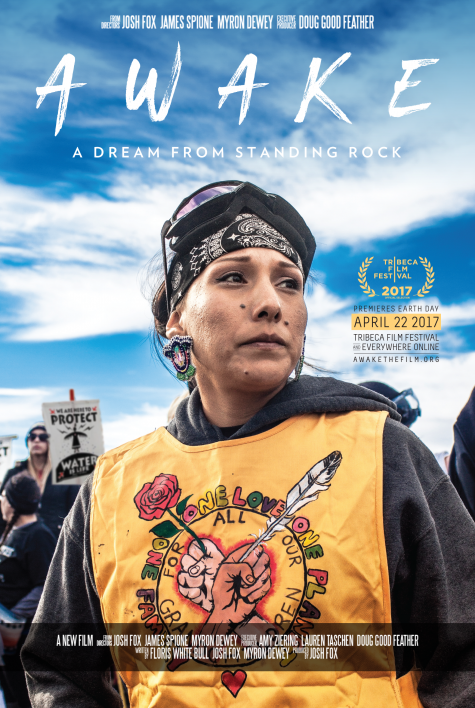
Premiering at the Tribeca Film Festival in 2017, “Awake” has been called “powerful” by the Hollywood Reporter and “an evocative wake-up call told as a visual poem” by IndieWire. The film does not follow a single protagonist but instead forms a “pastiche” of narrative, mostly indigenous, voices.
-
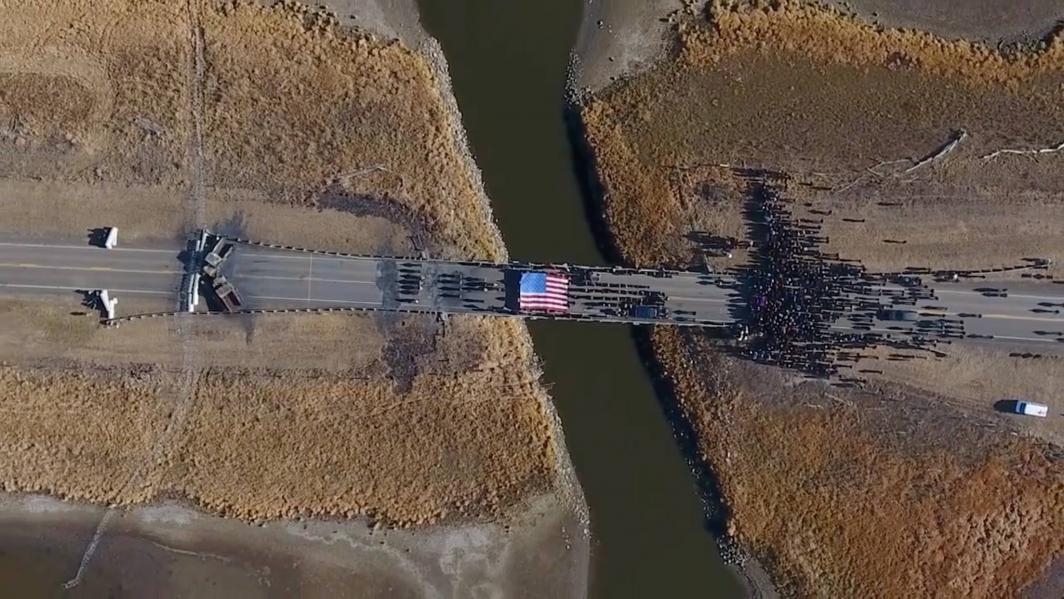
The Backwater Bridge on Highway 1806 over Cantapeda Creek. "Water Protectors" take part a peaceful prayer ceremony in front of a police brigade. Image from the film "Awake: A Dream from Standing Rock." Drone footage captured by Myron Dewey.
-
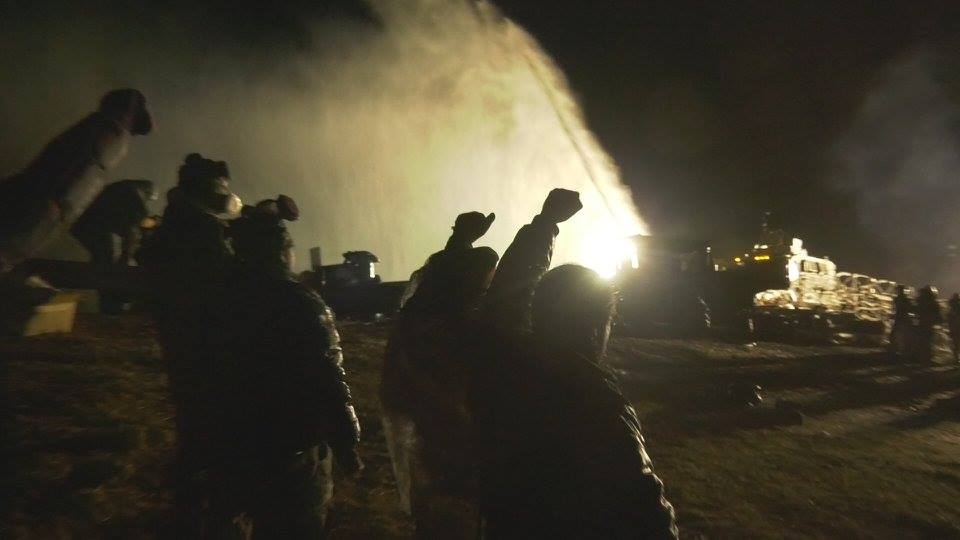
On November 20, 2016, militarized police fired water cannons, tear gas, and concussion grenades at protestors during freezing temperatures. Image from "Awake: A Dream from Standing Rock" captured by James Spione.
-
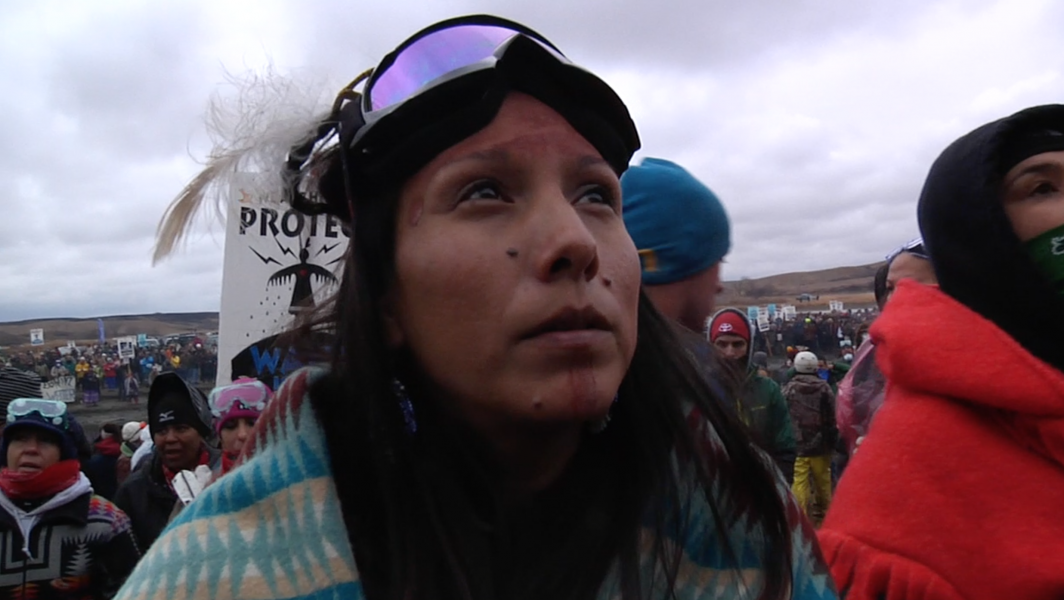
Floris White Bull, a writer of "Awake: A Dream from Standing Rock," at Trutle Island on November 24, 2016. Image from the film captured by Josh Fox.
-
Premiering at the Tribeca Film Festival in 2017, “Awake” has been called “powerful” by the Hollywood Reporter and “an evocative wake-up call told as a visual poem” by IndieWire. The film does not follow a single protagonist but instead forms a “pastiche” of narrative, mostly indigenous, voices.
-
The Backwater Bridge on Highway 1806 over Cantapeda Creek. "Water Protectors" take part a peaceful prayer ceremony in front of a police brigade. Image from the film "Awake: A Dream from Standing Rock." Drone footage captured by Myron Dewey.
-
On November 20, 2016, militarized police fired water cannons, tear gas, and concussion grenades at protestors during freezing temperatures. Image from "Awake: A Dream from Standing Rock" captured by James Spione.
-
Floris White Bull, a writer of "Awake: A Dream from Standing Rock," at Trutle Island on November 24, 2016. Image from the film captured by Josh Fox.
-
Premiering at the Tribeca Film Festival in 2017, “Awake” has been called “powerful” by the Hollywood Reporter and “an evocative wake-up call told as a visual poem” by IndieWire. The film does not follow a single protagonist but instead forms a “pastiche” of narrative, mostly indigenous, voices.
-
The Backwater Bridge on Highway 1806 over Cantapeda Creek. "Water Protectors" take part a peaceful prayer ceremony in front of a police brigade. Image from the film "Awake: A Dream from Standing Rock." Drone footage captured by Myron Dewey.
-
On November 20, 2016, militarized police fired water cannons, tear gas, and concussion grenades at protestors during freezing temperatures. Image from "Awake: A Dream from Standing Rock" captured by James Spione.
-
Floris White Bull, a writer of "Awake: A Dream from Standing Rock," at Trutle Island on November 24, 2016. Image from the film captured by Josh Fox.
More Law, journalism and politics

Can elections results be counted quickly yet reliably?
Election results that are released as quickly as the public demands but are reliable enough to earn wide acceptance may not…

Spring break trip to Hawaiʻi provides insight into Indigenous law
A group of Arizona State University law students spent a week in Hawaiʻi for spring break. And while they did take in some of the…

LA journalists and officials gather to connect and salute fire coverage
Recognition of Los Angeles-area media coverage of the region’s January wildfires was the primary message as hundreds gathered at…