

ASU professor's research on alcoholism, recovery brought to life in new documentary
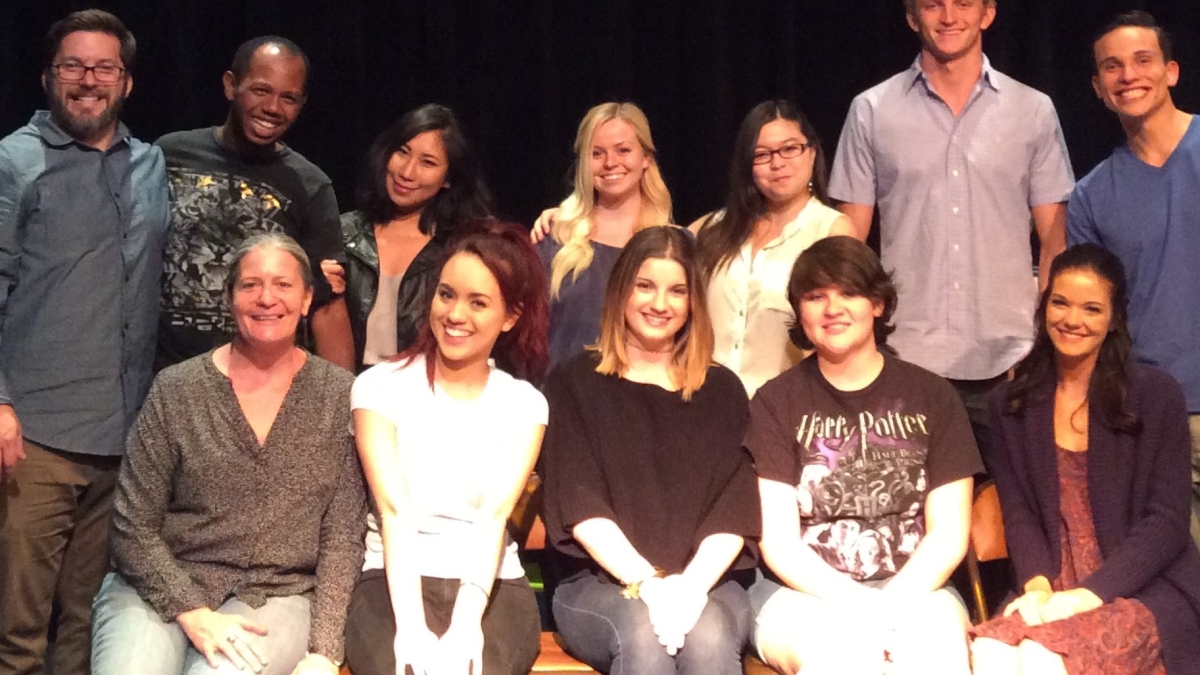
Student performers and faculty at the Hugh Downs School of Human Communication
For the past 30 years, Linda Costigan Lederman, Arizona State University professor of human communication and director of the Hugh Downs School of Human Communication, has been advancing research in the study of communication and alcohol use, abuse and reducing college drinking. Since joining Arizona State University in 2006, her ongoing dedication to the field of communication has earned her myriad honors, appointments and grants from federal and state agencies.
Lederman’s most recent research examines alcoholism and recovery, and is the focus of the documentary “Recovery,” which features stories of undergraduate students who all struggle with the same issue: how to live life without drinking?
The documentary utilizes “trigger scripting” — a performance method developed at ASU that targets specific topics and audiences for the purpose of public dialogue. Students from the Hugh Downs School performed the stories in a setting that resembles an alcohol recovery group.
“That is exactly the way people in Alcoholics Anonymous tell their stories,” Lederman said. “There’s no judgement. They really listen to one another.”
The documentary also features a live audience who sit outside of the student recovery group, watching the performance. The documentary captures how the audience responds from being triggered by the performance.

Linda Costigan Lederman, professor of human communication and director of the Hugh Downs School of Human Communication
“The stigma exists in our culture in what people like me would call a ‘narrative,’” Lederman said. “There is a narrative, or a story we tell, that people who drink too much and get drunk are weak, or they’re bad, or lazy, and if only they cleaned up their act and tried a little harder or just drank less, they’d be fine. That narrative carries a stigma with it, and it is wrong. So what we are doing in this documentary is to help create a counter-narrative, and tell a different story.”
The script was written and directed by Jennifer Linde, senior lecturer in the Hugh Downs School, who drew from Lederman’s extensive research on communication, storytelling and recovery.
“We specifically targeted the college audience for this script,” Linde said. “We wanted the voices and stories of the characters in the script to resonate with that group.”
“Everyone who watches this documentary will interpret it through the lens of their own experiences,” Lederman said. “To those who have struggled with alcohol, or those who have felt that they don’t fit in might identify with the stories. Others who have never had problems with alcohol might experience it as eye-opener, and will learn what it feels like for someone who does have those struggles.”
The documentary was most recently shown on campus at The Empty Space, a venue for performance studies classes, as part of an awareness campaign for National Recovery Month in September.
“I am dedicated to destigmatizing alcoholism and recovery,” Lederman said. “That is my passion, and it is part of my research. So if I can help people come to understand what alcoholism is, and that recovery is a possibility, I recommend they watch this documentary.”
More Health and medicine

College of Health Solutions launches first-of-its-kind diagnostics industry partnership to train the workforce of tomorrow
From 2007 to 2022, cytotechnology certification examinees diminished from 246 to 109 per year. With only 19 programs in the…

ASU's Roybal Center aims to give older adults experiencing cognitive decline more independence
For older people living alone and suffering from cognitive decline, life can be an unsettling and sometimes scary experience.…

Dynamic data duo advances health research
The latest health research promises futuristic treatments, from cancer vaccines to bioengineered organs for transplants…