

Native writer Linda Hogan to speak in ASU indigenous series
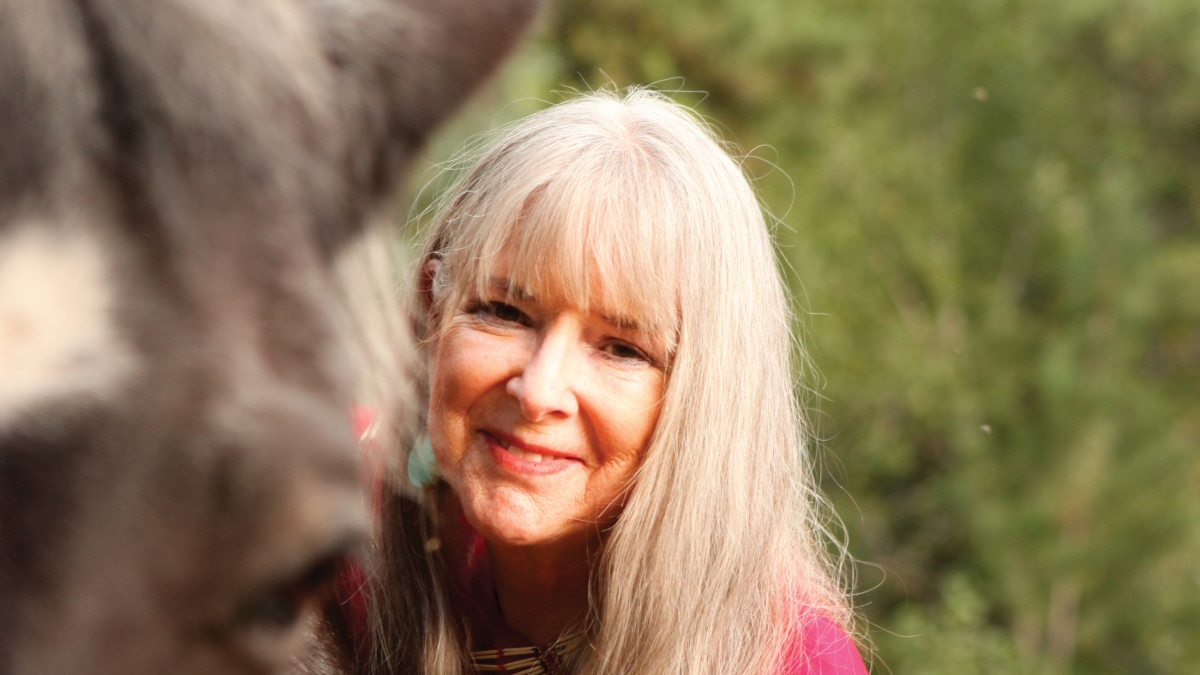
Linda Hogan. Photo by Gabriel Padilla
Linda Hogan (Chickasaw), a prominent poet, novelist, essayist and environmentalist, is the featured speaker in ASU’s Simon Ortiz and Labriola Center Lecture on Indigenous Land, Culture, and Community for spring 2017. Hogan will give a reading and narrative journey through her extensive body of work this Thursday, March 23 at the Heard Museum, 2301 N. Central Avenue in Phoenix. The event is free of charge and open to the public.
Can't make it to the lecture? Meet Linda Hogan on the ASU campus at 10:30 a.m. on March 23 in ASU's Labriola Center.
Hogan is the author of the poetry collections "Calling Myself Home" (1978); "Daughters, I Love You" (1981); "Eclipse" (1983); "Seeing Through the Sun" (1985), which won the American Book Award from the Before Columbus Foundation; "Savings" (1988), "The Book of Medicines," a National Book Critics Circle Award finalist (1993); "Rounding the Human Corners" (2008); "Indios" (2012); and "Dark. Sweet. New and Selected Poems" (2014). According to the Poetry Foundation, Hogan's poetry primarily deals with the environment and eco-feminism, the relocation of Native Americans, and historical narratives, including oral histories.
Her lyrical work is considered to be work of literary activism, and it contains Native spirituality and indigenous knowledge systems in all genres. Her novels include "Mean Spirit" (1990), "Solar Storms" (1995), "Power" (1998), and "People of the Whale" (2008).
Hogan's nonfiction includes a collection of essays on environment, "Dwellings, A Spiritual History of the Land" (1995); and "The Woman Who Watches Over the World: A Native Memoir" (2001). In addition, she has, with Brenda Peterson, written "Sightings, The Gray Whales' Mysterious Journey" (2002) for National Geographic Books, and edited several anthologies on nature and spirituality. She has written the script, "Everything Has a Spirit," a PBS documentary on American Indian religious freedom. In 2007, Hogan was inducted into the Chickasaw Nation Hall of Fame.
She has been awarded a Pushcart Prize, the PEN Thoreau Prize, a National Endowment for the Arts Fellowship, a Guggenheim Fellowship, a Lannan Foundation Fellowship, and lifetime achievement awards from Native Writers Circle of the Americas, The Wordcraft Circle, and The Mountains and Plains Booksellers Association, along with many other honors and recognitions from state and national arts organizations. She is the first minority woman to have been named a full professor at the University of Colorado, where she is currently professor emeritus.
The Simon Ortiz and Labriola Center Lecture on Indigenous Land, Culture, and Community at Arizona State University addresses topics and issues across disciplines in the arts, humanities, sciences, and politics. Underscoring indigenous American experiences and perspectives, this series seeks to create and celebrate knowledge that evolves from an inclusive indigenous worldview and that is applicable to all walks of life.
ASU sponsors include the American Indian Policy Institute; American Indian Studies Program; Department of English; School of Historical, Philosophical, and Religious Studies; Indian Legal Program in the Sandra Day O'Connor College of Law; Labriola National American Indian Data Center; School of Art in the Herberger Institute for Design and the Arts; and Women and Gender Studies in the School of Social Transformation. The Heard Museum is a community partner.
For more information, visit the series website.
More Arts, humanities and education

Award-winning playwright shares her scriptwriting process with ASU students
Actions speak louder than words. That’s why award-winning playwright Y York is workshopping her latest play, "Becoming…
Exceeding great expectations in downtown Mesa
Anyone visiting downtown Mesa over the past couple of years has a lot to rave about: The bevy of restaurants, unique local shops…

Upcoming exhibition brings experimental art and more to the West Valley campus
Ask Tra Bouscaren how he got into art and his answer is simple.“Art saved my life when I was 19,” he says. “I was in a…