

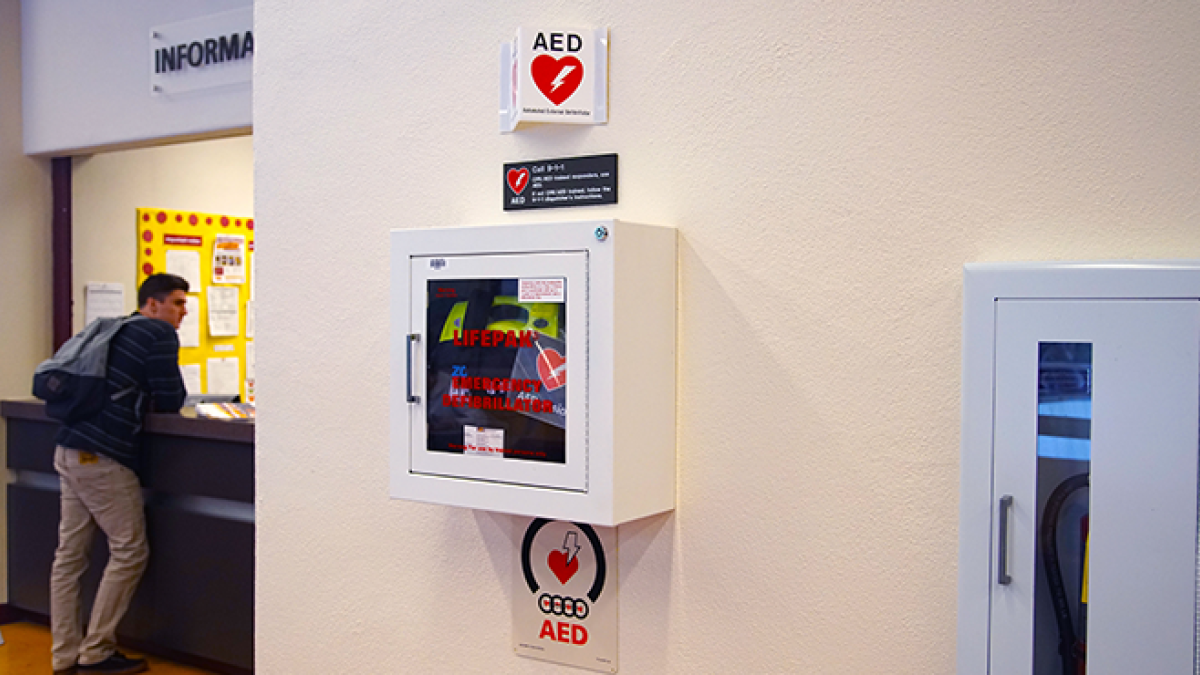
Heart Health Awareness Month underscores automated external defibrillator training at Arizona State University.
Anyone may use an AED to analyze a heart rhythm and, if necessary, deliver an electrical shock to re-establish a rhythm in an abnormal or stopped heart. The AED machine talks to the user and gives step by step instructions.
Public-access AEDs are located in common areas of many university buildings such as first-floor corridors, near the main restrooms or by elevators.
AEDs are also located in:
- Athletic venues
- ASU Police vehicles
- Fulton Center
- New or renovated buildings since 2007
- Residential halls
- Student unions
View more than 300 ASU AED locations.
“In an emergency, call 911 and use the CPR/AED skills we teach in our awareness classes,” said Alex Gutierrez, ASU’s AED program manager. “AED training may help you save someone’s life.”
To use an AED, you don’t need to be certified. Environmental Health and Safety offers in-person CPR/AED awareness training. If you want to be certified, Sun Devil Fitness hosts CPR/AED certification and ASU partner Emergency University offers online CPR/AED certification.
AED devices save lives
Geography senior Josh Groth works at the Tempe Sun Devil Fitness Center as an aquatic student coordinator. He also taught an AED/CPR and First Aid certification classes. He said certification gives confidence in emergency situations and that the training is easy to complete.
“The certification class is only about four hours long, and it’s a great mix of hands-on practice and information,” Groth said. “The instructors are invested in getting participants certified, so there is plenty of help during classes.”
For anyone at ASU who would like to take an awareness training, a certified CPR/AED instructor leads EHS’s free, 90-minute awareness training, but it will not result in certification. Participants learn chest compression CPR and how to use an AED.
ASU is recognized by the Arizona Department of Health Services as a Heart Safe organization. Visit the EHS AED webpage for more information.
More Health and medicine

Bird flu: Your questions on symptoms, spread and safety answered
Bird flu is no longer only “for the birds.”Infections have expanded beyond wild birds and poultry to a range of animals — from mice to mountain lions, dairy cows to domestic cats, and polar bears to…

Making medicine side-effect free
Many drugs that address medical conditions can come with serious side effects. In drug commercials, the litany of potential side effects is often longer than the benefits being touted. Carl…
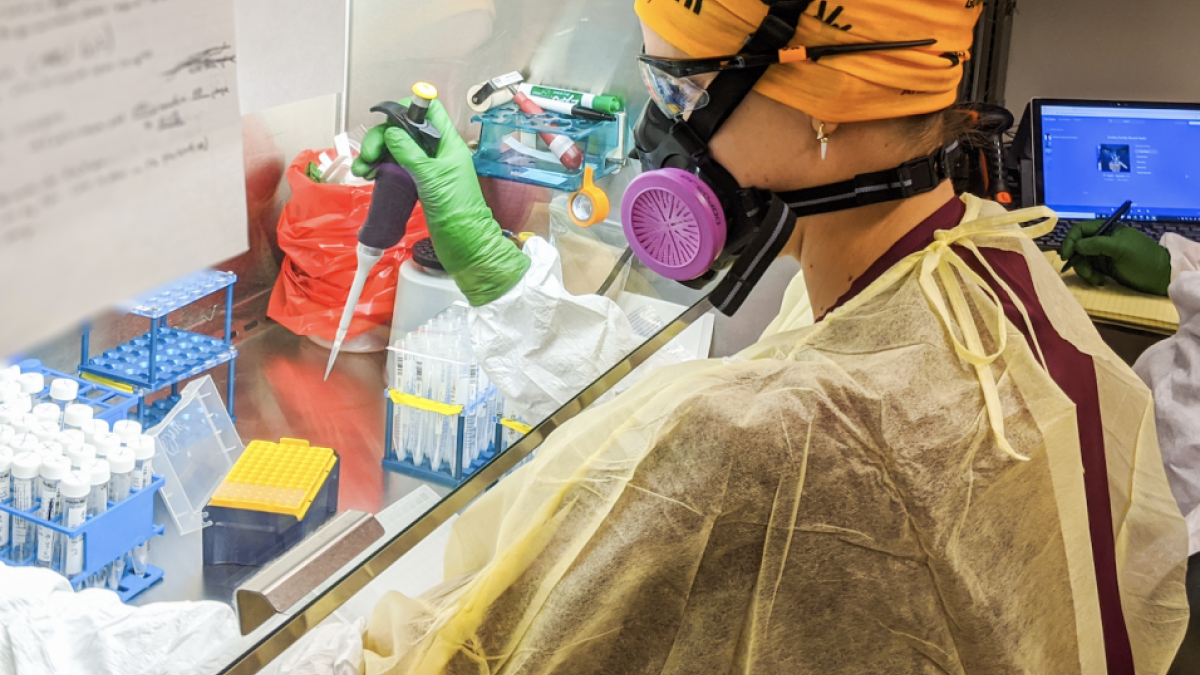
Diagnostic research happening at ASU focused on detecting diseases earlier to save lives
It was one of America’s founding fathers, Benjamin Franklin, who may have foreshadowed today’s health care innovation when he quipped the adage: An ounce of prevention is worth a pound of cure.In…