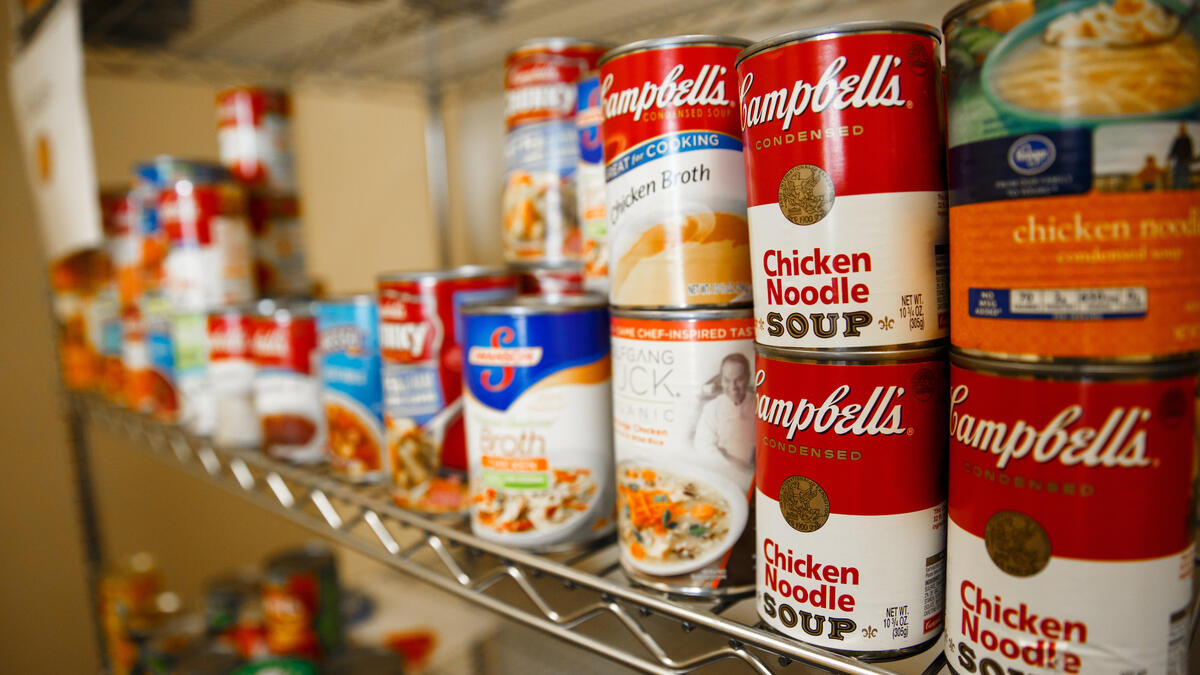
Freshman year at ASU, Stephanie Kaufmann watched a friend who couldn’t afford to eat leave school.
The friend, who worked multiple jobs on top of a full-time school schedule to make ends meet, dropped out because “she just couldn’t muster up the energy anymore to keep going.” Kaufmann, now a senior majoring in drawing and art history, said. “At one point, I was sharing my meal plan with her. And even then, it just wasn’t enough.”
Moved to action, Kaufmann began pushing for a food pantry on campus to provide for students in need. After months of planning and help from fellow students and faculty, Pitchfork Pantry launched this month with locations on ASU’s Tempe and Downtown Phoenix campuses.
“It’s been amazing how much the community has come together,” Kaufmann said in reference to the food drives and volunteer hours that helped make the pantry possible. “When you’re trying to pursue your education, the last thing you need to worry about is being hungry.”
A recent study put the number of college students in the U.S. who are food insecure — lacking reliable access to a sufficient quantity of affordable, nutritious food — at 22 percent. College of Health Solutions assistant professor Meg Bruening conducted her own study of ASU freshmen living in residence halls in 2016 and found that among that specific group, the number was closer to 35 percent.
Considering those students are required to purchase a meal plan, that may be surprising to some. However, as Kaufmann explained, the plans aren’t always adequate. For example, students can buy plans that provide only one meal a day.
Bruening’s study also found that food insecurity is associated with unhealthy eating habits and increased rates of depression and anxiety.
“So there are some pretty intense consequences of food insecurity,” said Bruening.
At the same time Bruening was finishing up her study and working on getting a food pantry at ASU’s Downtown campus, she heard of Kaufmann’s charge to do the same in Tempe. The two joined forces, and Pitchfork Pantry was born.
Bruening helped secure funding with an ASU sustainability grant, allowing for the purchase of refrigerators so the pantries can soon provide dairy and produce in addition to pre-packaged food like soup, pasta and peanut butter. Freezers will be added as well, to store food gleanedIn relation to food, gleaning refers to collecting that is leftover and would otherwise go to waste. from local sources, including restaurants and other food banksPitchfork Pantry is working out agreements to glean from both United Food Bank and Starbucks..
-
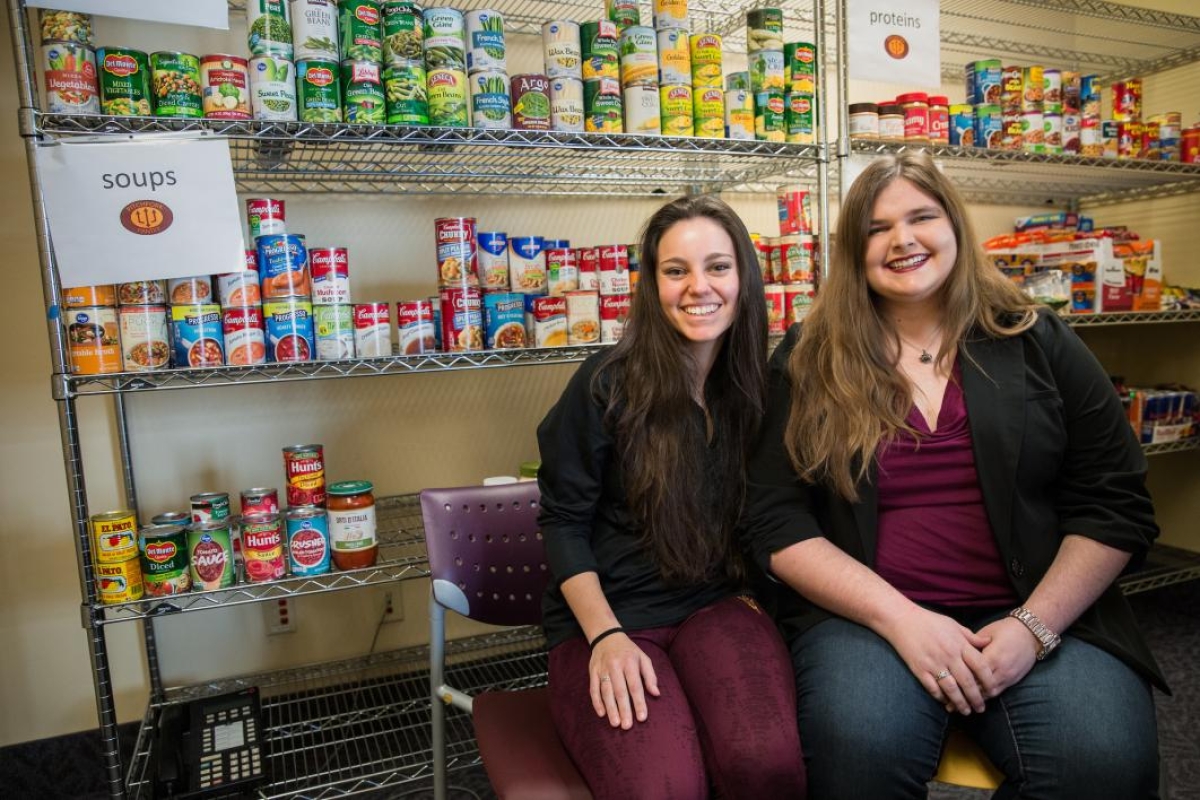
Student Anti-Hunger Coalition president Stephanie Kaufmann (right) and vice president Rebecca Bender at the Tempe campus Pitchfork Pantry location in the Health Services (South) Sonora Center.
Photo by Anya Magnuson/ASU Now
-
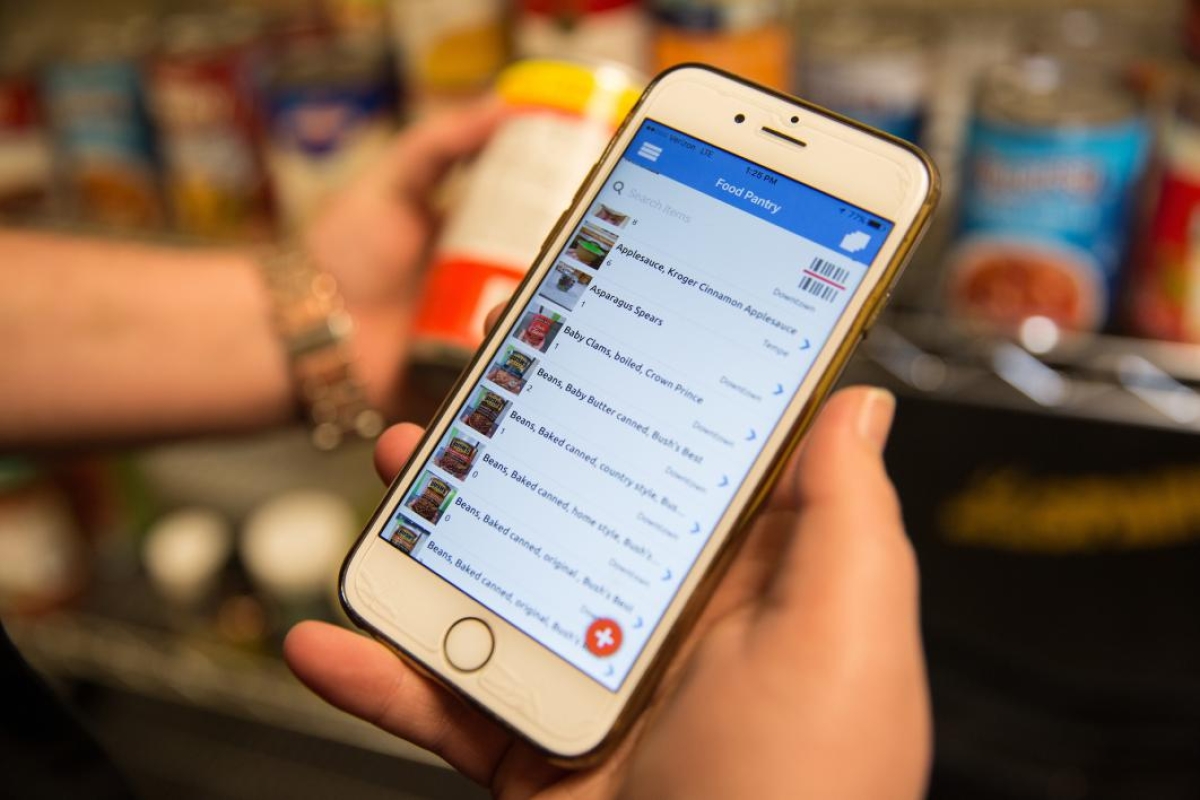
Pitchfork Pantries use a smartphone app to do inventory, making the process completely digital and hassle-free. Pantry volunteers simply scan the bar code of a food item to see how many are in stock.
Photo by Anya Magnuson/ASU Now
-
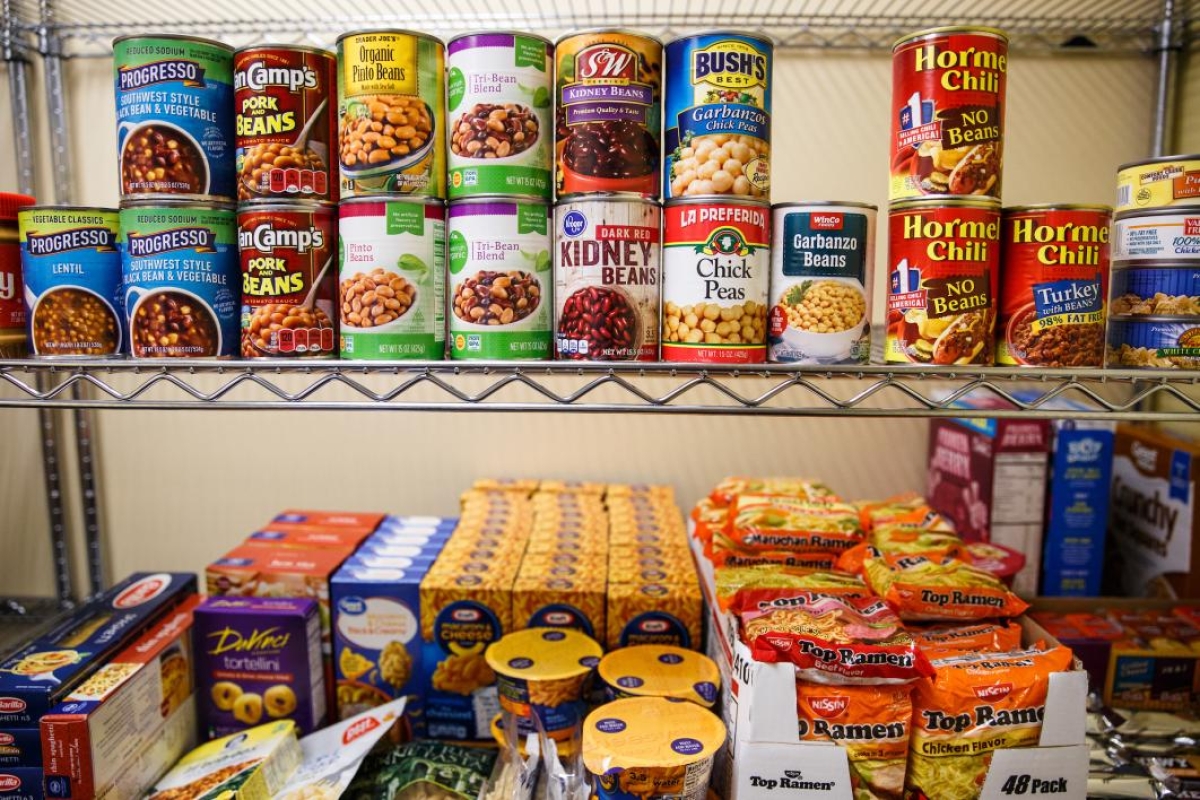
Food in the pantries is organized into categories such as protein, soups, grains, fruits and vegetables. The locations will soon be equipped with freezers and refrigerators to store dairy, produce and food gleaned from local restaurants and food banks.
Photo by Anya Magnuson/ASU Now
Bruening also introduced Kaufmann to junior nutrition major Rebecca Bender, who had helped Bruening with her study and had a related interest in reducing food waste.
“The amount of food we waste in the U.S. is mind-boggling,” Bender said. “It makes me very frustrated.”
So Kaufmann and Bender combined their shared interests in the form of the Student Anti-Hunger Coalition, which oversees efforts behind Pitchfork Pantry, as well as emerging initiatives including a university composting program in conjunction with ASU Zero Waste, and the Campus Kitchens Project, which recovers food from cafeterias and dining halls that would otherwise be thrown away and repurposes it into new meals.
The coalition has about 15 members, all of whom share responsibilities that include working shifts at the pantries, picking up and delivering food, and organizing food drives.
“The coolest thing about the coalition is that every member is a leader in another student organization,” said Bruening, who serves as the coalition’s faculty adviser. “So they can go back to those groups and help mobilize the larger student body.”
As for Pitchfork Pantry, it’s a work in progress, but Bruening said they plan to eventually have a location on every campus. She stressed that the existing pantries are, however, open to all ASU students, regardless of their academic year or which campus they attend — all they need is an ASU student ID.
Of the students who have already visited the pantry, Kaufmann said the general reaction has been overwhelming enthusiasm, with some relieved to have a source of food if they run out funds for the dining halls, and others who are looking forward to donating their surplus.
The next food drive will take place from 10 a.m. to 4 p.m. Tuesday, Feb. 14, at Hayden Lawn on the Tempe campus and at Taylor Place Mall on the Downtown campus. Visit the Pitchfork Pantry Facebook page for updates and changes.
Pitchfork Pantry is open from 10 a.m. to 2 p.m. Wednesdays on the Tempe campus at ASU Health Services (South) Sonora Center, and from 6 to 9 p.m. Sundays on the Downtown campus at the Taylor Place Demo Kitchen.

More Health and medicine

ASU teams up with Maricopa County to address local life expectancy gap
Arizona State University’s College of Health Solutions is partnering with the Maricopa County Board of Supervisors to address a 14-year life expectancy gap between residents of north Scottsdale and…

ASU professor named Rural Health Fellow
If you live in a major city, chances are you don’t spend much time thinking about what happens in smaller towns and rural areas. But Aaron Guest, an assistant professor at Arizona State…

The rise of NoLo: Many young people opting to reduce alcohol consumption
This month, the U.S. surgeon general released a new advisory on the link between alcohol and cancer risk.The advisory includes a series of recommendations to increase awareness of the link, including…