

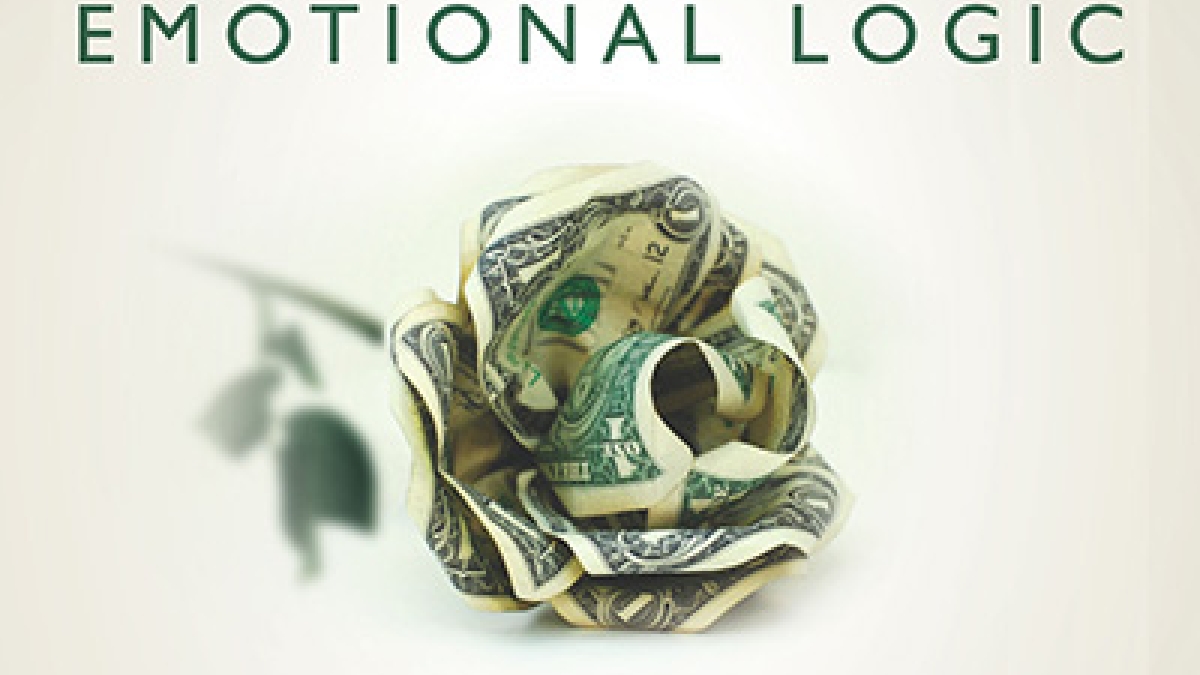
Modern critiques of capitalism accuse it of being a relentlessly rational structure that disrupts social bonds through its imposed utilitarianism. However, what if capitalism is not a cold monster, but is in fact a form of secular spirituality, deeply intertwined within emotional networks?
Martijn Konings, a senior lecturer in the Department of Political Economy at the University of Sydney, makes such an argument in his new book "The Emotional Logic of Capitalism: What Progressives Have Missed."
At 4:30 p.m. Oct. 18, Konings will give a book talk during the Institute for Humanities Research (IHR) Humanities Faculty Authors Reception in Hayden Library on the Tempe campus.
Konings’ deft use of economic theory combined with humanistic scholarship earned his book this year’s IHR Transdisciplinary Humanities Book Award. The Institute for Humanities Research presents this award every year for a non-fiction work that exemplifies transdisciplinary, socially engaged humanities-based scholarship.
Konings, a political economist, moves beyond traditional Marxist critiques of capitalism by employing humanistic scholarship, drawing on the works of theorists such as Bruno Latour, Giorgio Agamben, Michel Foucault and Judith Butler. By applying humanistic perspectives, he is able to challenge the traditional perception of capitalism as a rational monster, devoid of emotion or social roots, and instead reveals its deep emotional and theological underpinnings.
This event is co-sponsored by ASU Libraries.
More Arts, humanities and education

ASU professor, alum named Yamaha '40 Under 40' outstanding music educators
A music career conference that connects college students with such industry leaders as Timbaland. A K–12 program that…

ASU's Poitier Film School to host master classes, screening series with visionary filmmakers
Rodrigo Reyes, the acclaimed Mexican American filmmaker and Guggenheim Fellow whose 2022 documentary “Sansón and Me” won the Best…

Upcoming exhibition brings experimental art and more to the West Valley campus
Ask Tra Bouscaren how he got into art and his answer is simple.“Art saved my life when I was 19,” he says. “I was in a…