

Arizona State University was recently honored with a 2014 Tree Campus USA award, which Gov. Doug Ducey presented to the ASU Grounds Services/Arboretum crew at the Arizona Capitol on April 23.
The national Tree Campus USA program honors colleges and universities for promoting healthy trees and engaging students and staff in the spirit of conservation.
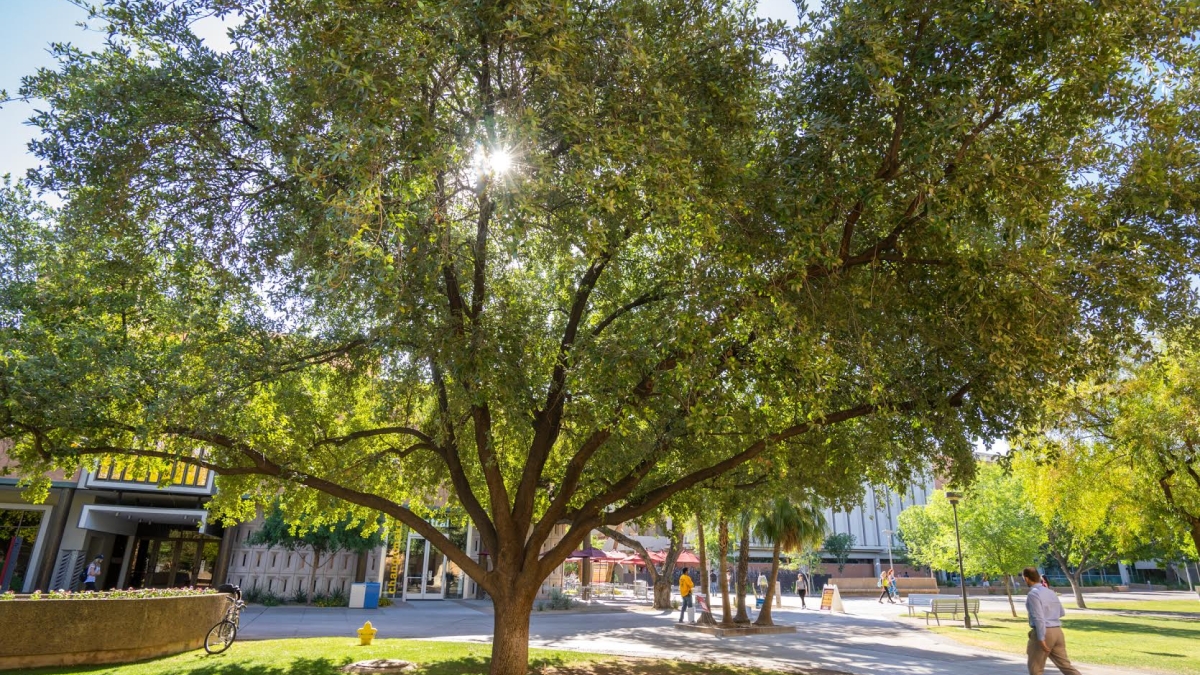
To mark the occasion, we present a short tour of some of the Tempe campus' 1,000 varieties of trees. Shown here is a Southern live oak (Quercus virginiana) in south Cady Mall. The tree is native to the Eastern United States. If you want to see the trees in person, use this map to know what you're looking at.
-
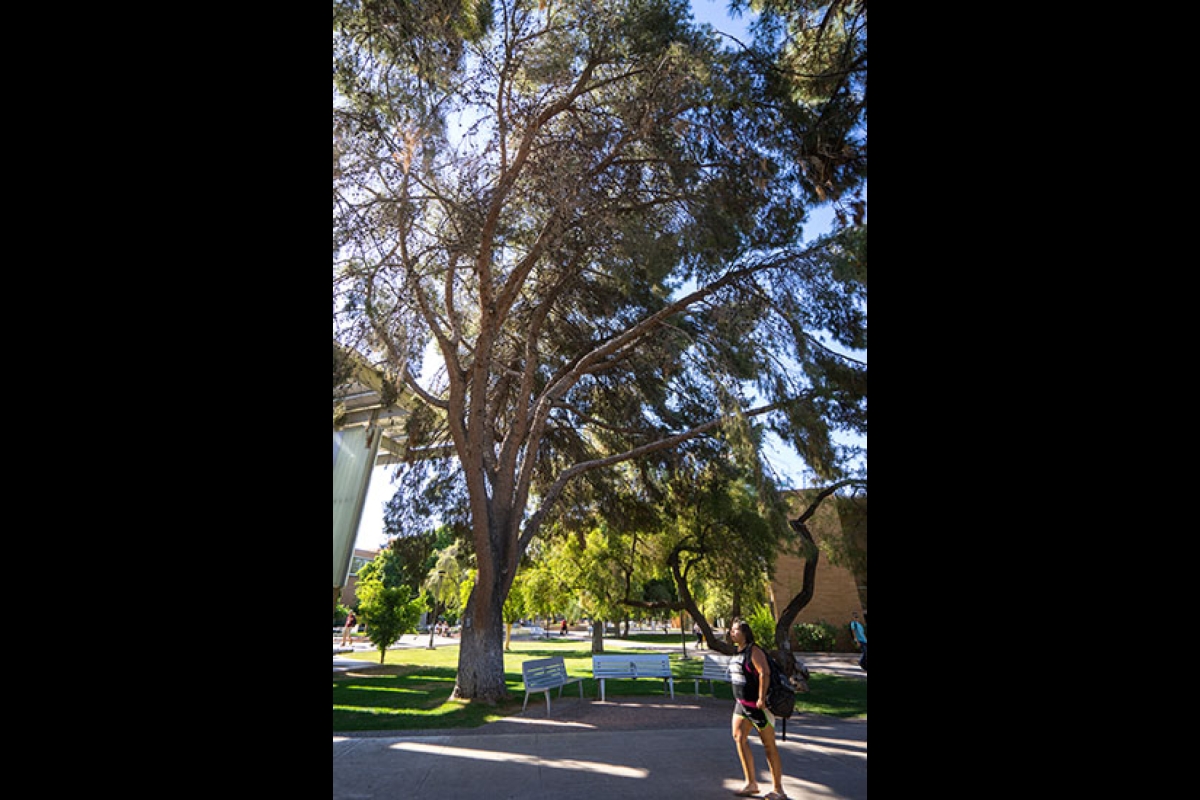
The Aleppo pine (Pinus halepensis) — this one near the Memorial Union — is native to the Mediterranean. Its sturdy wood was once used by Romans for shipbuilding.
Charlie Leight/ASU Now
-
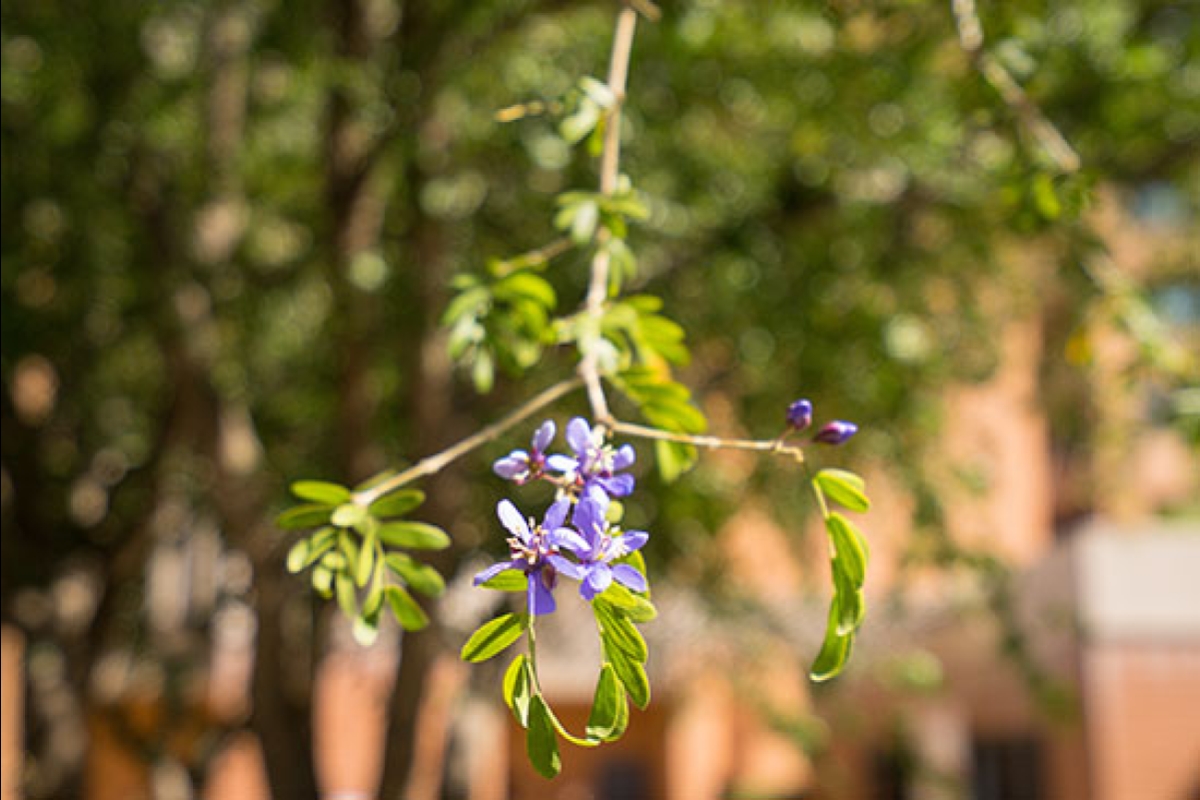
The Lignum vitae tree, on Tyler Mall, is native to the dry coastal areas of Central America.
Charlie Leight/ASU Now
-
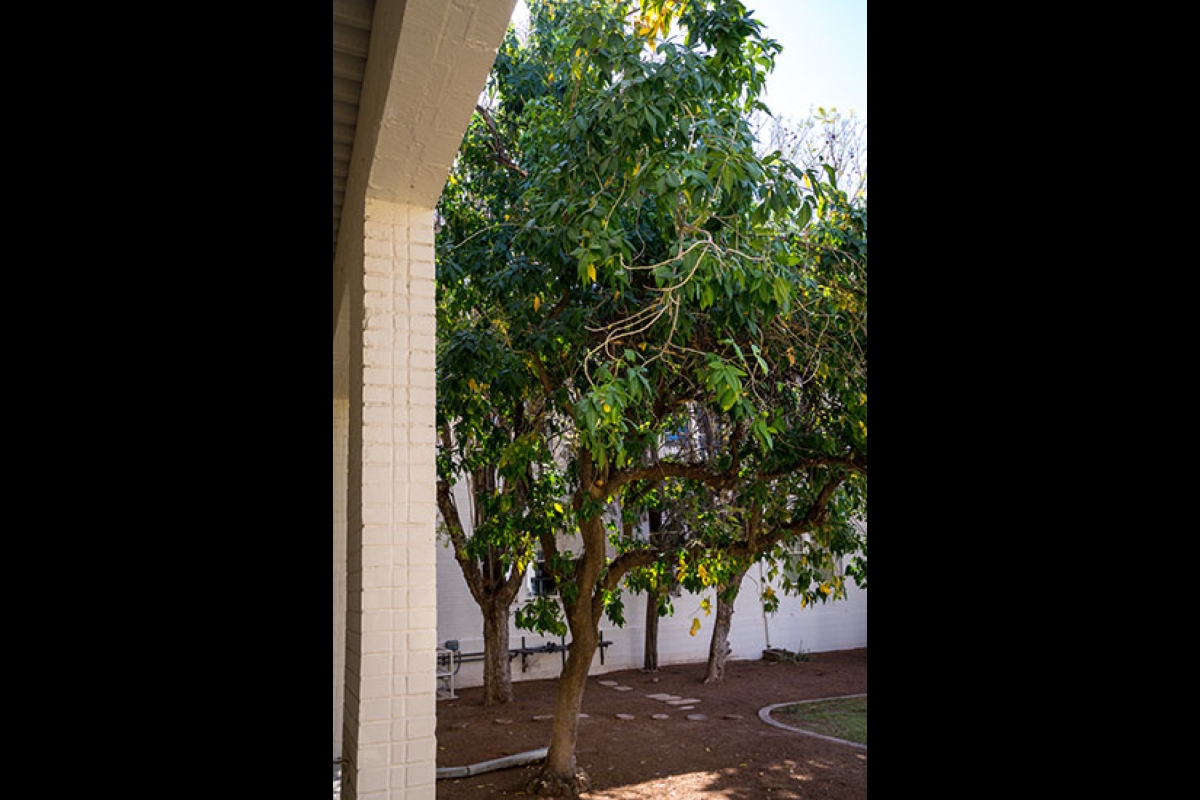
The White Sapote tree (Casimiroa edulus) in the Secret Garden courtyard is the only tree of its kind on campus. A native of Southern Mexico related to citrus, White Sapote fruit has a creamy, custard-like texture with a flavor reminiscent of pear, apricot and banana.
Charlie Leight/ASU Now
-
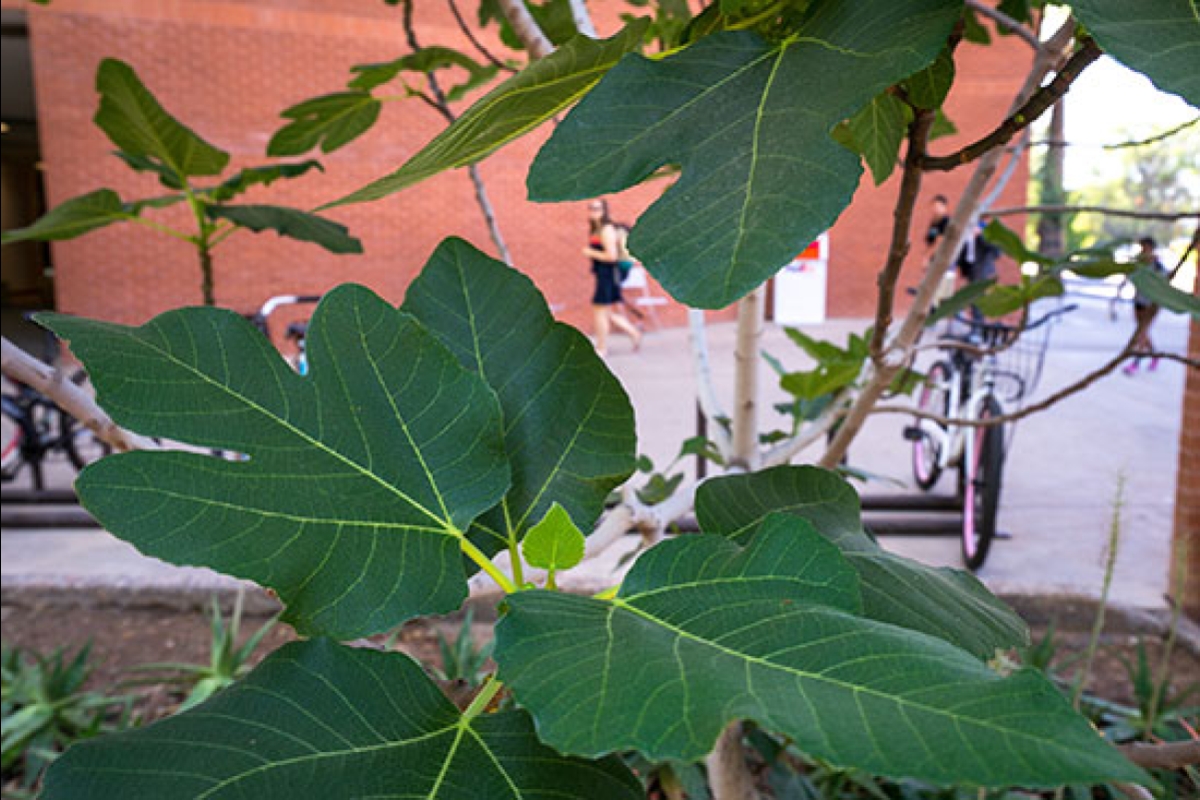
This fig tree, next to the Student Services Building, is one of several plants on campus with edible fruit.
Charlie Leight/ASU Now
-
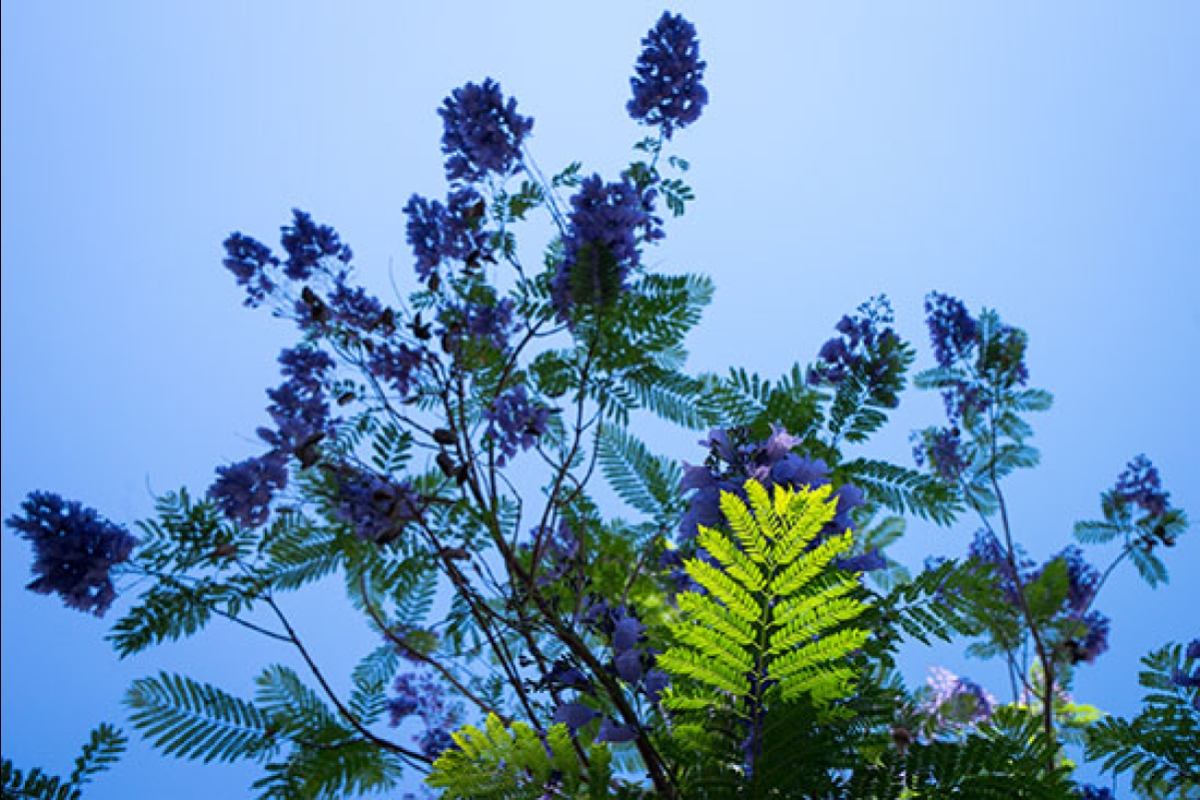
One of many jacaranda trees (Jacaranda mimosifolia) on campus, this tree stands near the Hassayampa Academic Village. A South American native, it boasts lush fern-like foliage and beautiful purple trumpet-shaped flowers.
Charlie Leight/ASU Now
-
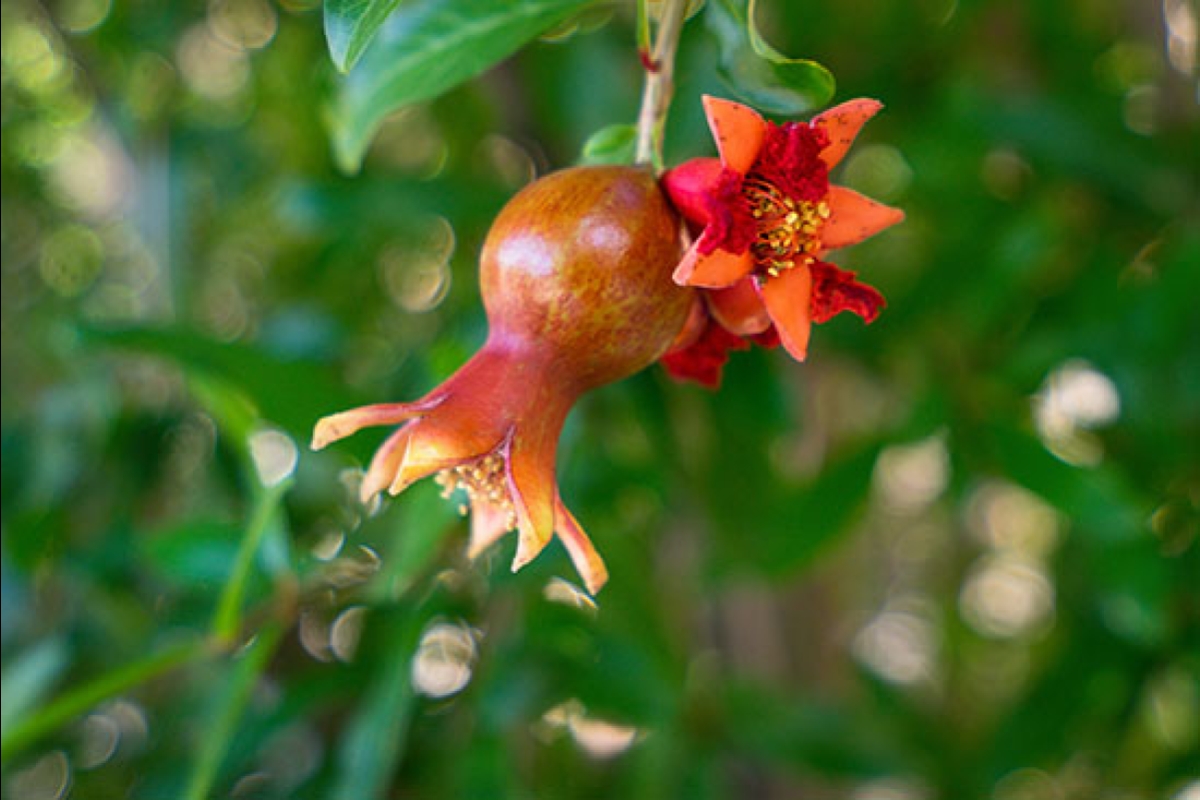
There are several plants on campus with edible fruit, including this pomegranate tree (Punica granatum), next to the Student Services Building.
Charlie Leight/ASU Now
-
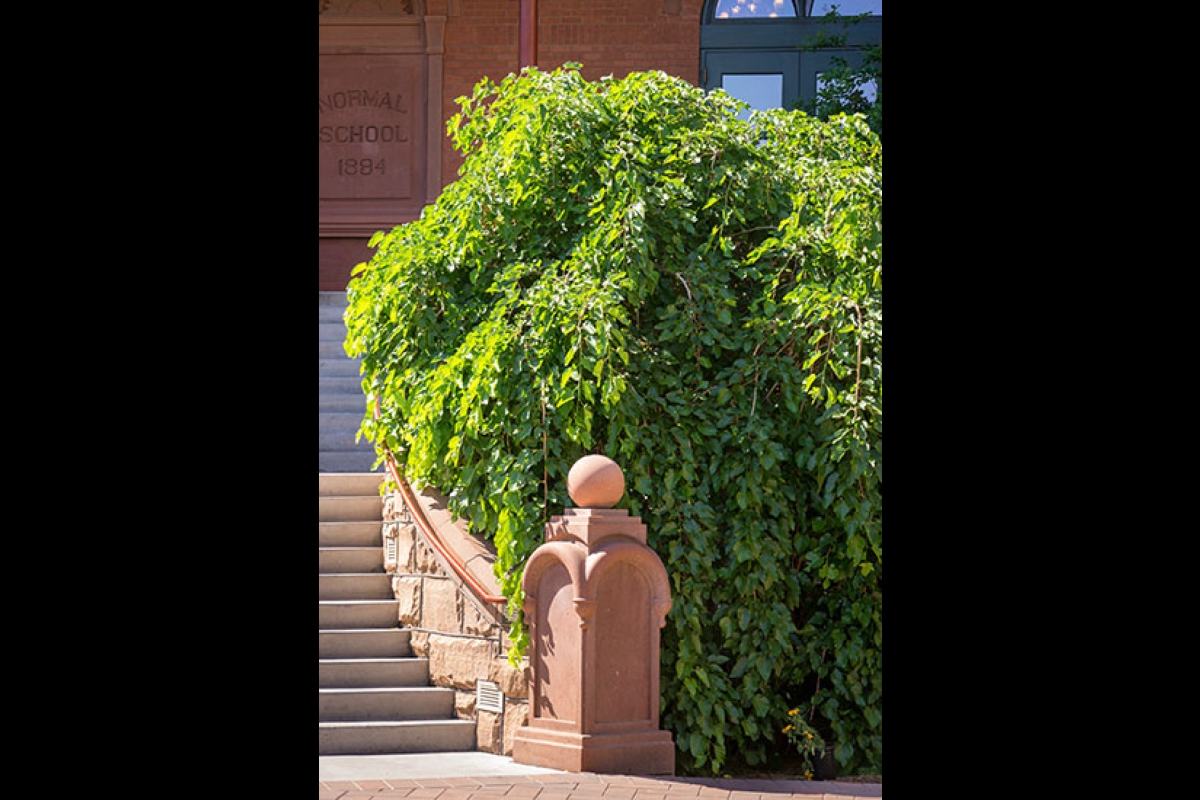
The weeping mulberry trees (Morus alba) on either side of the Old Main steps were planted more than 20 years ago.
Charlie Leight/ASU Now
-
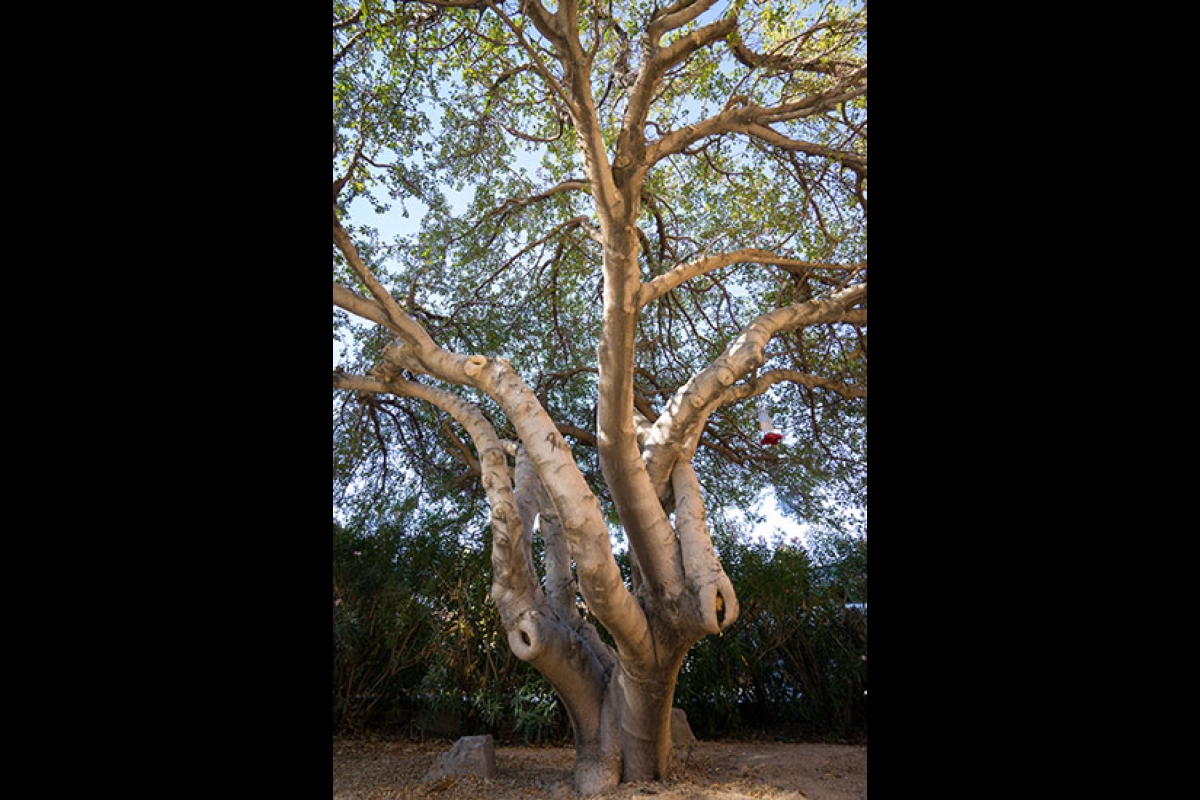
The Bursera Microphylla, or elephant tree, has a distinctive sculptural form, with a thickened, water-storing trunk. It is native to the Sonoran Desert. This particular example grows near Discovery Hall.
Charlie Leight/ASU Now
-
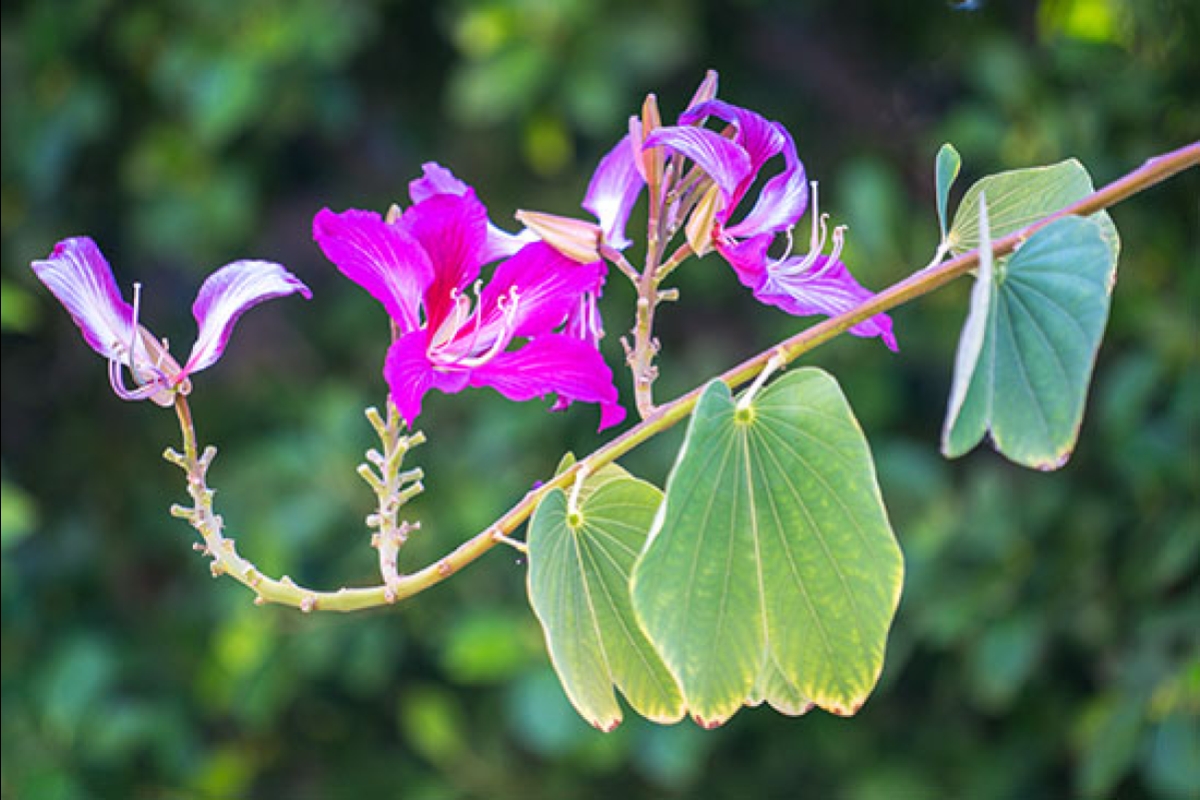
There are several species of the orchid tree on campus. This is a detail of a Hong Kong orchid tree (Bauhinia blakeana) near the Student Services Building. It is a native of Southern China.
Charlie Leight/ASU Now
-
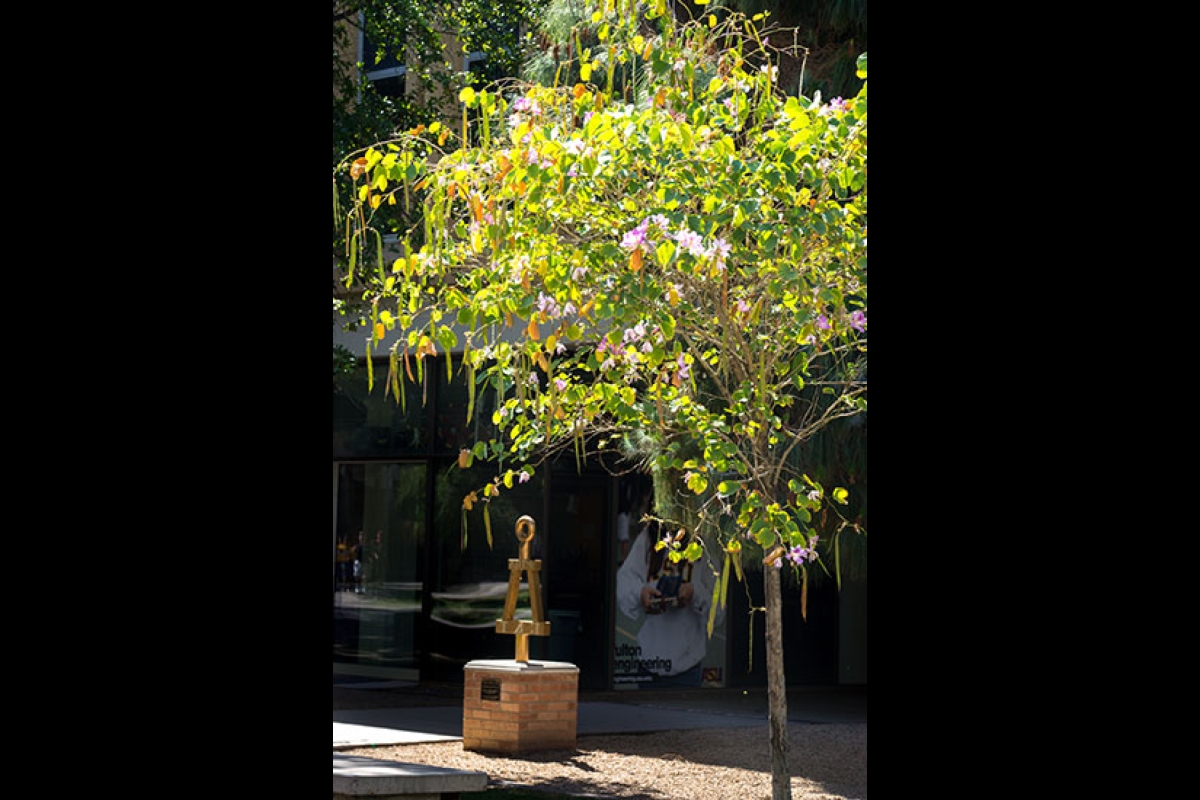
Here, another Hong Kong orchid tree blooms on Tyler Mall.
Charlie Leight/ASU Now
-
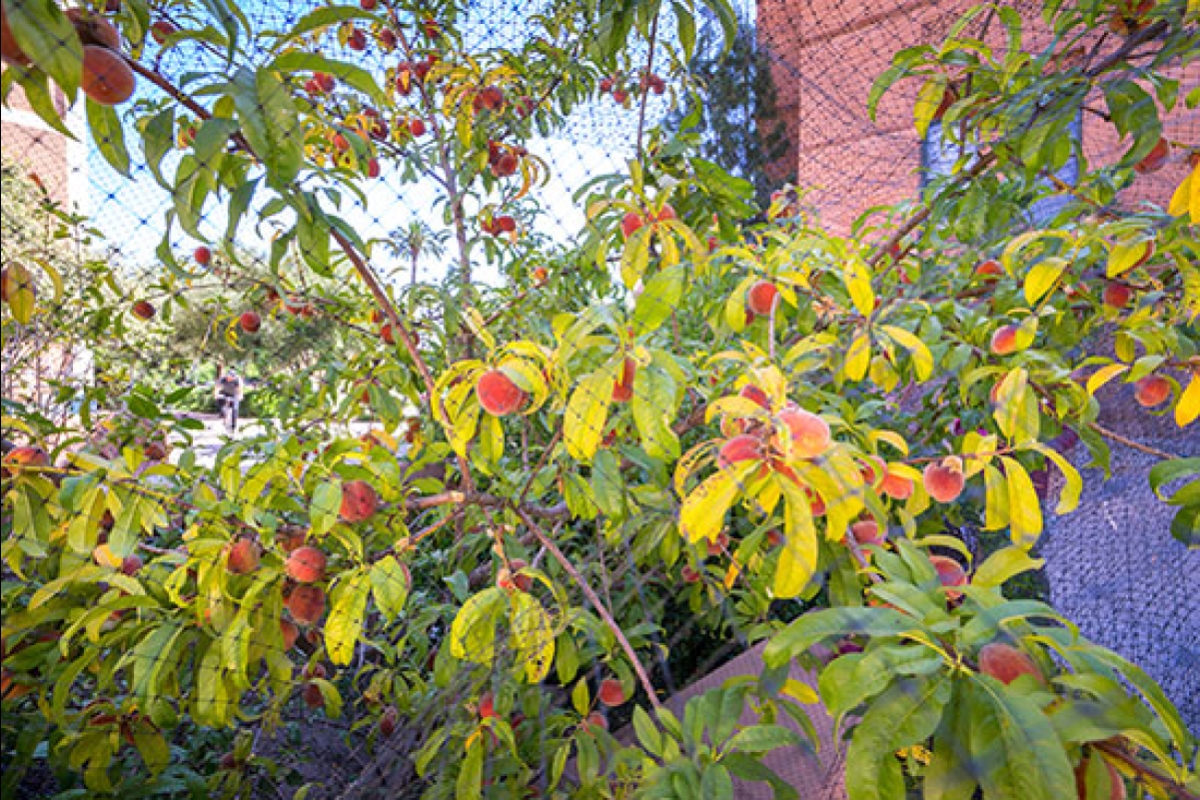
Netting protects the fruit on this peach tree (Prunus persica) next to Old Main from birds — and hungry students.
Charlie Leight/ASU Now
-
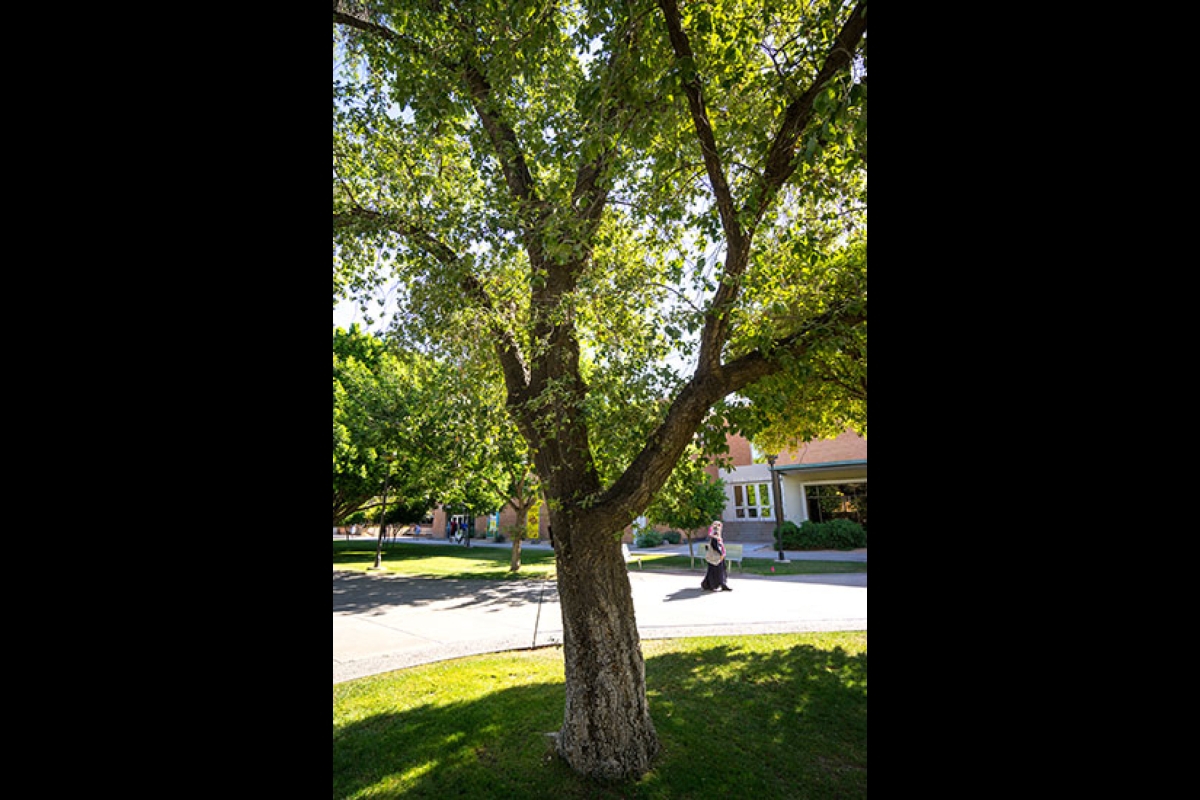
The spongy bark of the cork oak (Quercus suber) — a Mediterranean native — is used to create cork products. This one grows in Cady Mall.
Charlie Leight/ASU Now
-
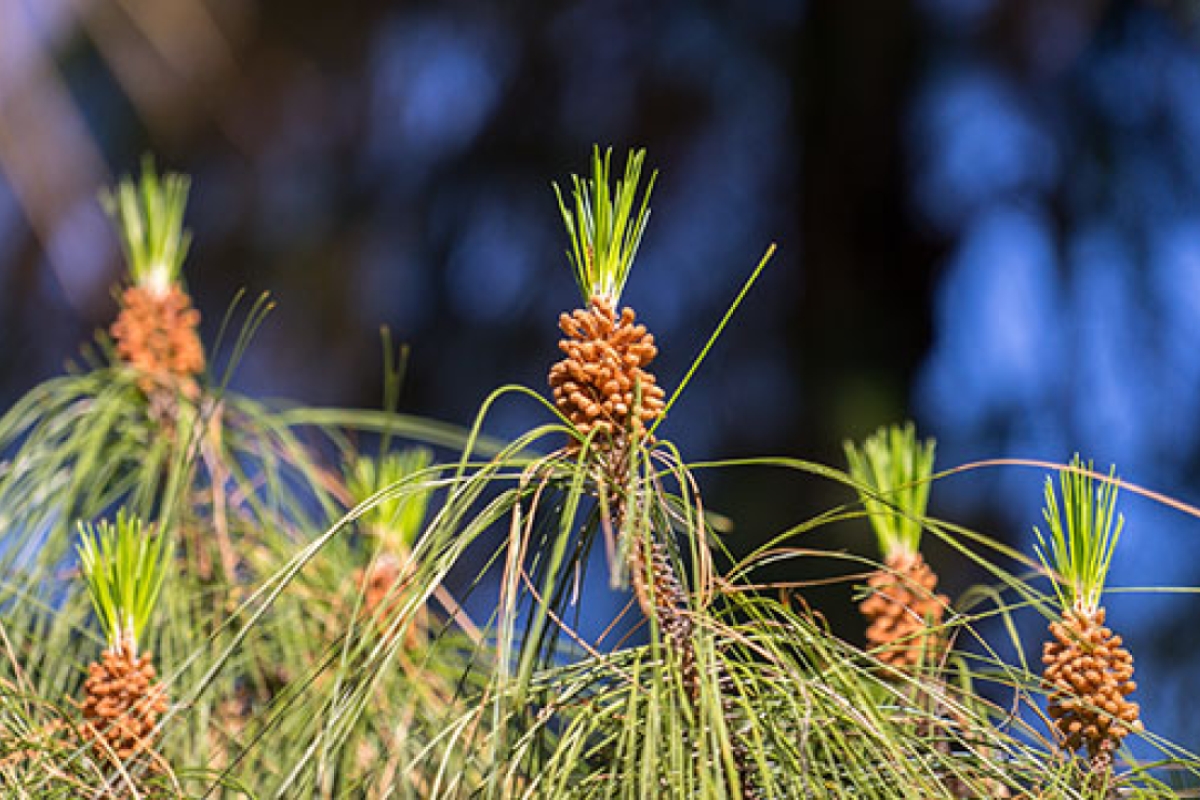
The brown cones of the Canary Island pine (Pinus canariensis) grow to 4 to 9 inches long. This one is near the Memorial Union.
Charlie Leight/ASU Now
-
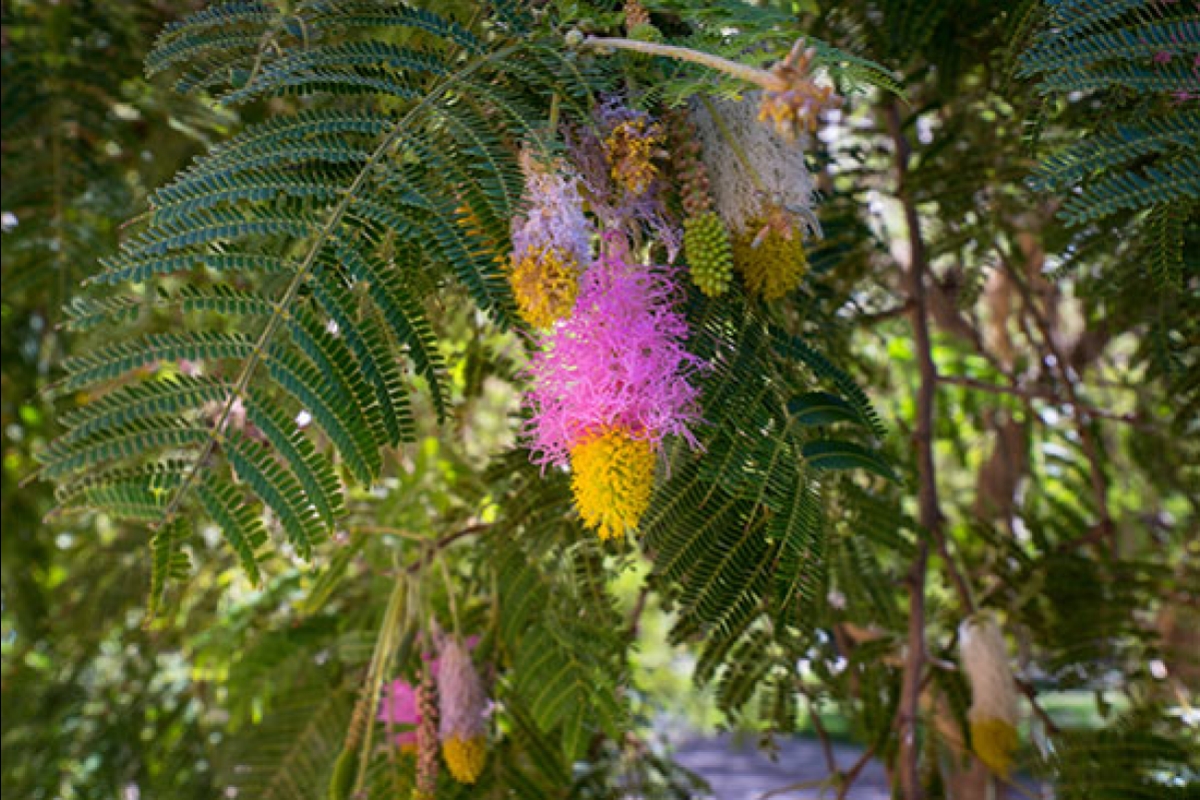
The pink and yellow blooms of this tree, known both as Chinese Lantern and Kalahari Christmas tree (Dichrostachys cinerea), bloom from summer to early winter.
Charlie Leight/ASU Now
-
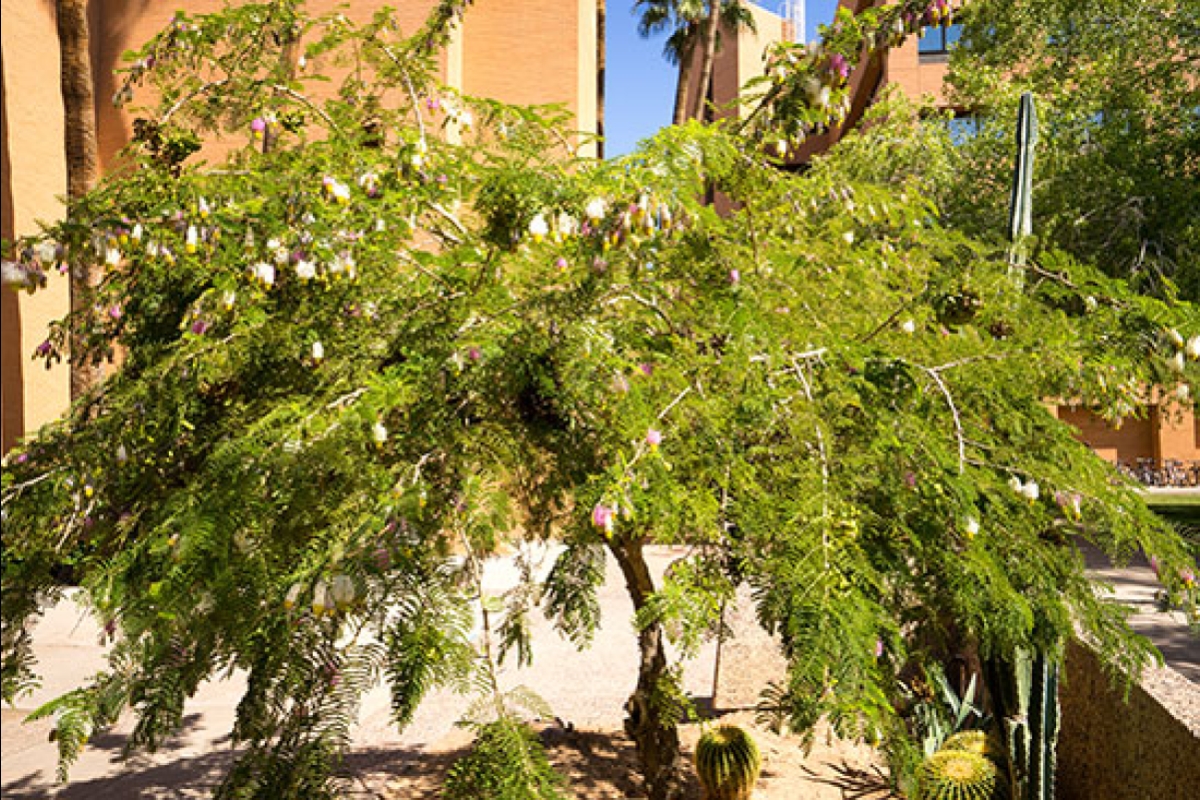
The Chinese Lantern tree — this one on Tyler Mall — is native to Africa. It grows both colorful flowers and a black fruit that coils as it grows.
Charlie Leight/ASU Now
-
The Aleppo pine (Pinus halepensis) — this one near the Memorial Union — is native to the Mediterranean. Its sturdy wood was once used by Romans for shipbuilding.
Charlie Leight/ASU Now
-
The Lignum vitae tree, on Tyler Mall, is native to the dry coastal areas of Central America.
Charlie Leight/ASU Now
-
The White Sapote tree (Casimiroa edulus) in the Secret Garden courtyard is the only tree of its kind on campus. A native of Southern Mexico related to citrus, White Sapote fruit has a creamy, custard-like texture with a flavor reminiscent of pear, apricot and banana.
Charlie Leight/ASU Now
-
This fig tree, next to the Student Services Building, is one of several plants on campus with edible fruit.
Charlie Leight/ASU Now
-
One of many jacaranda trees (Jacaranda mimosifolia) on campus, this tree stands near the Hassayampa Academic Village. A South American native, it boasts lush fern-like foliage and beautiful purple trumpet-shaped flowers.
Charlie Leight/ASU Now
-
There are several plants on campus with edible fruit, including this pomegranate tree (Punica granatum), next to the Student Services Building.
Charlie Leight/ASU Now
-
The weeping mulberry trees (Morus alba) on either side of the Old Main steps were planted more than 20 years ago.
Charlie Leight/ASU Now
-
The Bursera Microphylla, or elephant tree, has a distinctive sculptural form, with a thickened, water-storing trunk. It is native to the Sonoran Desert. This particular example grows near Discovery Hall.
Charlie Leight/ASU Now
More Environment and sustainability

5 takeaways from the Society of Environmental Journalists conference at ASU
Last week, Arizona State University welcomed academics, experts and journalists who focus on environmental and climate issues for the Society of Environmental Journalists' 34th annual conference.…

The mighty impact of insects
By Meghan Finnerty and Megan NeelyArizona State University has a lot of insects — and for good reason. A colony of researchers is studying how social insects can be used as tools to answer…

Majority of American religious leaders silently believe in climate change, ASU study shows
Many Americans turn to religious leaders for guidance on matters of faith and morality.With this in mind, a new study, led by a researcher from Arizona State University, suggests that congregations…