
On a bright and early Saturday morning, a group of Arizona State University students gathered in a remote desert area, just west of Quartzite, Arizona.
Their reason for being there? To launch two large weather balloons that can carry a payload (mechanically and thermally stable containers) near the edge of space so the students can study how high altitudes affect a variety of objects — in this case, lettuce seeds.
The students are part of ASU chapter of ASCEND (Aerospace Scholarships to Challenge and Educate New Discoverers), an Arizona Space Grant program that engages undergraduate students across the state in the full “design-build-fly-operate-analyze” cycle of a space mission.
They were joined by volunteers from Arizona Near Space Research, an affiliate of ASCEND that helps coordinate balloon launches.
The students prepared two different seed packets for the payloads — one on the outside that will be exposed to high-altitude radiation and one on the inside that will just be exposed to the high altitude — to see how both the altitude and radiation exposure affects the seeds.
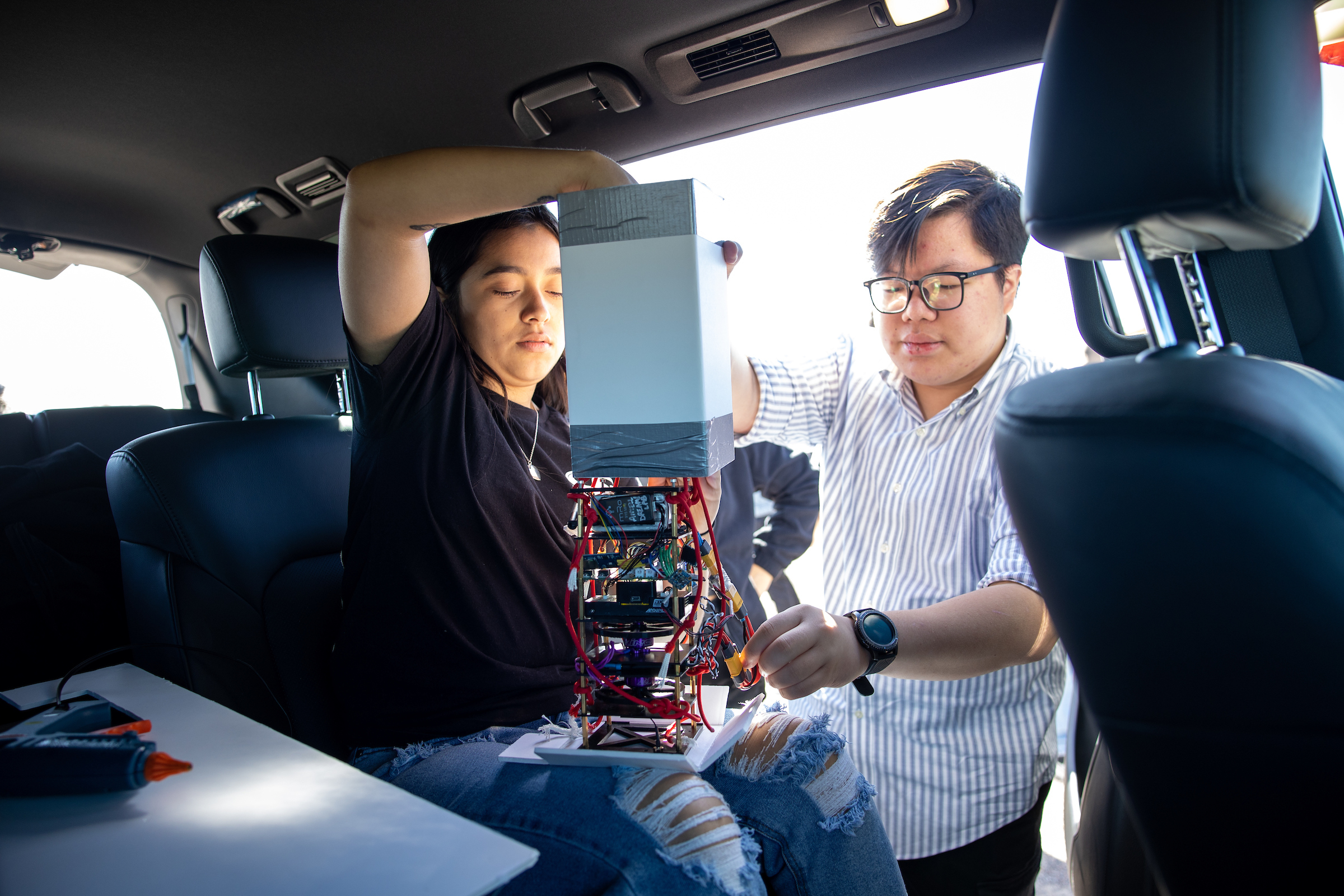
Aerospace engineering student Quang Huy Dinh (right) and mechanical engineering student Arlene Morales (left) help prep the payload prior to the balloon launch outside Quartzite, Arizona, on April 1.
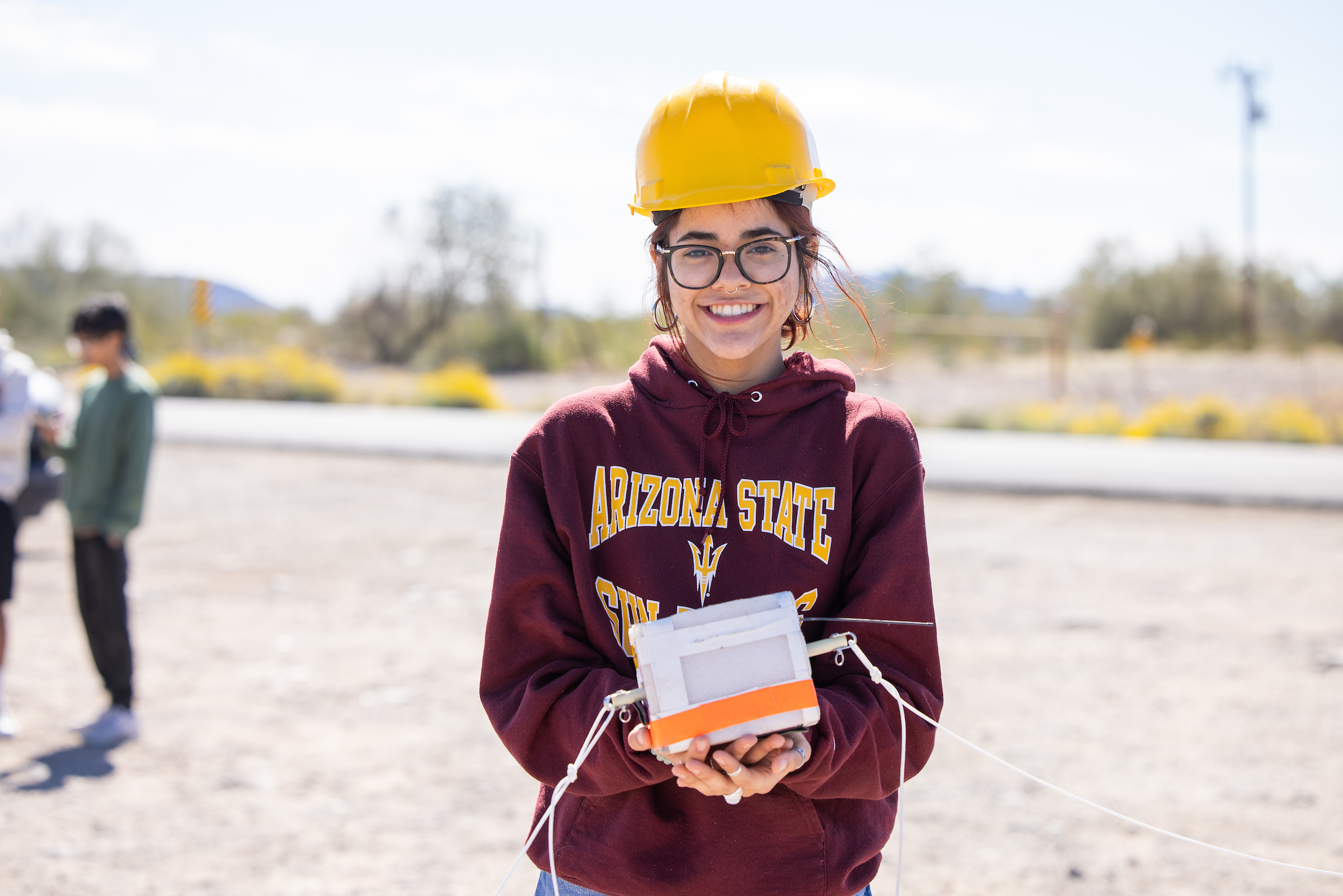
Exploration systems design student Elizabeth Garayzar holds the weather balloon payload before the launch on April 1.
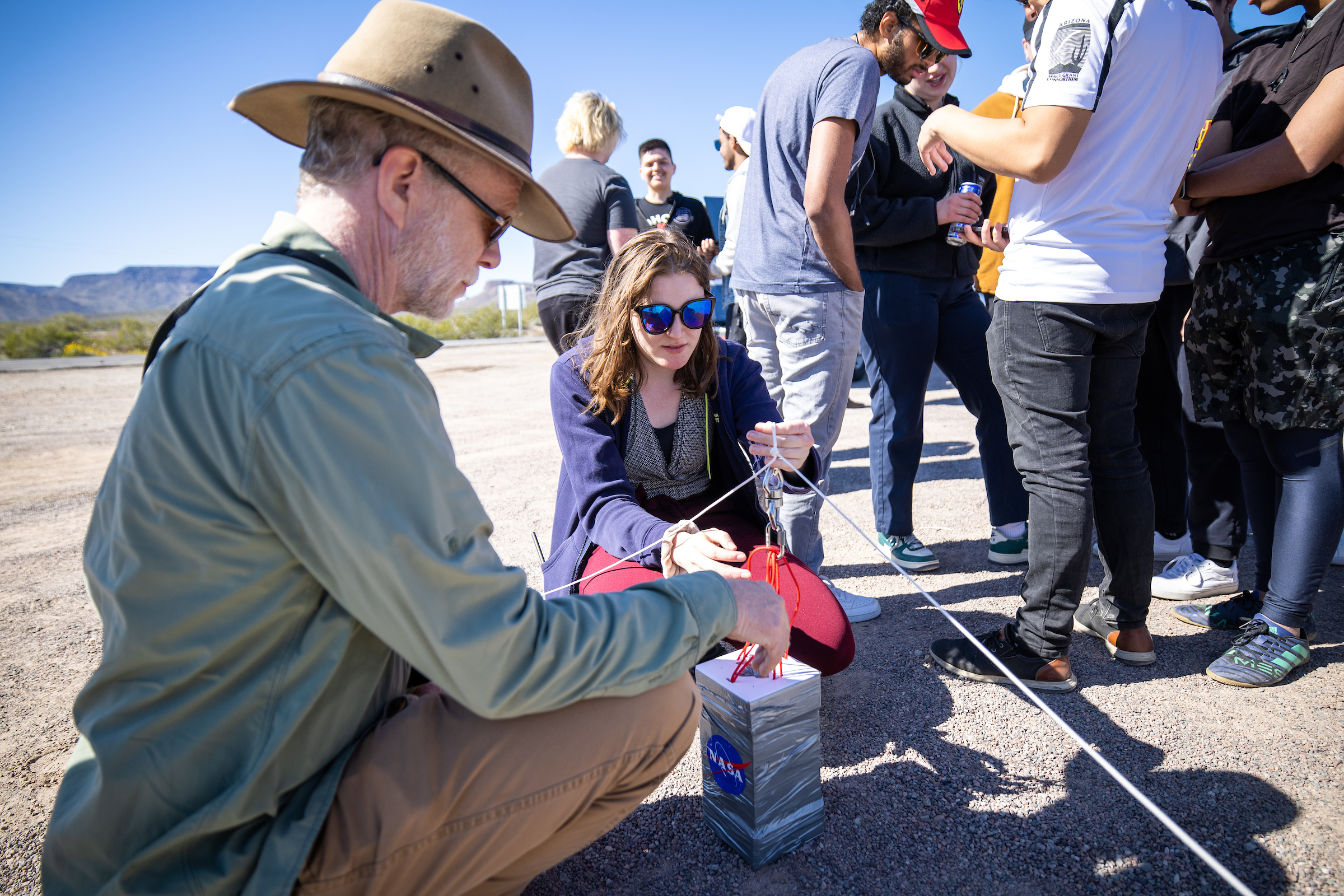
Professor Tom Sharp, in the School Of Earth and Space Exploration, and computer science undergraduate student Genevieve Cooper prep the payload for the weather balloon launch.
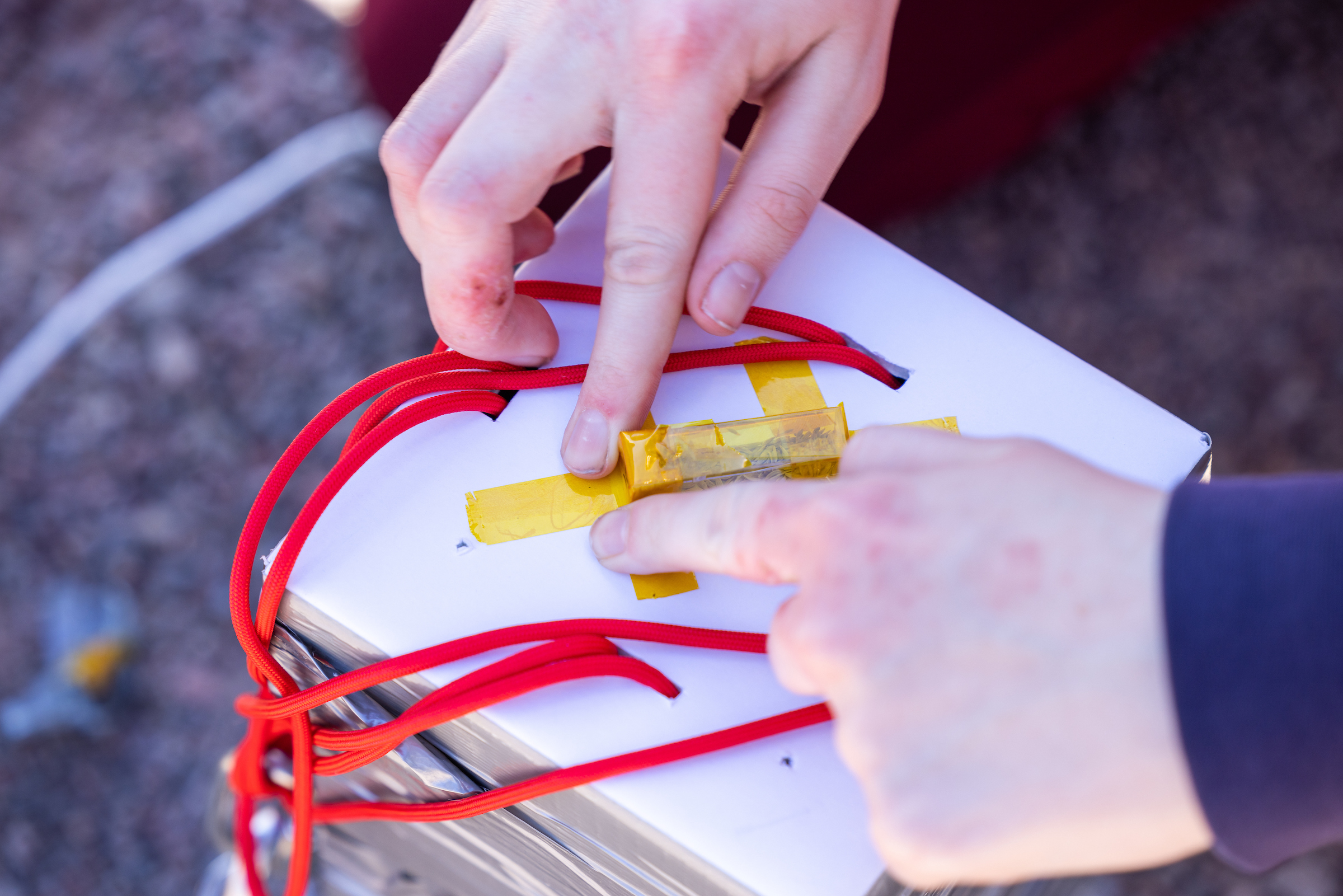
Cooper attaches lettuce seeds on the outside of the payload that will be exposed to radiation during the weather balloon experiment.
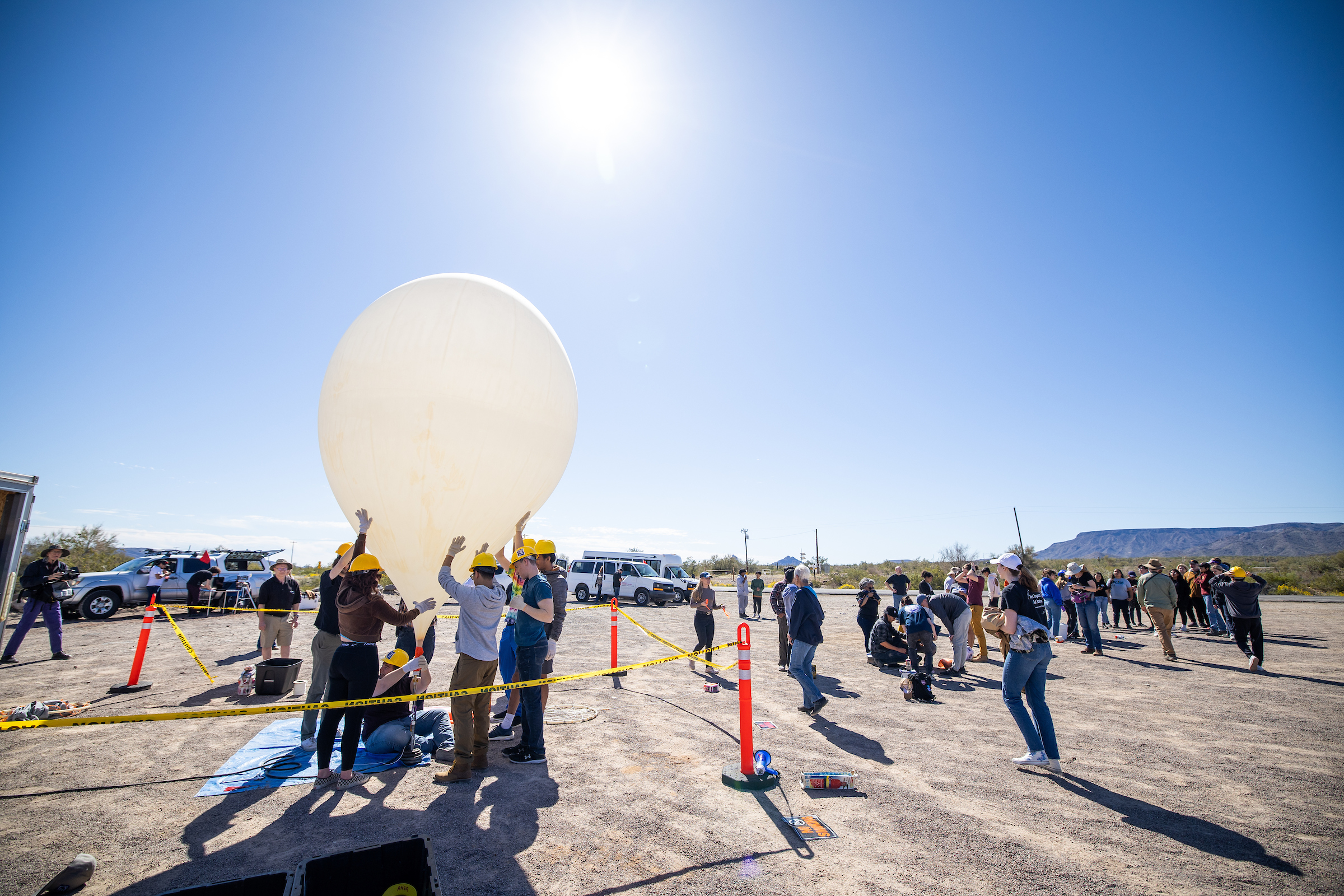
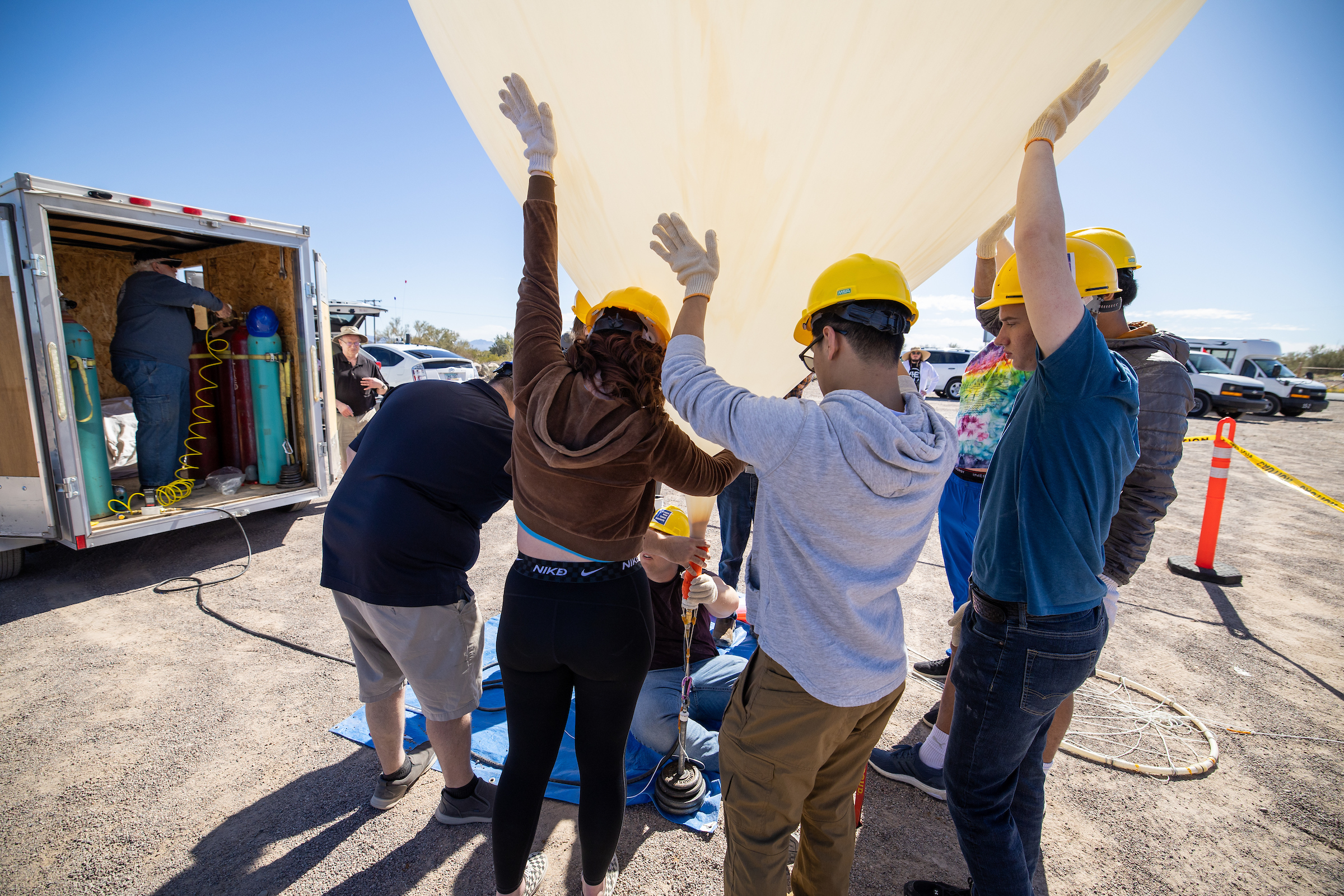
ASU students and volunteers from the Arizona Near Space Research group prep the helium weather balloon during the ASCEND launch outside of Quartzsite, Arizona, on April 1.
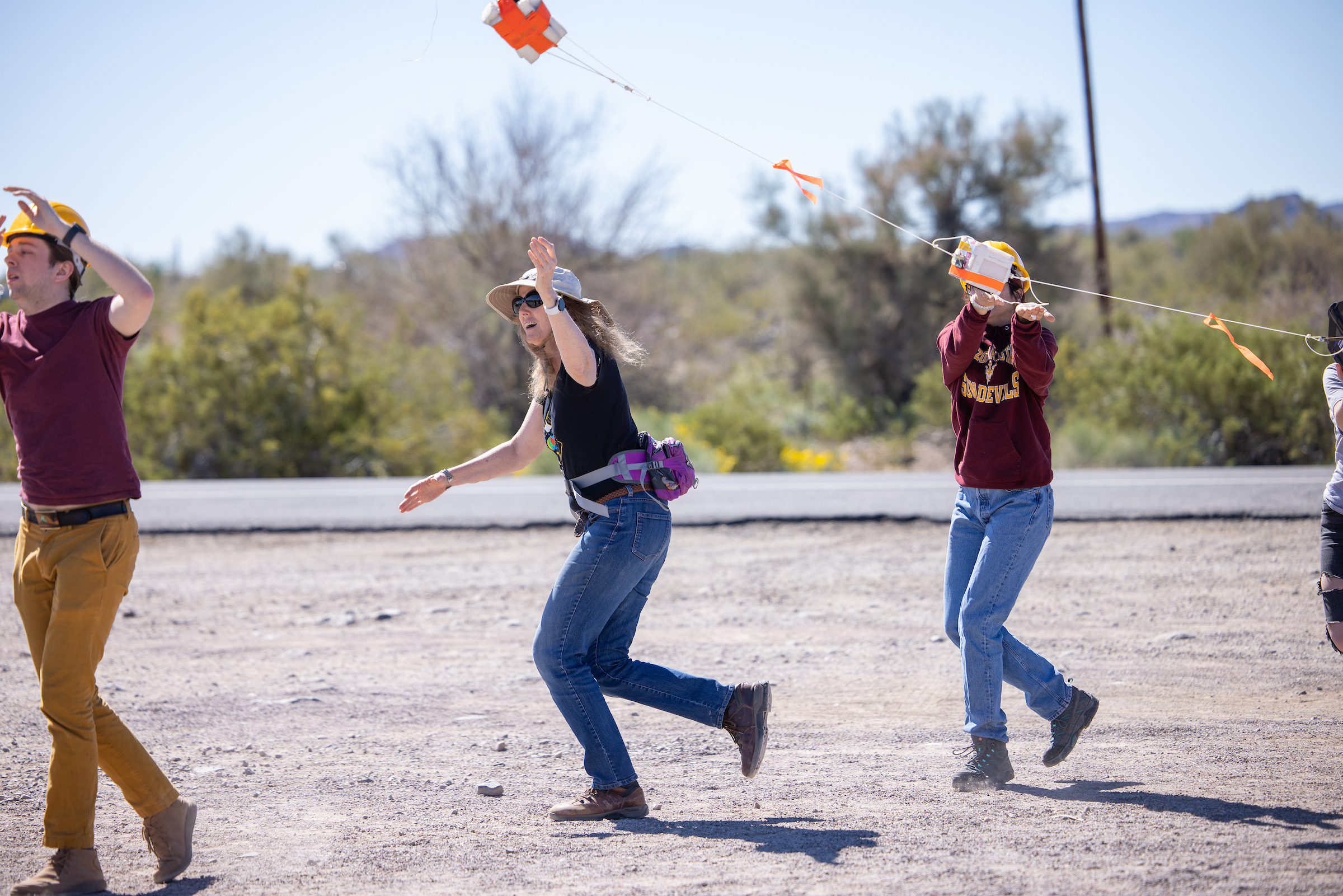
Students hold up the payload as it launches with the weather balloon on April 1.
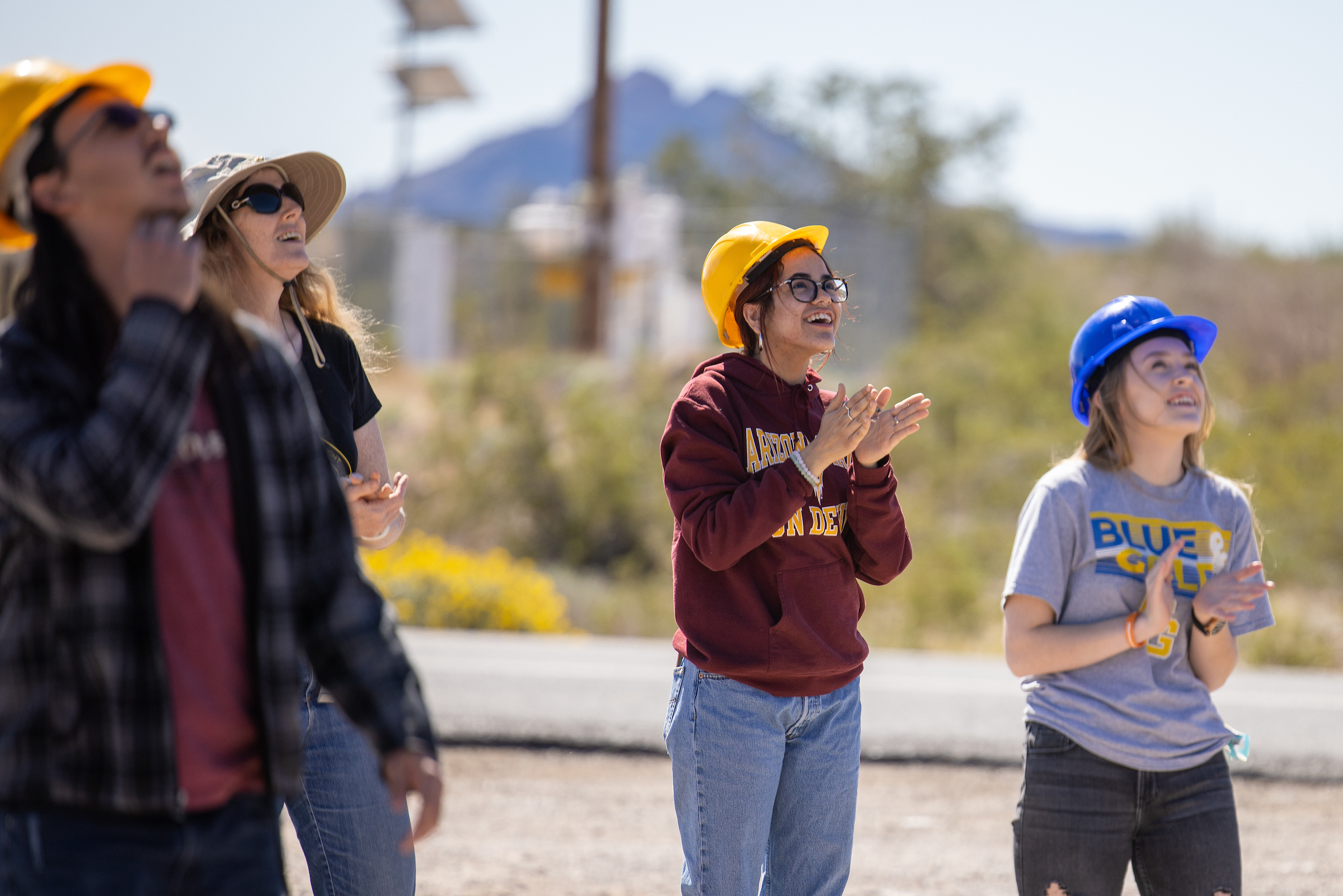
Students watch as a payload and weather balloon take off. The balloons traveled upward of 100,000 feet before popping and parachuting back down to Earth in the Harcuvar Mountains Wilderness.
Photos by Deanna Dent/Arizona State University
More Science and technology

ASU microscopes help solve decades-old asteroid-impact deposit mystery
Axel Wittmann had always had “a fondness for exotic rocks,” as he puts it, his favorite being suevite, formed from intense meteorite collisions. But in 2009, when he met fellow geologist Philippe…

Major in motion
Inside a dimly lit computer lab at Arizona State University, U.S. Space Force Maj. Tyler Williams leans over a glowing monitor, lines of simulated network traffic scrolling by faster than most eyes…

New study uncovers another role for the cerebellum, offering clues about autism
There is a window of time, a critical period, during infancy and early childhood when the brain learns how to process information — what different objects look like, parsing sounds that make up…