
As dean of Arizona State University’s Edson College of Nursing and Health Innovation, Judith Karshmer doesn’t just talk the talk. She walks the walk.
Or rather, she bicycles, as often as she can, instead of driving — and sometimes just for fun. It’s one wellness practice she has found that she is able to sustain, and that’s key.
“Sometimes we think there's a formula for good health, but it's so different for everyone,” Karshmer said. “My advice is that people should spend some time figuring out which wellness practices they can sustain, and do those.”
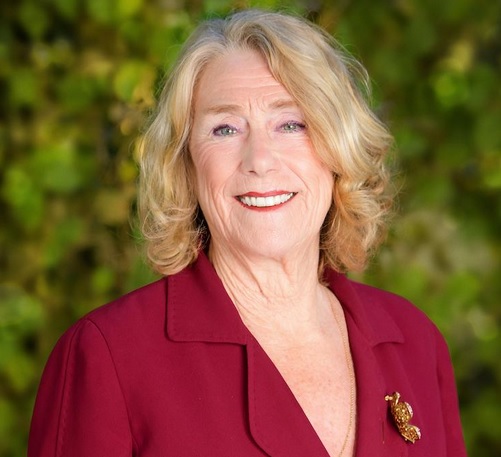
Judith Karshmer
In her new role as chief wellness officer at ASU, a role previously held by Professor Teri Pipe, Karshmer hopes to make it easier for the university community to explore and access the various wellness offerings that already exist here.
“It really is about curating all the resources ASU already has so that more people are aware of them and can use them,” she said.
Karshmer also plans to create stronger connections between wellness and ASU’s three enterprises: the Academic Enterprise, which encompasses degree-seeking students; Knowledge Enterprise, which represents research activities; and the new Learning Enterprise, which seeks to offer learning options to anyone, whether they are attending a K–12 school or recently retired.
ASU News sat down with Karshmer recently to learn more about how she plans to do that.
Question: What does it mean to you to be the university’s chief wellness officer, especially in the midst of a pandemic?
Answer: My predecessor, former Edson Dean Teri Pipe — her passion and her love has been the creation of the Center for Mindfulness, Compassion and Resilience here at ASU. They do amazing work, and they’ve done a wonderful job of spreading the mindfulness philosophy across the university. It’s also very timely considering how much tension and stress we’ve all been dealing with as a result of the pandemic. Something I’d like to do in this position is make a better coordinated effort to highlight wellness resources like the Center for Mindfulness that are available to faculty, staff and students.
I also think it’s important to connect wellness to the academic experience. If students learn that wellness is part of the academic experience, if they learn how to stay healthy while they're in college, they're going to be healthier citizens. And by the same token, we have to create a healthy workplace for faculty and staff. That's everything from making sure there’s good lighting and alternative transportation options so people feel comfortable walking on campus, to giving employers the tools to help employees when they’re stressed, to offering healthy, sustainable food options. It's a proactive sort of philosophy that puts ASU’s core values — assuming responsibility for the economic, social, cultural and overall health of its community — front and center.
Q: Where will you begin?
A: One of the things that I believe very strongly is that any activity around health at ASU should have the opportunity to address each of the enterprises — academic, knowledge and new learning. So every wellness event should be an opportunity for students to learn. It should also have an opportunity for some kind of research component, as well as a way to engage the learning enterprise.
Q: What is your overall goal?
A: It really is about curating all the resources ASU already has so that more people are aware of them and can use them. My goal in the next month or so is to meet with all the people who offer all these wellness services and get some feedback about how to better connect them all. And then also making those linkages between wellness and the three university enterprises.
Q: October is National Depression and Mental Health Screening month, and you have a master's degree in advanced psychiatric nursing. What are your thoughts on how we’re doing as a society as far as prioritizing the role of mental health in overall wellness?
A: I can remember 35 years ago talking about the need to remove the stigma around mental health. And I don't think we've done such a great job. I think there's still a huge amount of stigma. So I think it’s important to create environments that are safe enough for people to say, "Actually, I don't feel that great," or ‘"I'm feeling a lot of stress about this." We hear a lot about allies today. We need to be allies when it comes to mental and behavioral health, and normalize that sometimes you’re going to feel bad, and that's OK.
Q: Do you have any advice for students and faculty on how to balance the demands of academic life with prioritizing their wellness?
A: Sometimes we think there's a formula for good health, but it's so different for everyone. My advice is that people should spend some time figuring out which wellness practices they can sustain, and do those. If that’s walking 10 miles, great. If that’s not something you can sustain, then find something you can and do that instead. For me, it’s bicycling. But there's no one perfect way to do it. It’s about balance and finding what works for you.
Top photo by Arizona State University
More Health and medicine

Democratizing health care: There’s an app for that
Americans wait an average of 31 days to see a health care provider, a 22% increase since 2022. And while telehealth visits provide cost-effective and accessible alternatives to in-person care, vital…

From lab to startup: ASU researchers drive health innovation
By Emmanuelle ComptonThe future of engineering-driven health innovation is currently unfolding at Arizona State University.In the School of Biological and Health Systems Engineering, part of the Ira…

Creepy-crawly science that matters
Written by Douglas C. TowneWhen Karen Clark was a child traveling with her grandfather, the late ASU Professor Herbert L. Stahnke, she didn’t realize how unusual their evening routines were.“When we…