Agentic AI conference at ASU explores innovation, ethics, careers

ASU President Michael Crow gave the keynote address on Thursday at the "Agentic AI and the Student Experience" conference held by ASU Enterprise Technology at the Omni Tempe Hotel. Crow talked about how AI can help achieve the widespread access to education that has eluded humanity until now. Photo by Charlie Leight/ASU News
Artificial intelligence can be the ultimate equalizer for widespread access to education that has eluded humanity for centuries, and for that reason, it’s critical for higher education to embrace it, according to ASU President Michael Crow.
Crow gave a keynote address at the “Agentic AI and the Student Experience” conference on Thursday. The three-day event, held by ASU Enterprise Technology, featured speakers, panels and hands-on workshops to explore how higher education is dealing with the light-speed advances and challenges of AI.
An early and vigorous adopter of AI, Crow said that everyone has a brain that craves learning and AI can personalize education across the lifespan.
“We're each given this unbelievable gift and then we try to drive everybody through a factory model of learning,” he said.
In 2024, ASU became the first university to collaborate with OpenAI, the company behind ChatGPT. Since then, ASU has set guiding tenets for the use of AI, launched the AI Innovation Challenge, which has resulted in more than 700 faculty and staff projects, and developed CreateAI Builder, an in-house platform that enables the ASU community to build AI-enabled products in a secure environment.
The role of AI in expanding equity in education aligns perfectly with ASU’s charter because it can widen inclusion, increase student success and boost research, according to Roger Kohler, director of AI solutions and architecture on ASU's AI Acceleration team, who spoke at a workshop on Wednesday.
The workshop participants created their own AI tool using ASU’s CreateAI Builder, which protects data, provides transparency and has stewardship built in to safeguard students.
“We all in higher ed really need to show that AI is a power for good. It's not just for profit. And that there's a way to use AI with principled innovation, and we don't try to replace humans, but we enhance humans,” Kohler said.
“We can’t wait for policy because it’s so dynamic.”
-

ASU student Camille Campbell, a digital marketing major in the W. P. Carey School of Business at ASU, moderates a student panel on Thursday at the "Agentic AI and the Student Experience" conference at the Omni Tempe Hotel.
Photo by Charlie Leight/ASU News
-

Diana Bowman, professor of law and associate dean for applied research and partnerships at the Sandra Day O'Connor College of Law at ASU, was the moderator for the three-day "Agentic AI and the Student Experience" conference, held by ASU Enterprise Technology at the Omni Tempe Hotel.
Photo by Charlie Leight/ASU News
-

AI company vendors talk with participants at the "Agentic AI and the Student Experience" conference at the Omni Tempe Hotel at ASU. More than 650 people attended the three-day event held by ASU Enterprise Technology.
Photo by Charlie Leight/ASU News
Key messages from the conference include:
ASU President Michael Crow
Crow told a story about his school librarian, Mrs. Baker.
“She was unbelievable with what she was able to do in my interactions with her. And nothing about AI takes away the Mrs. Bakers. Nothing about AI takes away the value of the library,” he said.
Crow said that AI can evolve instantly along with the core knowledge that is at the heart of every university. And in our current era, all citizens need to have a mastery of how math and science affects our lives, he said.
“Mastery means, do you understand what it is? Do you understand what carbon dioxide is? Do you understand what it means if you change the amount that's in the atmosphere?” he said.
“If you don't know where your food comes from, we're in for big trouble going forward. If you don't know where water comes from or energy comes from or where all of these computational tools come from and how they work, we'll never be able to really fully grasp all the things that we're attempting to do or be.”
Crow referenced the dystopian movie “Elysium,” where the ultra-rich live on a luxurious space station and poor people live on a polluted Earth, scrabbling to get by.
“That's the trajectory we are on right now. If we really want our entire species to reach the potential that we have as a species, we’ve got to figure this out,” he said.
Marina Gorbin, executive director of the Institute for the Future
In 1978, the Institute for the Future forecast that eventually, people would work in “electronic meetings,” using audio and video. In 2008, the think tank created an alternative reality game imagining how people would react to quarantining and work disruption during a pandemic in the year 2019.
The institute creates 10-year outlooks based on research and data, but Gorbin said our society is not incentivized to act on long-term forecasts.
“Our society's very much short-term oriented. With stock prices, we worry about return investment right now. Our politics is very short-term oriented. It's about the next election.”
But people, and organizations, are more resilient when they have the capacity for temporal bandwidth — the ability to think about both the past and the future. And looking at history reveals that new technologies are typically followed by periods of polarization and disruption.
“When we think about AI and what's happening today, there are a lot of patterns in terms of technology evolution that we really need to be paying attention to,” she said.
Gorbin said the country should consider AI as a universal basic asset.
“It doesn't mean that the government has to own everything — it's a question of balance. Why is it that access to health is not a right? Why is it that access to basic technology infrastructure for broadband is not a right? There has to be a public option in all of these things,” she said.
“Increasingly, I think AI and AI infrastructure is becoming this basic asset.”
Kyrsten Sinema
After retiring from her political career, during which she represented Arizona as a U.S. senator, Sinema wanted to find a way to help kids who weren’t able to flourish in a traditional classroom. That passion dates back to her time as a social worker at an elementary school in Sunnyslope.
Earlier this year, she launched the Spark Center for Innovation in Learning at ASU to harness the power of AI to develop tools for neurodivergent learners, their teachers and their families.
“The old-school concept is, ‘Oh, let's mainstream these kids.’ No, no, no. These kids are extraordinary, and one day they'll be extraordinary adults, right?
“How do we marshal this incredible technology, the AI that we're developing?”
Sinema, a Distinguished Professor of Practice in the School of Social Work, said she’s not an expert in AI.
“What I'm excited about is a genius doing it,” Sinema said during a fireside chat on Friday with Lev Gonick, chief information officer at ASU.
“You could use AI as a tool to identify a student who has dyslexia very early on, long before reading even begins. Or help students who may be on the spectrum use AI to interact in a way that is most appropriate for them to communicate.”
Sinema and Gonick announced the inaugural Global AI Challenge, a competition to develop AI-powered solutions to help neurodiverse learners. It will include an Arizona AI Competition for statewide college students.
Contestants will get mentoring and support from Open AI and Microsoft in a dedicated lab.
“We’re not just looking for good ideas,” she said. “We are going to help turn those good ideas into reality so they go into the world and help real people.”
Activating AI at ASU
The “Agentic AI and the Student Experience” conference included two announcements:
ASU student workers designed and built an AI-powered chatbot that engages with prospective students during their college admissions journey as part of a collaboration among ASU, Cintana Education and Amazon Web Services. Next, the students will work on autonomous tutoring agents that provide personalized academic support in native languages to students in the ASU-Cintana Alliance of 33 partner universities across 28 countries.
ASU and Microsoft will be working together to bring Xbox Game Camp to all ASU students. Xbox Game Camp is a multi-week program that provides mentorship, tools and training to emerging game creators. This will be the first time Xbox Game Camp will be offered in Arizona.
More Science and technology

New research by ASU paleoanthropologists: 2 ancient human ancestors were neighbors
In 2009, scientists found eight bones from the foot of an ancient human ancestor within layers of million-year-old sediment in the Afar Rift in Ethiopia. The team, led by Arizona State University…

When facts aren’t enough
In the age of viral headlines and endless scrolling, misinformation travels faster than the truth. Even careful readers can be swayed by stories that sound factual but twist logic in subtle ways that…
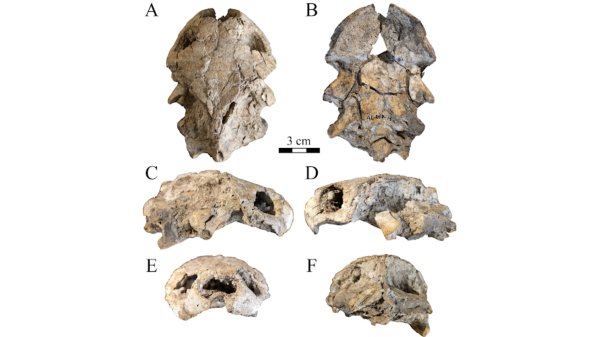
Scientists discover new turtle that lived alongside 'Lucy' species
Shell pieces and a rare skull of a 3-million-year-old freshwater turtle are providing scientists at Arizona State University with new insight into what the environment was like when Australopithecus…