Scientists discover genetic adaptations can help those living in dry climates

A well dug in the dry season by the Turkana from which water is collected to give to livestock and transported for household consumption. Photo by Sarah Mathew
A team of international scientists has uncovered key genetic adaptations underlying survival in hot and dry environments, revealing how natural selection may have enabled some pastoralist populations in Kenya to prevail in these environments.
The Turkana live in a semi-arid to arid savanna biome in northern Kenya where shade is rare and water — even rarer. In this environment, securing enough water for themselves and their herds of cows, goats, sheep and camels is a daily challenge, influencing the seasonal settlement and migration patterns of households.
Arizona State University researchers have been collaborating with Turkana communities since 2017 to understand how culture and genes interact to shape population history, demography and adaptations to the local environment.
“I began working with Turkana pastoralists in 2007, and over the years, our research project has cultivated strong relationships with the pastoralist communities. Their trust is something we never take for granted,” said Sarah Mathew, a research scientist at the Institute of Human Origins and associate professor at the School of Human Evolution and Social Change.
Genomic data
From saliva samples, ASU geneticists obtained high-coverage whole genome DNA sequences. The laboratory and computational work was supervised by ASU faculty Anne Stone and Melissa Wilson.
“Genomic data are providing insights into population history, including some of the many ways that people adapt to their environments,” said Stone, a research scientist at the Institute of Human Origins, director of the Center for Evolution and Medicine and Regents Professor at the School of Human Evolution and Social Change. “African populations are comparatively underrepresented in genetic studies despite the great diversity of people living there and the diversity of environments across Africa.”
The genetic data helped uncover evidence for natural selection in Turkana genomes. Researchers from the Kenya Medical Research Institute (KEMRI) in Nairobi, UC Berkeley and Vanderbilt University, under the umbrella of the Turkana Health and Genomics Project, were investigating adaptations in Turkana populations by examining genetic and physiological data, but did not have high-coverage whole genome sequence data. Combining these datasets allowed the researchers to identify regions showing evidence of natural selection.
“The analysis of this combined dataset allowed scientists to identify eight regions in the DNA that had likely changed over time to help people survive better,” said Rebecca Siford, an ASU alumna who surveyed pastoralists in northern Kenya about ethical topics in human genetics research as a part of her dissertation research.
“One gene, STC1, stood out and was especially interesting because it shows very strong signs of these changes (i.e. natural selection). This gene works in the kidneys and helps the body save water by reacting to a hormone that controls urine, allowing the Turkana to concentrate their urine and retain more water, which is helpful in dry environments.”
STC1 may also play a role in protecting the kidneys from the waste generated by purine-rich foods like red meat. These waste products, such as urea and uric acid, must be filtered by the kidneys, and in many people, too much dietary purine can lead to gout, a problem that appears to be rare among the Turkana.
The timing of these genetic adaptations appears to coincide with the aridification of northern Africa, suggesting that as the climate became increasingly dry about 5,000 years ago, natural selection favored genetic variants that helped people thrive in drier habitats with more animal-based food in their diet.
“While genetic adaptations get a lot of attention, we shouldn’t forget that the Turkana have accumulated thousands of unique cultural adaptations — knowledge, beliefs, behaviors, social norms and institutions — that have enabled them to thrive as pastoralists,” says Mathew, who studies how cultural capacities influenced the evolution of human cooperation.
“It is possible that we are seeing a case of gene-culture coevolution, where the cultural adaptations allowed people to expand into the arid pastoral niche, paving the way for subsequent genetic adaptations.”
-

Ekiru Carlistus explains the genetic study at a research camp communal hut in 2017.
Photo courtesy of Ekiru Carlistus
-

Gilbert Topos, Turkana field site manager, discusses their genetic research with the community.
Photo courtesy of Gilbert Topos
-

Sarah Mathew (right) and Turkana research assistant Amuria Lotiira gather in a Turkana hut for data collection.
Photo courtesy of Sarah Mathew
-

Rebecca Siford, former ASU PhD student and current postdoctoral researcher at the National Institutes of Health, develops dissemination materials in consultation with Turkana.
Photo courtesy of Rebecca Siford
-

Turkana women form a chain to hoist water from a well so that their livestock can take a drink on their grazing circuit.
Photo courtesy of Sarah Mathew
-

A Turkana woman departs after filling her jerrycans with water from a shallow well she dug in the dry river bed.
Photo courtesy of Sarah Mathew
-

Dorcas Aroo and Ekiru Carlistus, research assistants who hail from the Turkana community, share the results of the Science paper.
Photo courtesy of Ekiru Carlistus
Involving the communities
The ASU team has been working with their Turkana study communities to share findings from the research, and seek permission for any additional studies such as the collaboration that led to this finding.
Through a three-year grant from the National Human Genome Research Institute, the ASU team has also surveyed 750 pastoralists in northern Kenya about their preferences on data governance, consent, privacy and dissemination of findings in the context of genetics research.
“The narratives we have collected emphasize that meaningful community engagement requires openly and clearly sharing results, along with ongoing dialogue about research findings, participant expectations and community impacts,” Siford said.
Earlier this year, ASU’s Turkana field team visited the different locations where they recruited participants. They shared the findings with participant communities and asked people what they thought of it.
“I want you to keep coming with studies,” said one community member. “I like that the researchers share what they know and allow for the community to share what they know too.”
The results generally resonated with people’s perceptions about their capacity to go without water for long, but they also noted that other pastoralists in the region like the Rendille, Samburu, Borana, Merille, Karimojong and Toposa are likely to share this adaptation due to living in similarly arid environments.
“They are clearly on to something, as other Rendille and Samburu pastoral communities in Kenya, including the Rendille and Samburu, also show evidence for selection on this trait,” Stone said.
The study, “Adaptations to water stress and pastoralism in the Turkana of northwest Kenya,” was published in the journal Science.
Article adapted from the University of California Berkeley.
More Science and technology
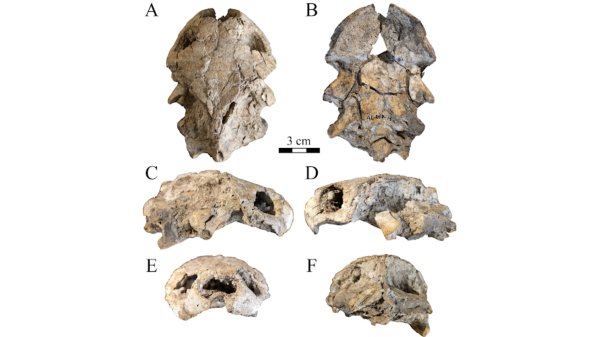
Scientists discover new turtle that lived alongside 'Lucy' species
Shell pieces and a rare skull of a 3-million-year-old freshwater turtle are providing scientists at Arizona State University with new insight into what the environment was like when Australopithecus…

ASU named one of the world’s top universities for interdisciplinary science
Arizona State University has an ambitious goal: to become the world’s leading global center for interdisciplinary research, discovery and development by 2030.This week, the university moved…

ASU and Thailand advance semiconductor collaboration through workforce development initiatives
As Thailand accelerates efforts to strengthen its semiconductor ecosystem, Arizona State University and Thai partners are expanding collaboration to support the country’s innovation and workforce…