Neuroeconomics to be focus of annual Arntzen Grand Challenges Lecture

Stock photo
Any casino owner can tell you: Especially when it comes to money, people don't like losing.
But thanks to neuroeconomics, a new field that seeks to understand and influence brain mechanisms related to economic decisions, we're gaining insights that have the potential to impact funding for everything from military defense to medical innovations, aid for countries in need, climate change mitigation and more.
Colin F. Camerer, professor and director at the California Institute of Technology who specializes in behavioral economics and neuroscience, will present “The Brain Hates Losing and Other News From Neuroeconomics” at the Walton Center for Planetary Health at Arizona State University on Thursday, Nov. 2, as part of the Arntzen Grand Challenges Lecture Series.
The series, inspired by Charles Arntzen, founding director of the Biodesign Institute at ASU, invites experts to speak on some of the world’s toughest problems in a public exchange. In his Nov. 2 talk, Camerer will discuss how the human aversion to loss — and our emotional response to it — can explain decisions related to consumer purchases, stock trading and even sports.
The lecture is free and open to the public. Register here.
Arntzen is internationally recognized for his novel applied research on the development of genetic strategies for using plants to manufacture pharmaceuticals and produce cost-effective vaccines or drugs to save lives around the world, especially in developing nations.
Moving quickly to set up a world-class research institute, ASU President Michael M. Crow not only tasked Arntzen to recruit existing ASU faculty to join the new institute, but he also helped to recruit external scientists — including George Poste as the first permanent director — and set up Biodesign’s initial support structure. Once Biodesign was set up for success, Arntzen co-directed a Biodesign center to develop vaccines to fight infectious diseases.
The Arntzen Grand Challenges Lecture Series was made possible by his family’s donation in 2017. Learn more by viewing the video below.
Video courtesy the Biodesign Institute at ASU
Watch past Arntzen Grand Challenges lectures on the Biodesign Institute's YouTube channel.
More Science and technology

New research by ASU paleoanthropologists: 2 ancient human ancestors were neighbors
In 2009, scientists found eight bones from the foot of an ancient human ancestor within layers of million-year-old sediment in…

When facts aren’t enough
In the age of viral headlines and endless scrolling, misinformation travels faster than the truth. Even careful readers can be…
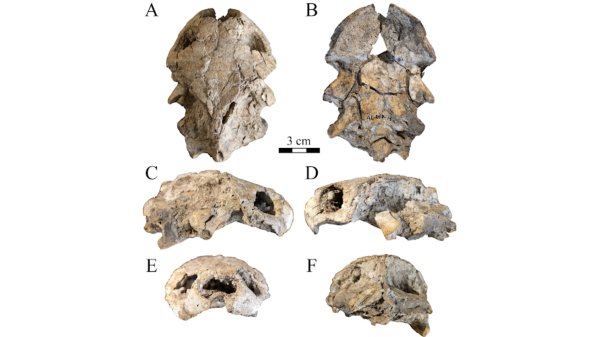
Scientists discover new turtle that lived alongside 'Lucy' species
Shell pieces and a rare skull of a 3-million-year-old freshwater turtle are providing scientists at Arizona State University with…