Summer travelers can add a space detour to their journey
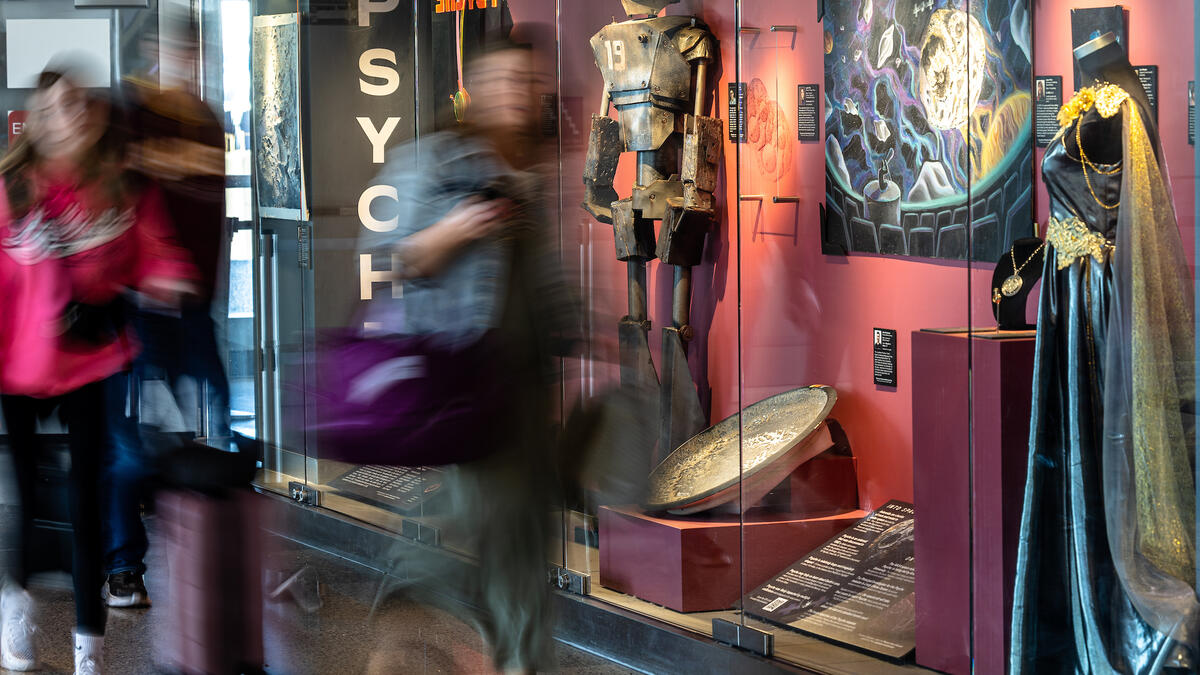
Travelers pass by the “Psyche: Mission to a Metal World” exhibit in Phoenix Sky Harbor International Airport’s Terminal 3, near the TSA Security Checkpoint entrance, in April. Photos by Charlie Leight/ASU News
Editor's note: On Sept. 28, NASA announced that the Psyche launch is now targeted for Oct. 12.
Passengers approaching the Terminal 3 security line at Phoenix Sky Harbor International Airport might notice a collection of art pieces and sculptures with a sign that reads: “Psyche: Mission to a Metal World.”
The exhibit is part of NASA’s Psyche Inspired internship program, where undergraduate students nationwide celebrate the Psyche mission through artistic and creative works. The mission, scheduled for launch Oct. 5, will send a robotic spacecraft to Psyche, a metal-rich asteroid that could provide clues into the formation of planets.
So far, the Psyche Inspired art program has included 91 undergraduate interns from 43 colleges and universities. The next cohort will be announced at the end of July.
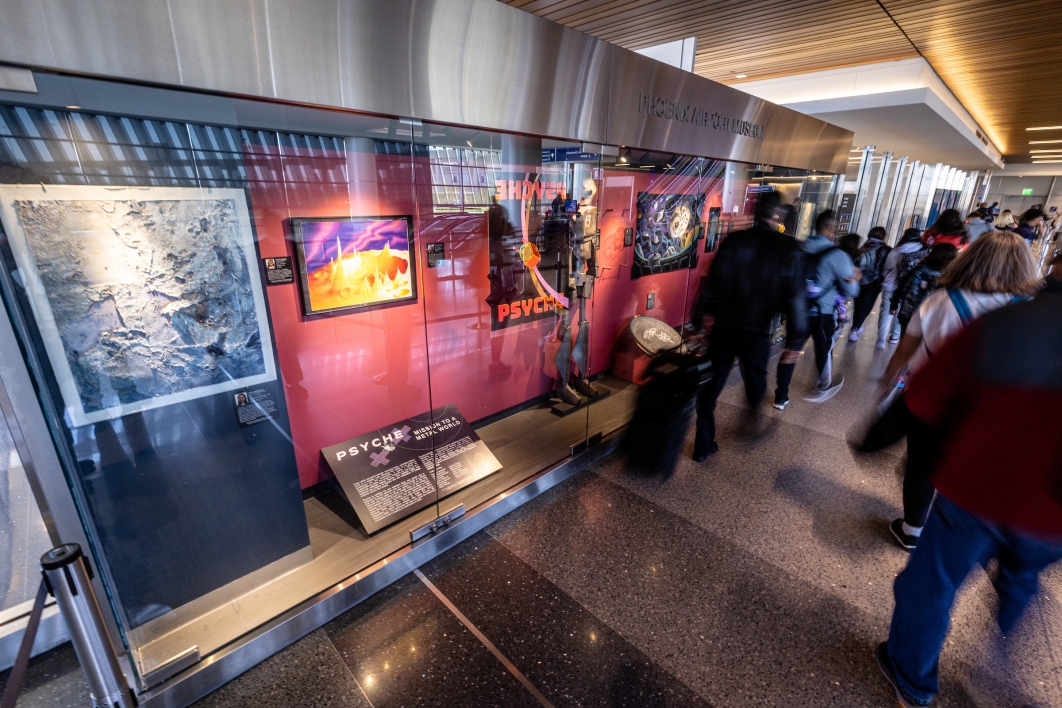
The Psyche Inspired exhibit at Phoenix Sky Harbor International Airport presents a sampling of works by 14 students utilizing paint, fabric, animation, metal and sculpture. The art program has been ongoing for several years, and undergraduate students from across the U.S. chosen for the latest cohort will be announced near the end of July.
“We have hundreds and hundreds of amazing works of art created by Psyche Inspired students over the years,” said Lindy Elkins-Tanton, an Arizona State University Regents Professor and the principal investigator for the Psyche mission.
“Marching band pieces, poetry, cooking, jewelry, digital art, you name it. It’s so human and connecting, and it captures all the emotions that we all feel about this mission.”
ASU News talked with two students whose work is currently displayed in the airport exhibit, which will be in place through the end of October.
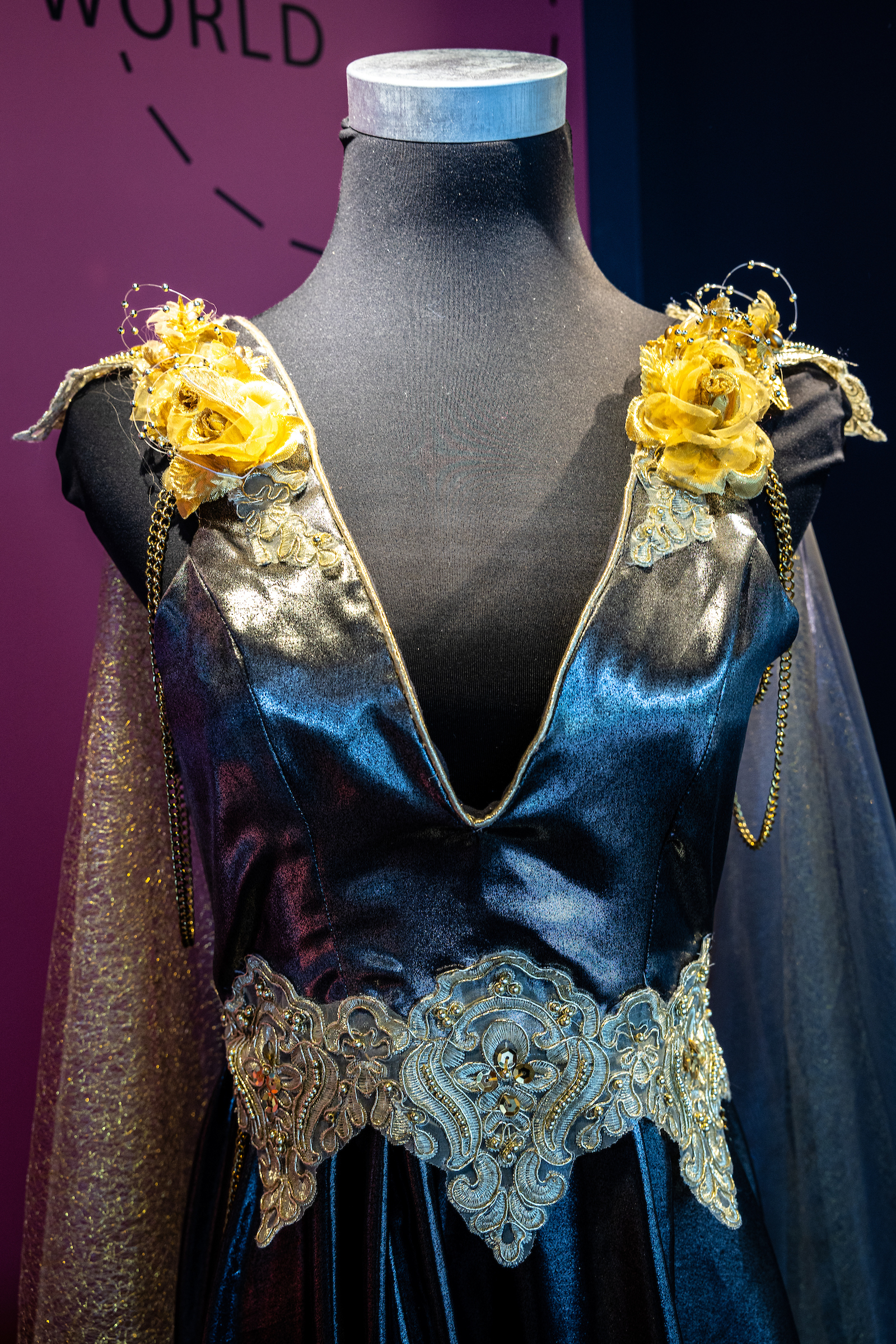
"Metallic Warrior" by ASU astrobiology student Siena Smania.
Siena Smania: “Metallic Warrior”
Siena Smania graduated from ASU in May with a degree in astrobiology. Here's how she describes her piece:
“So, one of the main aspects of Psyche and why scientists find it so interesting is because it’s metallic and it’s very large,” Smania said. “They think that it could be remnants of a planetary core that didn’t get fully developed or shattered and fell apart.
“That being said, I really wanted to take this metallic aspect and turn it into something like a dress. I found a metallic fabric that I really liked. It’s like a dark gray, very metallic, and it looks like nickel.
"The asteroid itself (may be) mostly composed of nickel and iron, but it also (might have) some gold in it, which is why I decided to add some gold accents as well.
“I really wanted it to look like something that could have come out of Star Wars. Actually, when I did the photoshoot taking pictures of me in the dress, I brought a lightsaber with me.”
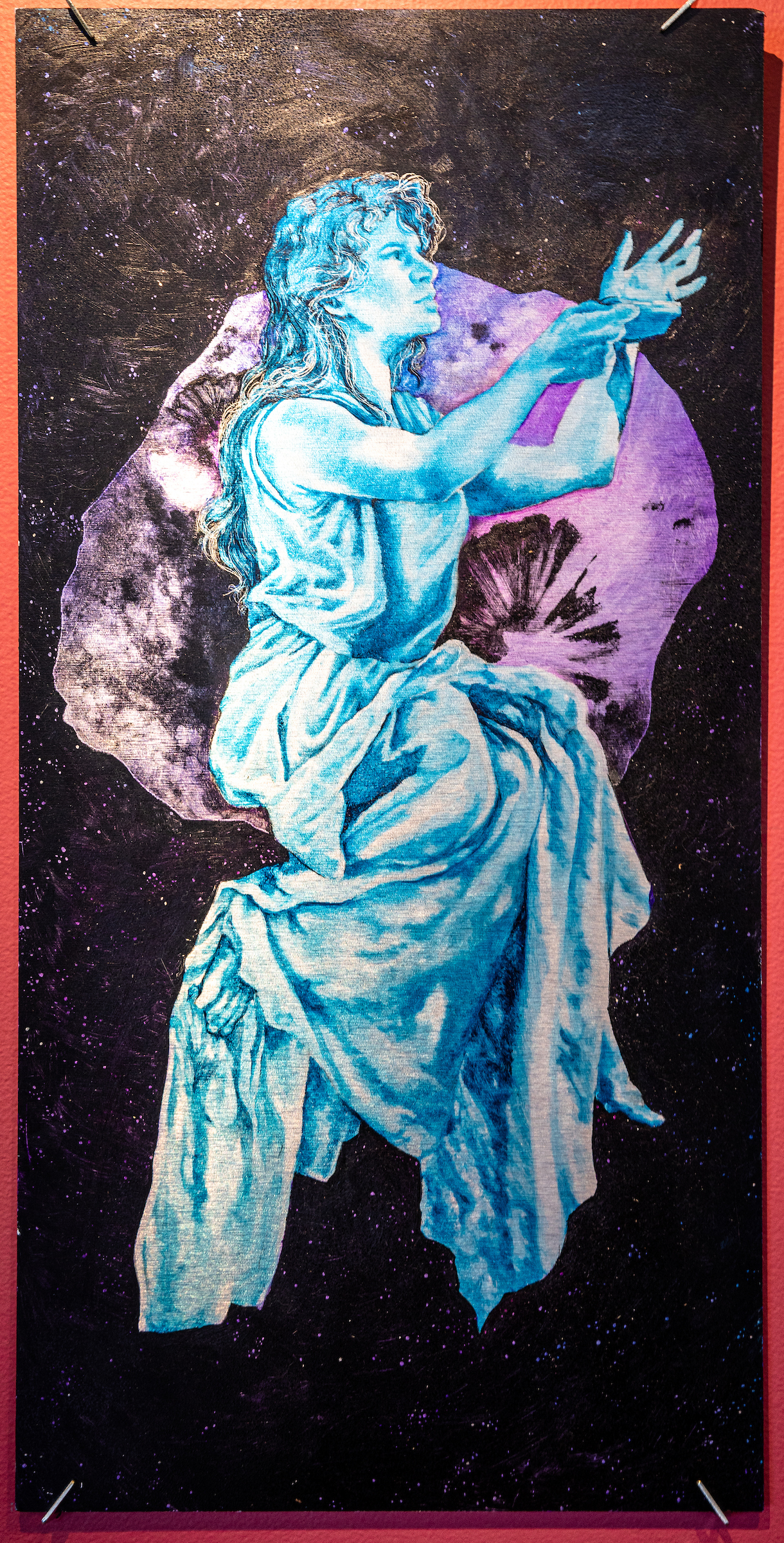
"Psyche Has a Metal Soul" by Virginia Commonwealth University student Levi Keatts.
Lev Keatts: “Psyche Has a Metal Soul”
Lev Keatts graduated from Virginia Commonwealth University with interests in printmaking and math. Here's his take on his piece:
“I obviously studied both math and art, so I had an interest in STEM and art, and this was kind of an ideal opportunity to find ways to combine those interests,” Keatts said.
“I decided to use a metal canvas, which is actually an older painting technique that kind of lost popularity but has recently been brought back with painting on copper and aluminum.
“I wanted to have a line between Psyche the asteroid having a metal core that kind of inspired the mission and then by having this painting that has Psyche as the mythological figure on physical metal, making that connection and hopefully making the audience curious about it.”
>>EXPLORE: Read more about the Psyche mission
More Science and technology

Cracking the code of online computer science clubs
Experts believe that involvement in college clubs and organizations increases student retention and helps learners build valuable social relationships. There are tons of such clubs on ASU's campuses…
Consortium for Science, Policy & Outcomes celebrates 25 years
For Arizona State University's Consortium for Science, Policy & Outcomes (CSPO), recognizing the past is just as important as designing the future. The consortium marked 25 years in Washington, D…

Hacking satellites to fix our oceans and shoot for the stars
By Preesha KumarFrom memory foam mattresses to the camera and GPS navigation on our phones, technology that was developed for space applications enhances our everyday lives on Earth. In fact, Chris…