ASU Law professor awarded Berlin Prize Fellowship to expand research on election law
In the run-up to the November midterm elections, lawmakers in several states have been working on new voting-related legislation and several bills have become law.
There have also been legal challenges to existing voting systems. In Arizona, for example, a Mohave County judge recently ruled that the state’s early voting law is constitutional, rejecting a lawsuit that claimed mail-in ballots violated the state’s constitution.
As election laws change over time, academic research is taking place to make sure voter’s rights are protected. This fall semester, Joshua Sellers, an associate professor at the Sandra Day O’Connor College of Law at Arizona State University will research the relationship between election law doctrines, electoral structures, policies and practices, and racial equality.
Sellers was selected for a Berlin Prize at the American Academy in Berlin, a private, independent, nonprofit institute for advanced study.
The competitive fellowships are awarded annually to American or U.S.-based scholars, writers, composers and artists who represent the highest standards of excellence in their fields, from the humanities and social sciences to journalism, public policy, fiction, the visual arts and music composition.
ASU News spoke with Sellers, who is also the co-host of the “Keeping It Civil” podcast through ASU’s School of Civic and Economic Thought and Leadership, about the fellowship and the future of election law in the U.S.
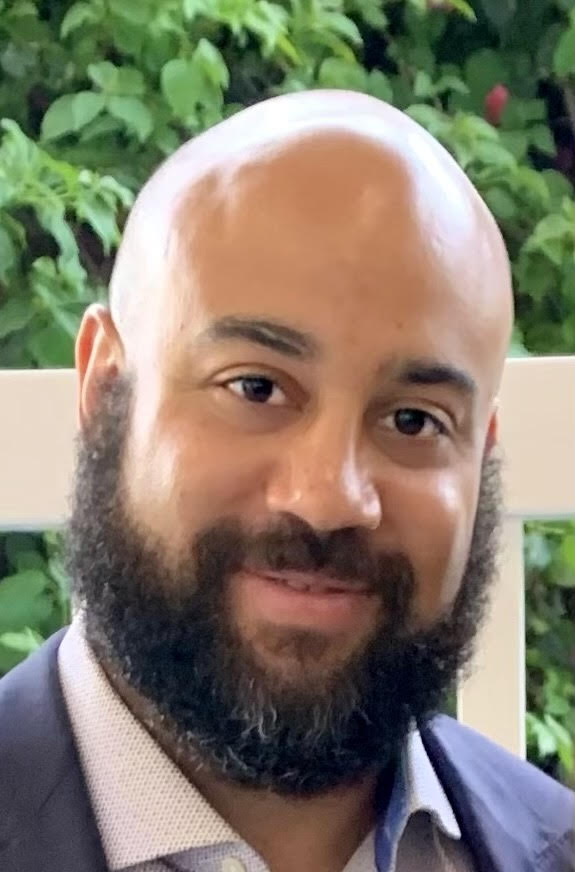
Joshua Sellers
Question: What specifically will be you researching during your fellowship? What types of projects will you be working on?
Answer: I hope to make substantial progress on several projects this fall in Berlin. I am currently working on a co-authored project examining the nature of voter complaints submitted to the Lawyer’s Committee for Civil Rights during the last decade’s presidential elections. I am also authoring a chapter on political parties in the forthcoming "Oxford Handbook of American Election Law." But most of my time will be spent researching the ways in which election law and electoral structures — gerrymandering, for example — impact people outside of the political process.
I am specifically interested in the relationship between election law and racial equity and how our electoral structures impact our economic and social lives. Scholars are very attentive to ongoing attempts to suppress or dilute minorities’ votes. But they devote far less time considering how those attempts, when successful, translate into other non-political forms of disadvantage. Researchers are just beginning to draw out those connections.
Q: What are America’s greatest challenges right now when it comes to election law?
A: I think referring to our “challenges” is an understatement; we are facing several severe threats. A significant number of our elected officials believe the last presidential election was stolen and are either promoting or supporting efforts to undermine future elections. Others downplay the events of Jan. 6, 2021. The trend towards illiberalism, coupled with the extent to which political polarization has infected so many aspects of American life, presents a serious threat to “free and fair elections,” a hallmark of American democracy. Restoring trust in our democratic processes and establishing a healthy civic culture are the challenges of our time.
Q: Should we be concerned about how many lawmakers in various states are trying to change election laws?
A: In many instances, yes. That said, change can be positive. The New York State legislature just passed a transformative voting rights bill that will increase voter access throughout the state and protect against voter discrimination. I suspect Gov. Hochul will sign it soon.
However, many other states, including Florida, Georgia, Texas and Arizona, are increasing administrative burdens on voters based on the fallacious notion that doing so is essential to guard against fraudulent voting. The idea that fraudulent voting is an ever-present threat is a canard that regrettably persists despite mountains of evidence to the contrary. So, we should be concerned both about laws that make it harder to vote and about legislators’ reliance on and exploitation of unsubstantiated propaganda.
Top photo courtesy Pixabay
More Law, journalism and politics
Exhibit uses rare memorabilia to illustrate evolution of US presidential campaigns
After one of the most contentious elections in history, a new museum exhibit offers a historical perspective on the centuries-old American process.“We The People! Electing the American President” had…
TechTainment conference explores the crossroads of law, technology, entertainment
What protections do writers, actors, producers and others have from AI? Will changing laws around name, image and likeness (NIL) eliminate less lucrative college sports programs?And what does…

How to watch an election
Every election night, adrenaline pumps through newsrooms across the country as journalists take the pulse of democracy. We gathered three veteran reporters — each of them faculty at the Walter…