Study: Conflict between divorced parents can lead to mental health problems in children

Karey O'Hara, assistant research professor of psychology. Photo by Robert Ewing.
Conflict between divorced or separated parents increases the risk of children developing physical and mental health problems.
A new study from the Arizona State University Research and Education Advancing Children’s Health (REACH) Institute has found that children experience fear of being abandoned when their divorced or separated parents engage in conflict. Worrying about being abandoned predicted future mental health problems in children. The work was published in Child Development on Jan. 12.
“Conflict is a salient stressor for kids, and the link between exposure to interparental conflict and mental health problems in children is well established across all family types — married, cohabitating, separated and divorced,” said Karey O’Hara, a research assistant professor of psychology at ASU and first author on the paper.
“Conflict between divorced or separated parents predicted children experiencing fear that they would be abandoned by one or both parents. This feeling was associated with future mental health problems, especially for those who had strong relationships with their fathers.”
Based on studies including children from families with married or cohabitating parents, the researchers knew that children view interparental conflict as a threat, often wondering if their parents will get divorced.
To understand how children with divorced or separated parents interpreted interparental conflict, the researchers surveyed families participating in the New Beginnings Program, asking 559 children (aged 9–18 years) about their exposure to conflict. The questions included topics like whether their parents fought in front of them, spoke poorly of the other parent or asked children to carry messages. Children exposed to interparental conflict were more likely to report worrying about being abandoned by one or both of their parents.
“When parents who are married or cohabitating engage in conflict, the child might worry about their parents separating,” O’Hara said. “But children whose parents are divorced or separated have already seen the dissolution of their family. The idea that they might be abandoned might be unlikely, but it is not illogical from their perspective.”
The fear of abandonment was persistent: Exposure to parental conflict predicted fear of abandonment three months later. And, worrying about abandonment predicted mental health problems, as reported by the children themselves and their teachers, 10 months later.
Because quality parent-child relationships are known to buffer children against stress, the researchers expected children who had strong relationships with a parent to experience less fear of abandonment and mental health problems. But the team did not find a general buffering effect of parenting.
“A strong father-child relationship came at a cost when interparental conflict was high,” O’Hara said. “Having a high quality parenting relationship is protective, but it is possible that quality parenting alone is not enough in the context of high levels of interparental conflict between divorced parents.”
The goal of ASU’s REACH institute is to bring research promoting children’s well-being from the lab into practice, and the research team is currently working on designing an intervention to help children cope with parental conflict after divorce.
C. Aubrey Rhodes, Sharlene Wolchik, Irwin Sandler and Jenn Yun-Tien, all of ASU’s REACH Institute, also contributed to the work. This study was supported by the National Institute on Drug Abuse, National Institute of Mental Health and National Institute of Child Health and Human Development.
More Science and technology

New research by ASU paleoanthropologists: 2 ancient human ancestors were neighbors
In 2009, scientists found eight bones from the foot of an ancient human ancestor within layers of million-year-old sediment in…

When facts aren’t enough
In the age of viral headlines and endless scrolling, misinformation travels faster than the truth. Even careful readers can be…
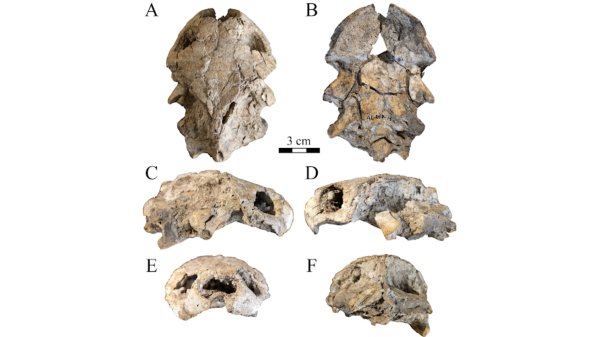
Scientists discover new turtle that lived alongside 'Lucy' species
Shell pieces and a rare skull of a 3-million-year-old freshwater turtle are providing scientists at Arizona State University with…