
Launching a business takes laser focus and gritty perseverance as entrepreneurs devote massive amounts of time to their ventures. It’s a lot of stress.
New research by an Arizona State University professor found that convincing entrepreneurs to devote time to exercising can result in lower stress levels for them.
Christopher Neck, an associate professor of management and entrepreneurship in the W. P. Carey School of Business, with two co-authorsThe co-authors were Michael Goldsby of Ball State University and Donald Kuratko of Indiana University., surveyed 472 small-business owners on how much they exercised, what type of exercise they did, their stress levels and job satisfaction. They also asked about personality traits.
“At the big-picture level, it validates what we thought — rigorous and high-intensity exercise can reduce job stress and, in turn, increase job satisfaction,” Neck said.
“That’s a very important finding.”
In addition, the analysis, published in the Journal of Leadership and Management, found that entrepreneurs whose personalities are more “open” and “agreeable” find more stress-busting benefits from exercise, he said.

Christopher Neck
Neck said he will further study the issue.
“Exercise is important to me, but I question from a pragmatic standpoint whether the exercise has to be rigorous and high intensity,” he said. “If you say, ‘Hey, you have to exercise two hours a day,’ that’s adding stress all on its own.”
Recent medical research has shown that shorter exercise periods that are more consistent over the week can be beneficial.
“I think that would provide a more practical recommendation to an entrepreneur,” he said.
Neck previously researched the impact of exercise on corporate managerial performance, using data from a big fitness center in Dallas.
“The idea of looking at entrepreneurs was a big void in that line of research, and that’s not surprising because the field of entrepreneurship as an academic field of discipline is relatively new,” he said.
Neck said that media attention on the most famous entrepreneurs doesn’t show a healthy lifestyle, and he wants to further study that.
“My whole crux is exercise, and the second thing is the impact of diet on entrepreneurial performance, longevity and stress,” he said.
“And the third thing is sleep. In the entrepreneurial world you say, ‘I stayed up for three weeks straight working on this project.’
“With our next generation of entrepreneurs that we’re training, do we really want them trained in the myth that you work 24 hours a day, don’t pay attention to diet and don’t sleep?”
That research will have practical applications, he said.
“I get a lot of personal satisfaction in research things that have personal applications to any entrepreneur, whether you’re running Apple or you’re a student with $500 thinking, ‘How can I start a business?’”
Entrepreneurship + Innovation will showcase the top ASU-affiliated ventures at Demo Day on Friday at 1951 @ ASU SkySong, 1475 N. Scottsdale Road, Scottsdale. Student, staff, faculty and community members will pitch their ventures in several categories as they compete for more than $250,000 in funding and support. The event is free and open to the public.
Top image by Pixabay
More Health and medicine

ASU team part of nationwide study looking at Type 2 diabetes in youth
Near the end of an interview in which he talked about the work his team will be doing to tackle the rise in Type 2 diabetes among youth, Arizona State University Professor Gabe Shaibi answered why…
Leading the way in wellness: ASU highlighted in The Princeton Review's 2025 Mental Health Services Honor Roll
Being a college student isn’t easy — navigating new routines, people and places can be a challenge, especially if the right support system is not in place. That's why Arizona State University is a…
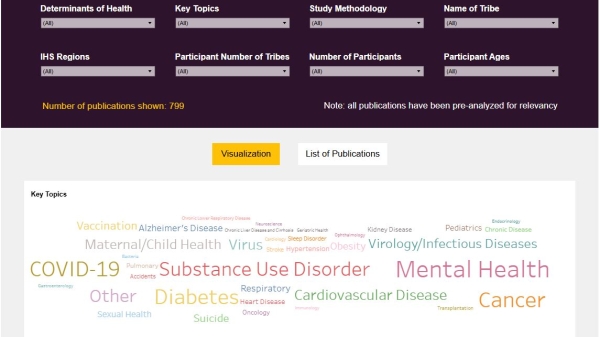
New Indigenous health dashboard offers robust database for scholars
By Nicole Greason and Kimberly Linn A team at Arizona State University’s College of Health Solutions and American Indian Studies program has created a new tool to aid researchers…