ASU communications lab helps students grow as speakers
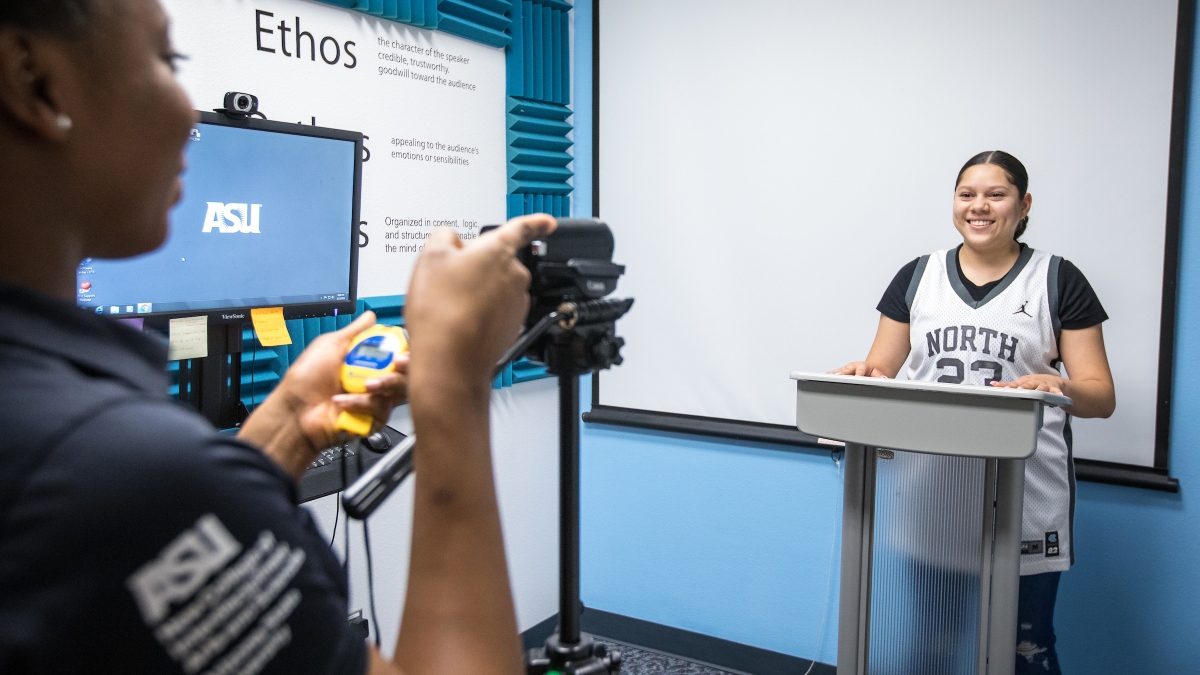
Justiana Carabajal neatly stacks the pages in front of her, then takes a deep breath as Arizona State University communications sophomore Miranda Alexander presses record on a video camera.
“Go ahead,” Alexander tells the 18-year-old, and hits start on a small, hand-held timer. Carabajal launches effortlessly into her speech, recounting her life story, the good along with the bad. From time to time, she looks up and smiles, and it’s infectious.
That’s a positive, Alexander tells her. Carabajal is great at connecting emotionally with the audience. However, she could work on the swaying. It can be distracting.
Carabajal takes the note graciously, mentally filing it away for the day, only about two weeks away now, when she will deliver that same speech in front of a crowd of friends, family and strangers at Phoenix College’s Bulpitt Auditorium. A member of the Boys & Girls Club of Metro Phoenix, she has been chosen to represent her branch and compete in the club’s annual Youth of the Year competition.
For the past few weeks, Carabajal and 12 other Boys & Girls Club youths have been visiting the Communication Assessment and Learning Lab (CALL) at ASU’s West campus to work on their speeches under the guidance of the lab’s experienced mentors, who — like Alexander — are students at ASU’s New College of Interdisciplinary Arts and Sciences.
CALL is one of 15 nationally certified peer-mentoring communications training programs — the largest west of the Mississippi — and the only such program in Arizona.
Communications senior lecturer Bonnie Wentzel became the director of CALL after leaving a career in human resources to return to college.
“I grew tired of being on the side of the desk where people were losing their jobs or not getting promotions because of poor communication,” she said.
So Wentzel came to ASU, where she received a bachelor’s degree and then a master’s degree in communication. When the opportunity to stay on at the university as director of CALL came up, she jumped at the chance. The philosophy of the New American University had grown on her, and she wanted to do her part to continue fostering it.
“I take our charter very seriously,” Wentzel said. “We have the New American University poster outside of our offices. So I really just looked at that and thought, 'OK, in this new job I have, how can I contribute?' And social embeddedness really spoke to me.”
-
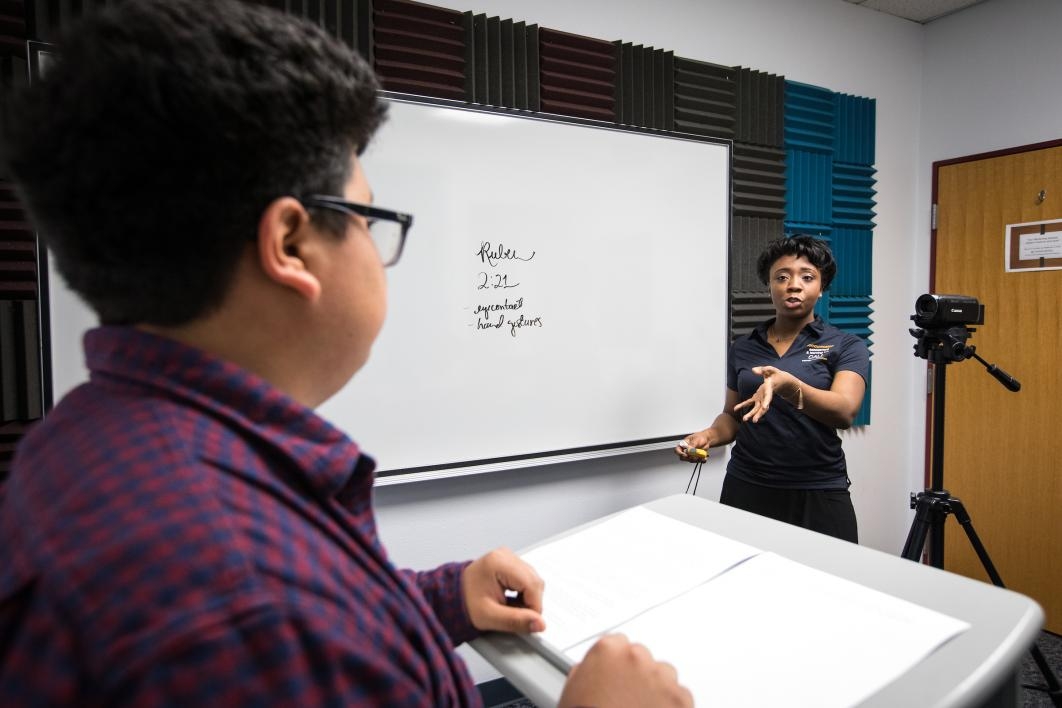
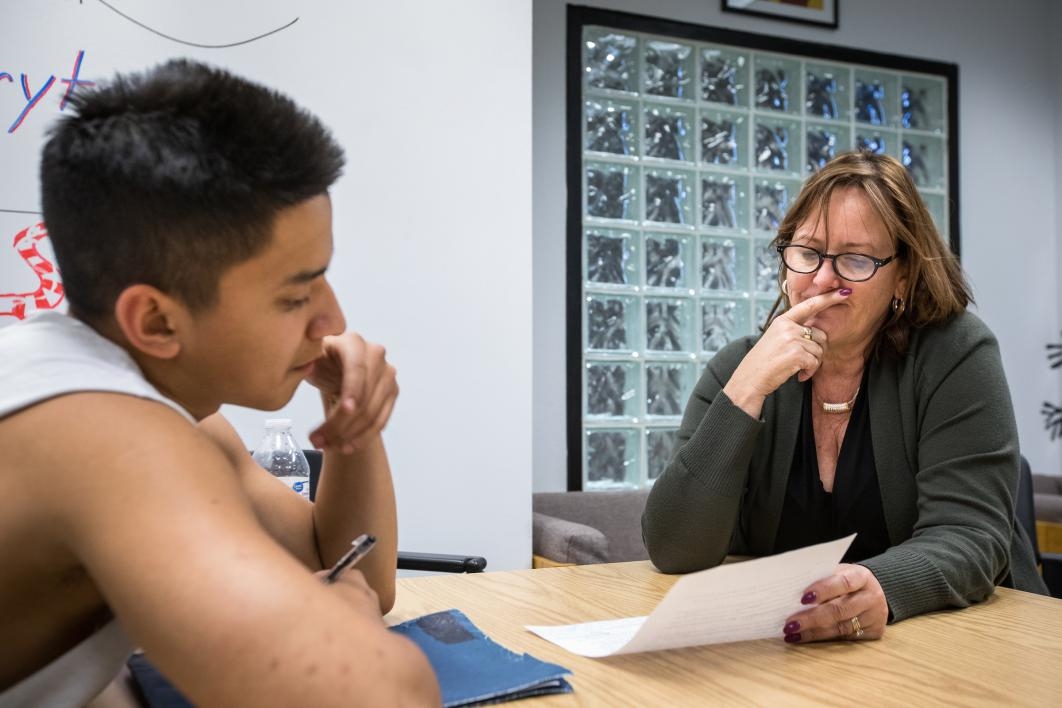
Communications and Spanish sophomore Miranda Alexander critiques Phoenix College Prep Academy junior Ruben Galicia, 17, after he gives a practice three-minute speech on his life and his desire to become a public defender, in the ASU Communication Assessment and Learning Lab on the West campus on Tuesday.
Photo by Charlie Leight/ASU Now
-
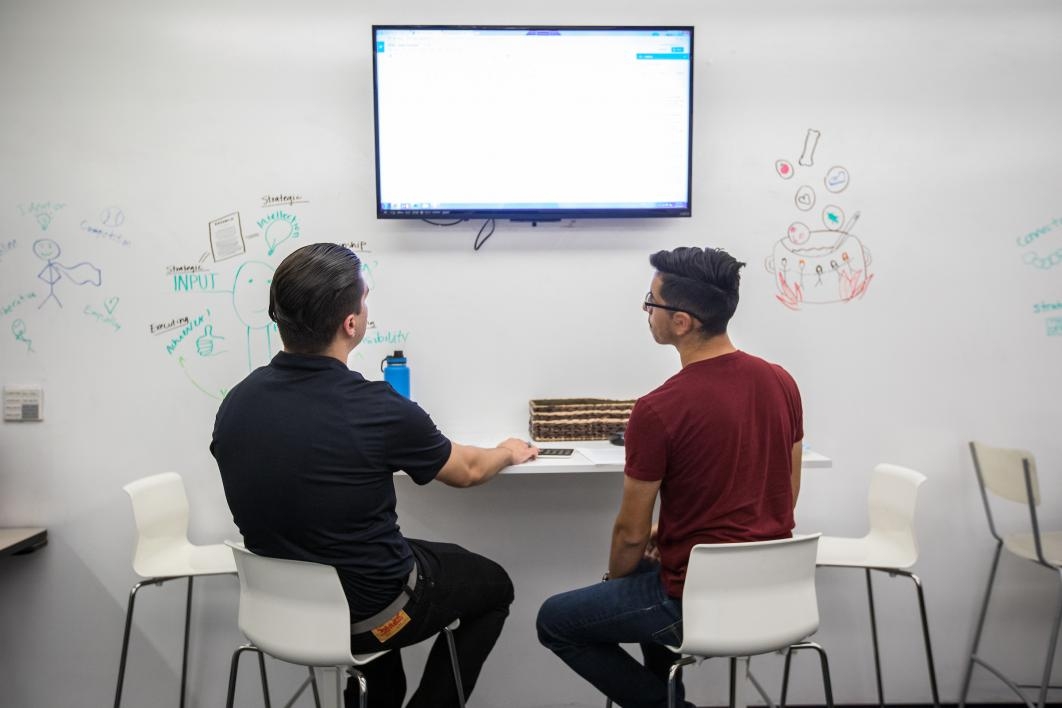
Communications sophomore Gary Poole works with North Canyon High School senior Jose Alvarado, as they dissect Jose's three-minute script on the wall-mounted monitor. For the past few weeks, 13 Boys & Girls Club youths have been visiting the Communication Assessment and Learning Lab at ASU’s West campus to work on their speeches for an upcoming competition.
Photo by Charlie Leight/ASU Now
-
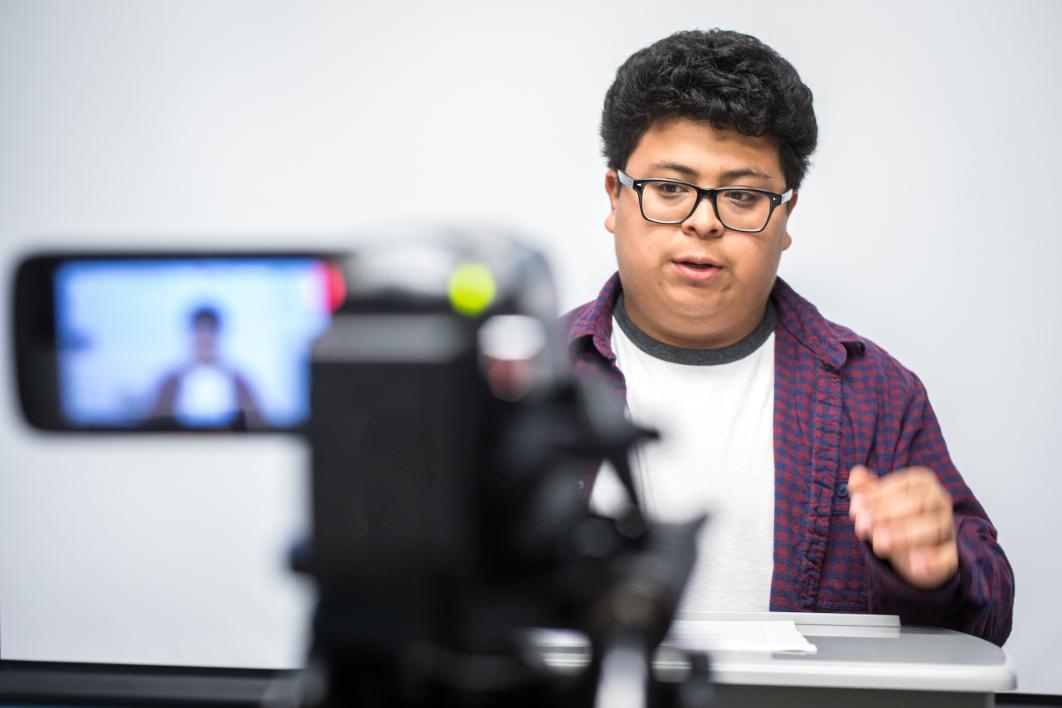
Phoenix College Prep Academy junior Ruben Galicia, 17, gives a practice three-minute speech on his life and his desire to become a public defender.
Photo by Charlie Leight/ASU Now
-
Faculty director Bonnie Wentzel and Cyrus Martinez work on the construction of his speech for the upcoming Boys & Girls Club of Metro Phoenix's annual Youth of the Year competition. Martinez, a senior at Deer Valley High School, will talk about what led him to a seven-week wilderness program and his goals of graduating from ASU and working with troubled teens.
Photo by Charlie Leight/ASU Now
The opportunity CALL provides for student growth through community engagement is at the heart of its mission, she said. Along with the Boys & Girls Club of Metro Phoenix, the lab has also provided services to Girl Scouts of the USA and a handful of Fortune 500 companies in the Valley.
CALL mentors — both graduate and undergraduate students — do everything from assist with speech writing to taping and critiquing speakers’ delivery. Those services are also available to ASU faculty, staff and students enrolled in public speaking courses, both in-person and through ASU Online.
“Communication is one of the most needed skills, yet it’s not as easy to grasp as we think it is,” said Ken Kunkel, communications instructor and CALL assistant director. “People think, 'Oh, it’s just talking.' Well no, it’s also understanding your audience, considering the message you’re developing and how you’re saying it.
“I like to think of something Maya AngelouMaya Angelou has been quoted as saying, “I've learned that people will forget what you said, people will forget what you did, but people will never forget how you made them feel.” said, about how it’s not what you say, it’s how you leave people and how they feel.”
Kunkel started out at CALL as an undergraduate mentor. He said the lab helped him get out of his comfort zone and learn real-world skills in a less intimidating way.
“Anywhere else you go, if you mess up, you’re fired,” he said. “But here, you’re given that opportunity to take on a lot of professional responsibilities. It’s a great way to start to shape and put into practice all of those concepts you’re learning in school.”
Top photo: Communications and Spanish sophomore Miranda Alexander starts the video and stopwatch for 18-year-old Justiana Carbajal's three-minute speech practice session in the ASU Communication Assessment and Learning Lab on the West campus. Photo by Charlie Leight/ASU Now