
The term “global security” can be vague, encompassing any number of issues, from climate change to autonomous weapons systems to food insecurity. For those in positions that require a firm grasp of the subject — be they members of the military, government officials or humanitarian workers — getting a handle on it is no small task, especially when they’re on the move.
A new online program out of ASU’s School of Politics and Global Studies (SPGS) seeks to address that need with support from the university’s recently established Center on the Future of War. The program offers students a Master of Arts in global security and is now accepting applications for the fall semester.
The deadline to apply is July 15.
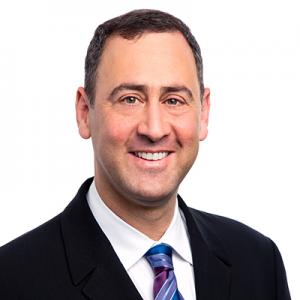
Daniel Rothenberg
“There’s so much complexity to the understanding of global security; it brings into question everything from governmental structures to economics systems, as well as a host of social and cultural questions,” said Daniel Rothenberg, SPGS professor of practice and co-director of the center.
“The most appropriate engagement with the idea,” he added, “is one that is broad-based and interdisciplinary. Our program seeks to do that by providing students with a set of key tools and ideas with which to analyze all sorts of complex and divergent issues.”
The Center on the Future of War was established three years ago with the goal of combining the resources of one of the nation’s largest and most innovative institutes of higher education with New America, a uniquely interdisciplinary Washington, D.C.-based think tank, in order to address the profound social, political, economic and cultural implications of the changing nature of war and conflict.
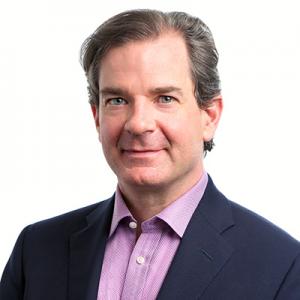
Peter Bergen
Following the center’s inaugural Future of War Conference in 2015, an event that brings together the foremost thought leaders in security the world over, Rothenberg and center co-director Peter Bergen — who recently co-edited the book “Drone Wars: Transforming Conflict, Law, and Policy” — heard from several members of different military institutions inquiring about the possibility of a graduate program that could take an interdisciplinary approach to global security questions by linking serious academic research with real-world case studies and situations.
“Many people who work in conflict zones have no academic grounding in why conflict happens,” Rothenberg said. “What we hope to do is give them a decent grounding to speak intelligently on this.”
The program is unique in that the courses feature expertise from both top scholars from a variety of disciplines, such as sustainability, engineering and religious studies, as well as practitioners from a variety of backgrounds, such as humanitarian workers, government officials and journalists.

Jeffrey Kubiak
This year’s roster will include excerpts of the center’s recent interviews with Senior National Security Studies Fellow at the New America Foundation Douglas Ollivant, U.S. Army Chief of Staff Gen. Mark Milley and Pulitzer Prize-winning journalist David Woods.
“No one else is getting that,” said SPGS Professor of Practice Jeffrey Kubiak. He is teaching a course on war, conflict and security in the fall.
He argued that although there are some institutions that offer similar programs, they lack the reputation, interdisciplinarity and flexibility of ASU.
“We have a need to get folks master’s degrees who are not able to get into civilian schools because it’ll take them off the line of duty,” he said. “ASU fills that gap.”
“It’s very difficult to isolate any given threat to global security,” he added, “because at the end of the day, a lot of these things are all connected. It demands new approaches to how we think about security. It’s a new mind-set, and ASU has many strengths there.”
More Law, journalism and politics

When police moonlight, who’s watching?
When police officers work off-duty security jobs, or “moonlight,” often in uniform and sometimes with full police powers, the lines between public service and private interest can blur.A new…

Arizona tax changes this year: What to know
Let’s face it: Tax season is rarely anyone’s favorite time of year. And this time around, there’s an added wrinkle as Arizona’s tax code is in flux.Arizona lawmakers are debating which of the recent…

ASU course inspires students from different majors to engage with government
On a brisk January morning, about 50 students file into a classroom on Arizona State University's Downtown Phoenix campus. Many of the students are majoring in journalism or nursing but they are…