ASU ranks 5th in political science research expenditures
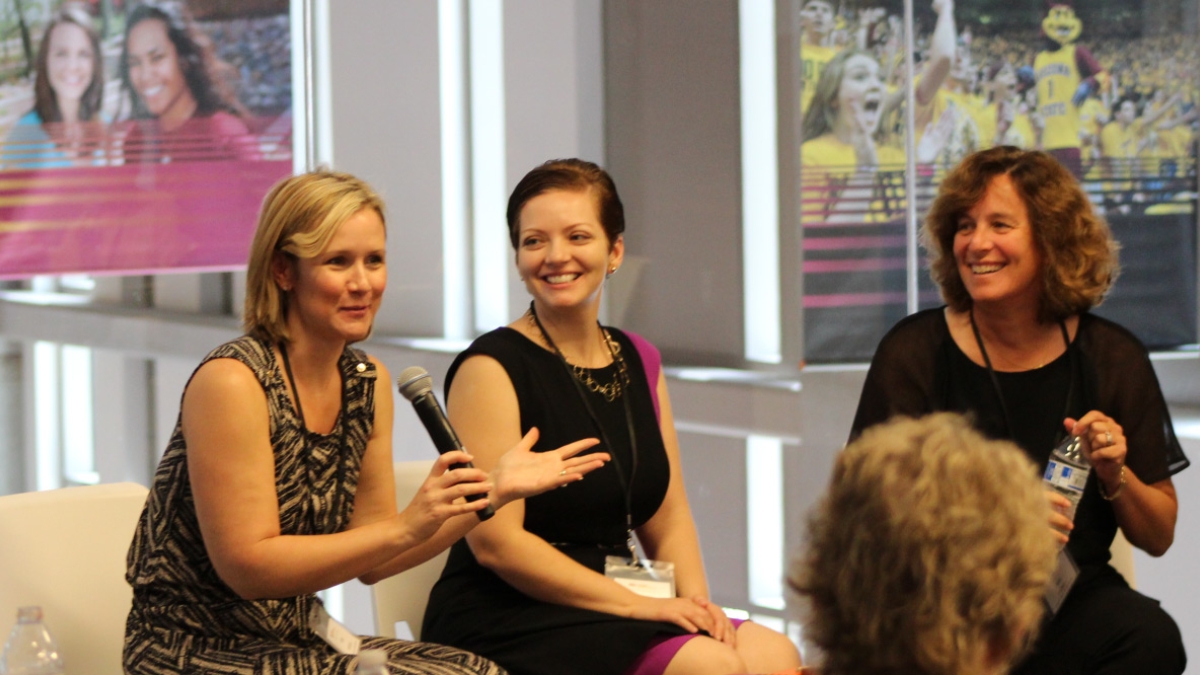
ASU School of Politics and Global Studies professors (from left) Miki Kittilson, Magda Hinojosa and Kim Fridkin.
Every year the National Science Foundation (NSF) conducts its Higher Education Research and Development Survey (HERD). HERD is the primary source of information on research and development expenditures at U.S. colleges and universities.
The School of Politics and Global Studies (SPGS) is proud to announce that ASU's political science research expenditures ranked fifth out of 480 schools in the most recent HERD survey (FY2015). ASU’s ranking in the HERD results was higher than notable schools such as Yale, University of Maryland and Duke.
“I think the NSF HERD ranking recognizes the fact that a lot of high-quality, externally funded research is occurring in the School of Politics and Global Studies,” said School of Politics and Global Studies Director Cameron Thies. “I hope the ranking will help to raise our visibility within the ASU community as well as across the country and around the world.”
SPGS professors Miki Kittilson and Valerie Hoekstra are working on a project that helps ASU’s HERD ranking. Their NSF grant project is titled “Policy Diffusion: International Influences on Appointment to High Courts.” They have built the first data set on the composition of high courts around the world, and look to find important international and domestic influences on gender equality on high courts.
School Professors Carolyn Warner and David Siroky are studying what aspects of religion might enable and inspire relatively small, weak groups, such as ISIS, to engage in violent conflict with much stronger adversaries. The project should aid the U.S. and its allies in anticipating the emergence of conflict situations, creating interventions to defuse potential conflicts, and managing seemingly intractable current conflicts in many parts of the world.
Another ASU political science professor, Kim Fridkin, received NSF funding to examine people’s reactions to the general election debates between Hillary Clinton and Donald Trump. This project explored how political campaign rhetoric affected people’s reactions to the candidates, studying emotional and cognitive responses to the back-and-forth between candidates during the debates.
To learn more about the research the School of Politics and Global Studies is conducting, view its webpages on working groups and conferences.
More University news

ASU earns 'Gold' in inaugural Times Higher Education Online Learning Ranking
Arizona State University continues to set the standard in online learning, having earned a Gold rating in the inaugural Times…
2024 President's Awards honor ASU projects for real-world impact
Ten Arizona State University programs were honored for their real-world solutions during the annual President’s Awards ceremony…

ASU celebrates Paul C. Helmick Center renaming
When Mary Jo Helmick cut the ribbon at the front doors of the Paul C. Helmick Center at Arizona State University, more than 100…